
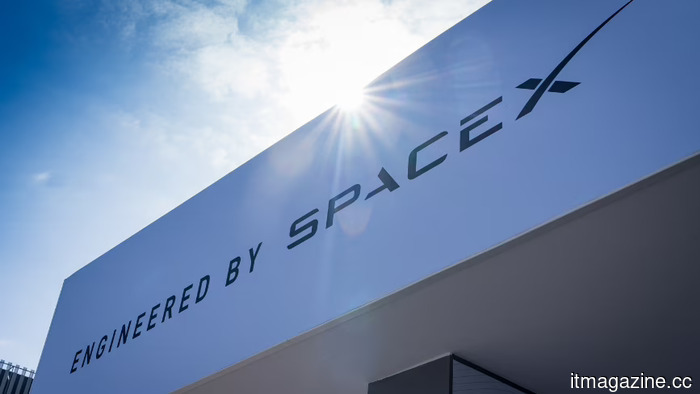
SpaceX bridge loan reduces Musk's debt expenses by 50% prior to the IPO.
Summary: SpaceX’s IPO filing discloses a $20 billion bridge loan that replaced $17.5 billion of high-interest junk debt from X and xAI, halving Musk’s annual interest costs to around $900 million.
Elon Musk's strategy to merge his companies into a single conglomerate is already yielding results. Regulatory documents submitted in connection with SpaceX’s upcoming IPO indicate that the company has obtained a $20 billion bridge loan from a consortium of major banks, which was utilized to pay off $17.5 billion of high-interest junk debt accrued by X and xAI.
The financial impact is significant. The junk bonds and leveraged loans had interest rates as high as 12.5 percent, while the bridge loan's effective rate stood at 4.58 percent as of March 31, according to the filing. This difference reduces the total annual interest payments by nearly half, bringing them down to approximately $900 million.
Goldman Sachs, Bank of America, Citigroup, JPMorgan Chase, and Morgan Stanley facilitated the bridge loan, which matures in September 2027 and allows for prepayment at any time. SpaceX must utilize proceeds from certain debt financings and the IPO to pay back at least part of the loan within six months of receiving those funds.
The debt cycle began with Musk’s 2022 acquisition of Twitter, which burdened the social media firm with around $12.5 billion in debt, resulting in one of Wall Street’s most notable hung-debt situations. The banks that financed the deal struggled to offload the debt to investors for years, eventually managing to do so last year.
Subsequently, xAI purchased X in March 2025 in a $33 billion all-stock transaction. Three months later, Morgan Stanley facilitated an additional $5 billion debt issuance for xAI, with the floating-rate component carrying a premium of 7 percentage points over the benchmark and the fixed-rate notes offering returns of about 12 percent. Demand was considered modest by junk-market standards.
When SpaceX acquired xAI in February 2026, with a combined valuation of $1.25 trillion, Morgan Stanley informed existing lenders that all debt would be fully repaid, using the bridge loan as the method.
The refinancing has tidied up SpaceX's balance sheet in anticipation of what is projected to be the largest IPO ever. The company aims to be listed on Nasdaq with the ticker SPCX at an estimated valuation of around $1.75 trillion, seeking to raise as much as $75 billion.
However, the debt situation is not entirely straightforward. Besides the bridge loan, SpaceX's filing listed an additional $9 billion in “other financings,” which includes obligations linked to AI infrastructure assets classified as failed sale-leaseback transactions. The company also has access to an undrawn revolving credit line of up to $5 billion, increased from $1.5 billion in May.
This filing comes at a time when Musk’s business ventures face significant scrutiny. SpaceX reported a loss of about $4.9 billion in 2025, against revenues of over $18 billion. The S-1 filing contains 38 pages of risk factors, ranging from Musk's personal involvement in government matters to the feasibility of orbital AI data centers.
For investors considering the IPO, the bridge loan strategy highlights both the financial maneuvers possible within Musk’s conglomerate and the extensive amount of debt involved. SpaceX's public debut will test whether the market perceives this combination as a strength or a liability.
Other articles
 Motorola's latest Razr series has sparked a competition among carriers in the US with their promotional offers.
T-Mobile is providing the Razr Fold at no cost along with 6Rx network support, whereas Verizon is promoting complimentary deals on the Razr 2026 and Moto G 2026.
Motorola's latest Razr series has sparked a competition among carriers in the US with their promotional offers.
T-Mobile is providing the Razr Fold at no cost along with 6Rx network support, whereas Verizon is promoting complimentary deals on the Razr 2026 and Moto G 2026.
 ClickUp reduces its workforce by 22% while providing $1 million salaries amid its AI restructuring efforts.
ClickUp's CEO Zeb Evans reduced the workforce by 22% and established $1 million salary bands for a "100x organization" where AI agents exceed the number of employees by three to one.
ClickUp reduces its workforce by 22% while providing $1 million salaries amid its AI restructuring efforts.
ClickUp's CEO Zeb Evans reduced the workforce by 22% and established $1 million salary bands for a "100x organization" where AI agents exceed the number of employees by three to one.
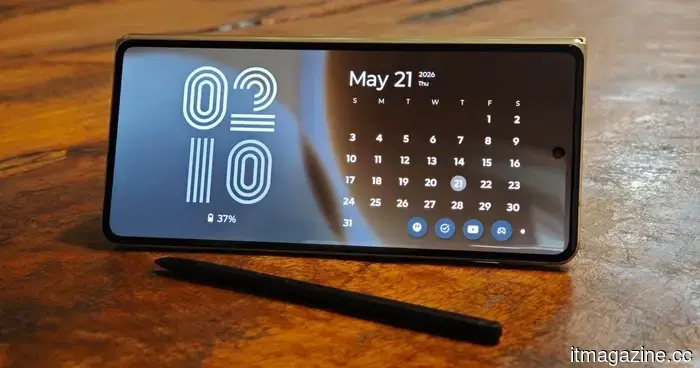 The Motorola Raze Fold brought the phone stylus back into my life, and I realized how much I had missed using it.
I was surprised by the Moto Pen Ultra of the Razr Fold, as it doesn't regard the stylus merely as a nostalgic item, but instead as a functional shortcut tool for a spacious foldable display.
The Motorola Raze Fold brought the phone stylus back into my life, and I realized how much I had missed using it.
I was surprised by the Moto Pen Ultra of the Razr Fold, as it doesn't regard the stylus merely as a nostalgic item, but instead as a functional shortcut tool for a spacious foldable display.
 HMD, formerly associated with Nokia, launches a bold imitation of the iPhone 17 Pro and brands it as “futuristic.”
HMD, the brand linked to Nokia's phone heritage, has introduced an affordable 5G smartphone in India that features a rear design that feels quite recognizable. Although the company describes it as "futuristic," it bears a strong resemblance to the latest Pro iPhone from Apple.
HMD, formerly associated with Nokia, launches a bold imitation of the iPhone 17 Pro and brands it as “futuristic.”
HMD, the brand linked to Nokia's phone heritage, has introduced an affordable 5G smartphone in India that features a rear design that feels quite recognizable. Although the company describes it as "futuristic," it bears a strong resemblance to the latest Pro iPhone from Apple.
 Research indicates that unhealthy screen habits significantly contribute to the poor sleep and mental health of young people.
Recent studies reveal how habits related to screens, inadequate sleep, feelings of loneliness, and depression interconnect in self-reinforcing cycles among young adults between the ages of 18 and 40.
Research indicates that unhealthy screen habits significantly contribute to the poor sleep and mental health of young people.
Recent studies reveal how habits related to screens, inadequate sleep, feelings of loneliness, and depression interconnect in self-reinforcing cycles among young adults between the ages of 18 and 40.
 HMD, previously known as the home of Nokia, has introduced a blatant imitation of the iPhone 17 Pro and refers to it as “futuristic.”
HMD, the brand linked to Nokia’s phone heritage, has introduced an affordable 5G smartphone in India featuring a rear design that feels quite familiar. While the company refers to it as “futuristic,” it bears a strong resemblance to Apple's latest Pro iPhone.
HMD, previously known as the home of Nokia, has introduced a blatant imitation of the iPhone 17 Pro and refers to it as “futuristic.”
HMD, the brand linked to Nokia’s phone heritage, has introduced an affordable 5G smartphone in India featuring a rear design that feels quite familiar. While the company refers to it as “futuristic,” it bears a strong resemblance to Apple's latest Pro iPhone.
SpaceX bridge loan reduces Musk's debt expenses by 50% prior to the IPO.
SpaceX's IPO filing discloses a $20 billion bridge loan at a rate of 4.58%, which has substituted higher-interest junk debt from X and xAI, leading to annual savings of almost $1 billion.