
GitLab reduces workforce by 7% amid restructuring for the 'agentic era'
GitLab is reducing its workforce by 7%, cutting its geographical presence by 30%, and flattening its management structure as part of a significant restructuring effort, which CEO Bill Staples refers to as the "agentic era." The firm plans to reorganize its research and development into 60 self-sufficient teams and implement AI agents for internal use, while maintaining its financial outlook for FY27 ahead of an earnings call on June 2.
On May 19, GitLab announced it would be laying off about 7% of its employees, lowering its country presence by as much as 30%, and eliminating up to three management levels in certain areas. With approximately 2,580 employees as of January 2026, the company is also offering a voluntary separation option for those considering leaving on their own.
CEO Bill Staples described the changes as a critical response to the "agentic era," a time when autonomous AI systems are expected to play a major role in software development, deployment, and internal processes. In a memo to the company, Staples stated that “software will be built by machines, directed by people,” highlighting the philosophical shift GitLab aims to achieve.
Similar to other companies, GitLab is adopting the “agentic AI” discourse to rationalize job cuts. Cloudflare recently eliminated 1,100 jobs in a comparable shift, and the tech industry as a whole has seen over 95,000 job losses through 247 layoffs in 2026. Critics are questioning whether these changes indicate legitimate strategic shifts or if they reflect what some call “AI washing,” using AI terminology to mask traditional cost-cutting.
The financial implications add complexity to the situation. Following the announcement, GitLab’s stock fell about 8% in after-hours trading, continuing a challenging trend where shares dropped from $52 to roughly $26 over the past year. The company's board had approved a $400 million share repurchase plan when it released its Q4 FY26 results in March, a move that now appears aimed at boosting investor confidence prior to the restructuring.
Despite the disruptions, GitLab is reaffirming its financial projections, estimating Q1 FY27 revenue to be between $253 million and $255 million, which reflects an 18% to 19% increase year-over-year, with non-GAAP operating income projected between $32 million and $34 million. The overall FY27 forecast remains steady. GitLab intends to finalize its new organizational structure by June 1, with full details and financial implications to be revealed in the Q1 earnings call on June 2.
The pressing question is whether GitLab’s strategy will be successful. The challenges of operating AI agents at scale are significant, and the shift from human-led to agent-driven development is complex. However, Staples seems dedicated to transforming GitLab into an organization that not only markets agentic AI tools but also embodies those principles internally.
For the approximately 180 employees facing layoffs, the philosophical rationale offers little solace. An industry observer noted that despite the promise of AI, the gap between expectation and reality remains substantial, with workers bearing the brunt of this uncertainty.
Other articles
 Google AI Studio can now create Android applications without requiring you to write any code.
At I/O 2026, Google AI Studio introduces Android app development capabilities, integration with Google Workspace, personalized design tools, and a mobile application.
Google AI Studio can now create Android applications without requiring you to write any code.
At I/O 2026, Google AI Studio introduces Android app development capabilities, integration with Google Workspace, personalized design tools, and a mobile application.
 Google unveils the Gemini Spark agentic AI assistant during I/O 2026.
At I/O 2026, Google introduced Gemini Spark, an AI agent that is always active and can handle tasks through Gmail, navigate in Chrome, and operates continuously on cloud VMs for AI Ultra subscribers.
Google unveils the Gemini Spark agentic AI assistant during I/O 2026.
At I/O 2026, Google introduced Gemini Spark, an AI agent that is always active and can handle tasks through Gmail, navigate in Chrome, and operates continuously on cloud VMs for AI Ultra subscribers.
 Google introduced the Gemini Spark agentic AI assistant during I/O 2026.
At I/O 2026, Google introduced Gemini Spark, a persistent AI agent that handles tasks through Gmail, navigates Chrome, and operates continuously on cloud VMs for AI Ultra subscribers.
Google introduced the Gemini Spark agentic AI assistant during I/O 2026.
At I/O 2026, Google introduced Gemini Spark, a persistent AI agent that handles tasks through Gmail, navigates Chrome, and operates continuously on cloud VMs for AI Ultra subscribers.
 Google introduces Android CLI 1.0 for AI coding agents.
Google's stable Android CLI 1.0 provides AI agents such as Claude Code, Codex, and Antigravity with direct command line access to the Android Studio toolchain.
Google introduces Android CLI 1.0 for AI coding agents.
Google's stable Android CLI 1.0 provides AI agents such as Claude Code, Codex, and Antigravity with direct command line access to the Android Studio toolchain.
 Google introduces Android CLI 1.0 for AI programming agents.
Google's stable Android CLI 1.0 provides AI agents such as Claude Code, Codex, and Antigravity with direct command line access to Android Studio's toolchain.
Google introduces Android CLI 1.0 for AI programming agents.
Google's stable Android CLI 1.0 provides AI agents such as Claude Code, Codex, and Antigravity with direct command line access to Android Studio's toolchain.
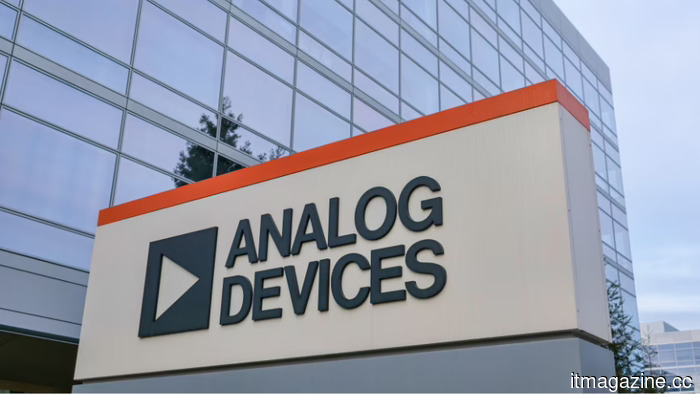 Analog Devices acquires Empower Semiconductor for $1.5 billion | TNW
Analog Devices has reached an agreement to purchase Empower Semiconductor for $1.5 billion in cash, thereby incorporating integrated voltage regulators that reduce power consumption in AI data centers by 20%.
Analog Devices acquires Empower Semiconductor for $1.5 billion | TNW
Analog Devices has reached an agreement to purchase Empower Semiconductor for $1.5 billion in cash, thereby incorporating integrated voltage regulators that reduce power consumption in AI data centers by 20%.
GitLab reduces workforce by 7% amid restructuring for the 'agentic era'
GitLab reduces its workforce, cuts its country presence by 30%, and restructures R&D into 60 independent teams as CEO Bill Staples places his bets on AI agents developing software.