
Analog Devices acquires Empower Semiconductor for $1.5 billion | TNW
TL;DR: Analog Devices is set to acquire Empower Semiconductor for $1.5 billion in cash to enhance its power-delivery technology for AI data centers. This acquisition provides ADI access to Empower's integrated voltage regulators, which can potentially reduce system power usage by about 20%.
Analog Devices has announced its intention to purchase Empower Semiconductor for $1.5 billion in cash, taking a significant step in addressing the increasing energy needs of AI data centers, which are driving chip manufacturers to seek improved power-delivery solutions.
The deal, revealed on Monday, enables the Wilmington, Massachusetts-based company to utilize Empower’s integrated voltage regulators. These regulators are positioned directly beneath AI accelerators, delivering current vertically through the circuit board instead of sideways. Empower claims this design can reduce a system's overall power consumption by approximately 20%, a critical factor considering that a single hyperscale facility may consume hundreds of megawatts.
“AI infrastructure is fundamentally changing how power must be delivered, with energy being the most significant limitation to scaling next-generation systems,” stated Vincent Roche, CEO and chair of Analog Devices. Roche further noted that Empower’s technology will broaden ADI’s product range and assist its customers in meeting the compute densities required by next-generation AI.
Tim Phillips, the co-founder and CEO of Empower, will remain on to supervise the development of integrated voltage regulators within ADI. Empower, headquartered in Milpitas, California, is experiencing rapid growth. In September 2025, it completed a Series D funding round exceeding $140 million, led by Fidelity Management & Research, with contributions from Maverick Silicon, CapitalG, Atreides Management, and other investors, raising its total funding to approximately $236 million. The company also inaugurated a new corporate headquarters in Milpitas and a dedicated research and development center in Munich late last year, indicating ambitions beyond its Silicon Valley origins.
This acquisition coincides with significant investments in AI infrastructure from both chipmakers and hyperscale companies. Nvidia has pledged over $40 billion in AI ventures in 2026, while Meta recently finalized a $27 billion data center agreement with Nebius. Power efficiency is becoming a crucial competitive factor, with startups striving to reduce energy consumption in data centers amid surging workloads.
For Analog Devices, the timing is particularly significant. The company is set to report its second-quarter earnings on Tuesday, with analysts predicting record revenues of approximately $3.5 billion. Its shares have risen by over 52% this year, elevating ADI’s market capitalization above $200 billion. PJT Partners provided advisory services to Analog Devices for this transaction, while Barclays represented Empower.
Analog Devices, which designs and produces chips for various markets, is currently performing well. The company ranks as the third-largest U.S.-listed chipmaker not primarily focused on processors, and the acquisition of Empower marks its largest deal in years.
The transaction is anticipated to be finalized in the second half of 2026, pending regulatory approval under the Hart-Scott-Rodino Act. If completed, ADI will integrate Empower's FinFast technology and Crescendo power platform into its current grid-to-core power offerings.
The success of the deal will depend on the pace at which AI power budgets increase; however, early reports indicated that both parties were nearing an agreement. With energy costs becoming a significant challenge in AI scalability, Analog Devices is betting that the chips closest to the processor will prove most essential.
Other articles
 Discord automatically encrypts all voice and video calls.
Discord has enabled end-to-end encryption for all voice and video calls automatically, without the need for users to opt in. The DAVE protocol ensures that even Discord itself cannot eavesdrop.
Discord automatically encrypts all voice and video calls.
Discord has enabled end-to-end encryption for all voice and video calls automatically, without the need for users to opt in. The DAVE protocol ensures that even Discord itself cannot eavesdrop.
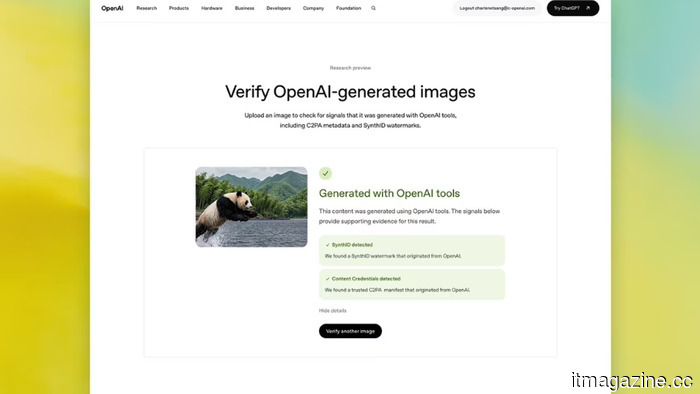 OpenAI incorporates C2PA metadata and SynthID watermarks into AI-generated images.
OpenAI has become a member of the C2PA standard and has teamed up with Google to incorporate invisible SynthID watermarks, establishing a dual-layer system for recognizing AI-generated images.
OpenAI incorporates C2PA metadata and SynthID watermarks into AI-generated images.
OpenAI has become a member of the C2PA standard and has teamed up with Google to incorporate invisible SynthID watermarks, establishing a dual-layer system for recognizing AI-generated images.
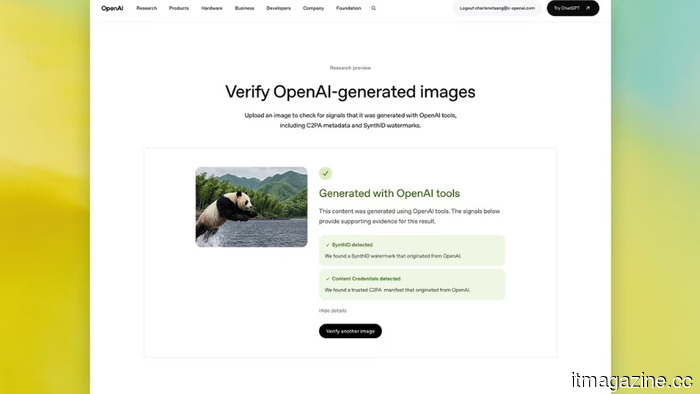 OpenAI incorporates C2PA metadata and SynthID watermarks into AI-generated images.
OpenAI has become a participant in the C2PA standard and has teamed up with Google to incorporate invisible SynthID watermarks, establishing a dual-layer system for identifying images generated by AI.
GitLab reduces workforce by 7% amid restructuring for the 'agentic era'
GitLab reduces its workforce, cuts its country presence by 30%, and restructures R&D into 60 independent teams as CEO Bill Staples places his bets on AI agents developing software.
OpenAI incorporates C2PA metadata and SynthID watermarks into AI-generated images.
OpenAI has become a participant in the C2PA standard and has teamed up with Google to incorporate invisible SynthID watermarks, establishing a dual-layer system for identifying images generated by AI.
GitLab reduces workforce by 7% amid restructuring for the 'agentic era'
GitLab reduces its workforce, cuts its country presence by 30%, and restructures R&D into 60 independent teams as CEO Bill Staples places his bets on AI agents developing software.
 Google showcases audio glasses designed in collaboration with Gentle Monster and Warby Parker.
Google has finally provided us with a sneak peek at the Android XR audio glasses, which are powered by Gemini and set to be released later this year.
SpaceX plans to acquire the AI coding startup Cursor for $60 billion following its initial public offering (IPO).
SpaceX anticipates finalizing its $60 billion acquisition of Cursor in July, approximately 30 days following its record-setting IPO on Nasdaq. The deal is supported by a $10 billion breakup fee.
Google showcases audio glasses designed in collaboration with Gentle Monster and Warby Parker.
Google has finally provided us with a sneak peek at the Android XR audio glasses, which are powered by Gemini and set to be released later this year.
SpaceX plans to acquire the AI coding startup Cursor for $60 billion following its initial public offering (IPO).
SpaceX anticipates finalizing its $60 billion acquisition of Cursor in July, approximately 30 days following its record-setting IPO on Nasdaq. The deal is supported by a $10 billion breakup fee.
Analog Devices acquires Empower Semiconductor for $1.5 billion | TNW
Analog Devices has reached an agreement to purchase Empower Semiconductor for $1.5 billion in cash, thereby incorporating integrated voltage regulators that reduce power consumption in AI data centers by 20%.