
At I/O 2026, Google introduces voice prompting for Docs, Keep, and Gmail.
Google announced at its I/O 2026 developer conference the introduction of voice-based prompting for Docs, Keep, and Gmail, allowing users to create documents, organize notes, and search their inboxes through speech rather than typing. These features, powered by Gemini AI, will be available this summer for premium subscribers and Workspace business users.
The company believes that the future of productivity software will rely on voice input instead of keyboard use. The standout feature is Docs Live, which enables users to create and edit documents entirely through spoken commands. During a demo, Google illustrated a user instructing the tool to gather résumé details from Drive, incorporate logistics from an email chain, and add humorous anecdotes, all in one fluid spoken passage. This approach is based on the idea that voice allows for more lengthy and intricate prompts than most individuals would typically type, and the current models can effectively keep up even when a speaker diverges mid-sentence.
CEO Sundar Pichai described this transition as inevitable, claiming users will soon routinely create and edit documents by voice. While this may seem ambitious, the necessary technical foundation is arguably already established. Google recently introduced a standalone dictation tool named Rambler, integrated with its Gboard keyboard, which eliminates filler words and manages multilingual code-switching in real time. Rambler was released earlier this month for Samsung Galaxy and Google Pixel devices.
Keep will also undergo a voice transformation, where users can vocalize a stream of disorganized thoughts—ranging from gift suggestions to grocery lists to home improvement projects—and the AI will categorize the transcriptions into organized notes. This concept is not new, as various apps like Voicenotes and AudioPen have provided voice-to-structured text capabilities for years, and desktop dictation applications such as Wispr Flow, Monologue, and Aqua Voice have garnered dedicated users. What sets Google apart is its scale: Keep is integrated into the larger Workspace ecosystem, enabling voice notes to seamlessly transition into Docs, Sheets, and other tools within the suite.
In addition, Gmail is introducing what Google refers to as Gmail Live, a voice-driven conversational interface for managing your inbox. Rather than typing search queries, users can request Gmail to retrieve specific information, such as flight confirmation codes, Airbnb check-in details, or their child’s school schedule, with spoken responses generated from their messages. Essentially, it operates as an AI assistant for email, proficient enough to manage multi-step inquiries.
The overarching trend is evident; users are posing increasingly sophisticated, multi-part questions to AI tools, and voice input offers a more intuitive avenue for this type of interaction compared to text boxes. Google is not alone in recognizing this shift, as its recent Cloud Next conference highlighted a range of AI features within Workspace, and competitors like OpenAI and Apple are striving to integrate voice-first AI into their productivity solutions.
The new voice features will launch this summer for Google AI Premium subscribers and Google Workspace business users. It remains to be seen if speaking to documents will become a common practice, but Google is clearly determined to challenge the keyboard’s longstanding dominance in productivity.
Other articles
 Gemini 3.5 Flash is the new default AI model from Google, designed to perform actions rather than merely provide answers.
Today, Google unveiled Gemini 3.5 Flash, the most advanced model in its Flash series to date. The company claims it surpasses Gemini 3.1 Pro in coding and agency benchmarks and operates at four times the speed of similar frontier models.
Gemini 3.5 Flash is the new default AI model from Google, designed to perform actions rather than merely provide answers.
Today, Google unveiled Gemini 3.5 Flash, the most advanced model in its Flash series to date. The company claims it surpasses Gemini 3.1 Pro in coding and agency benchmarks and operates at four times the speed of similar frontier models.
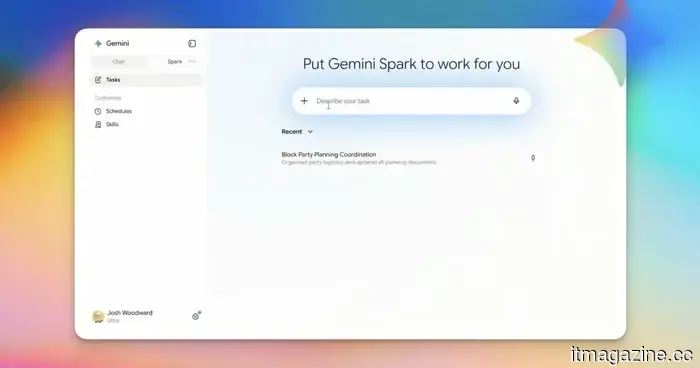 Google's latest Gemini Spark AI agent can handle your tasks while you manage your life.
Google's Gemini Spark is an innovative AI assistant that manages multi-step tasks in the background, operates across various Google applications, and continues its work even after you shut your laptop.
Google's latest Gemini Spark AI agent can handle your tasks while you manage your life.
Google's Gemini Spark is an innovative AI assistant that manages multi-step tasks in the background, operates across various Google applications, and continues its work even after you shut your laptop.
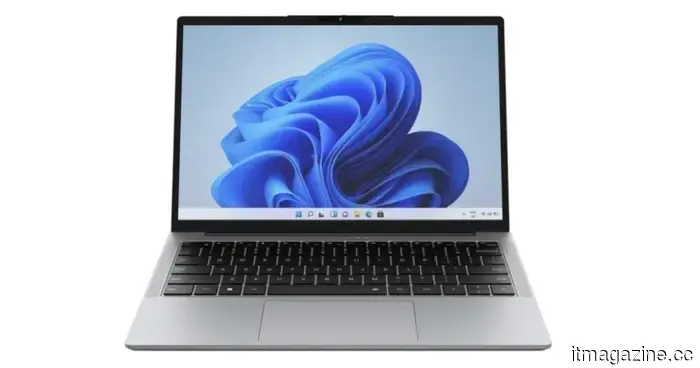 Chuwi's UniBook is a $449 laptop vying for the title held by the MacBook Neo, offering substantial features.
Chuwi's UniBook features Intel's latest Wildcat Lake Core 3 processor, along with a 14-inch display that covers 100% of the sRGB spectrum, ample ports, and an estimated price of $449.
Chuwi's UniBook is a $449 laptop vying for the title held by the MacBook Neo, offering substantial features.
Chuwi's UniBook features Intel's latest Wildcat Lake Core 3 processor, along with a 14-inch display that covers 100% of the sRGB spectrum, ample ports, and an estimated price of $449.
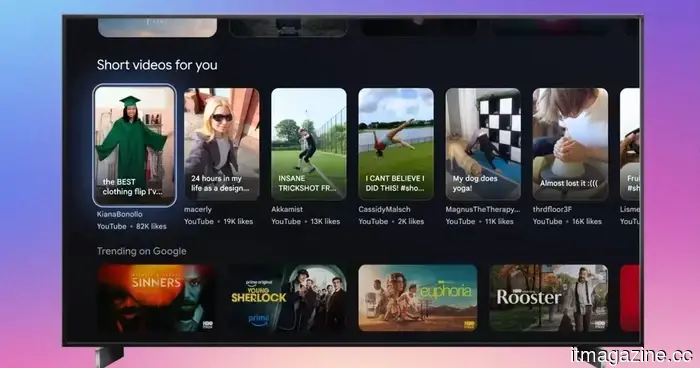 Google aims to transform your TV remote with Gemini and pointer controls.
Google is transforming the future of televisions with Gemini-enhanced discovery and a new method for navigating applications. Nonetheless, the most significant shift might not be on the display itself, but rather in your remote control.
Google aims to transform your TV remote with Gemini and pointer controls.
Google is transforming the future of televisions with Gemini-enhanced discovery and a new method for navigating applications. Nonetheless, the most significant shift might not be on the display itself, but rather in your remote control.
 Google unveils the Gemini Spark agentic AI assistant during I/O 2026.
At I/O 2026, Google introduced Gemini Spark, an AI agent that is always active and can handle tasks through Gmail, navigate in Chrome, and operates continuously on cloud VMs for AI Ultra subscribers.
Google unveils the Gemini Spark agentic AI assistant during I/O 2026.
At I/O 2026, Google introduced Gemini Spark, an AI agent that is always active and can handle tasks through Gmail, navigate in Chrome, and operates continuously on cloud VMs for AI Ultra subscribers.
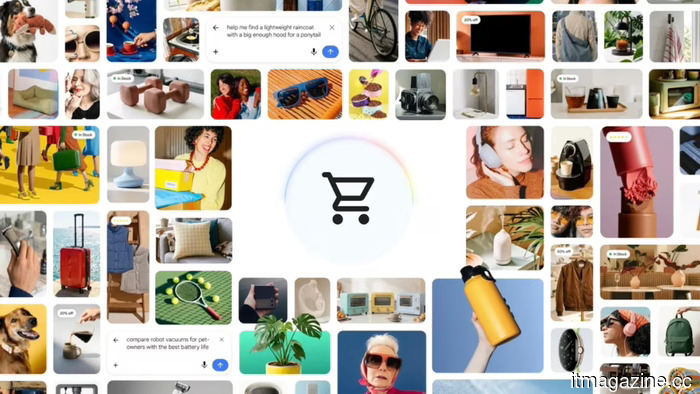 Google introduces Universal Cart and announces updates to AP2 at I/O 2026.
Google introduced Universal Cart, an AI shopping platform that integrates Search, Gemini, YouTube, and Gmail, along with enhancements to its Agent Payments Protocol for autonomous transactions.
Google introduces Universal Cart and announces updates to AP2 at I/O 2026.
Google introduced Universal Cart, an AI shopping platform that integrates Search, Gemini, YouTube, and Gmail, along with enhancements to its Agent Payments Protocol for autonomous transactions.
At I/O 2026, Google introduces voice prompting for Docs, Keep, and Gmail.
At I/O 2026, Google introduced voice-activated AI functionalities for Docs, Keep, and Gmail, allowing users to generate documents and search their inboxes through voice commands rather than by typing.