
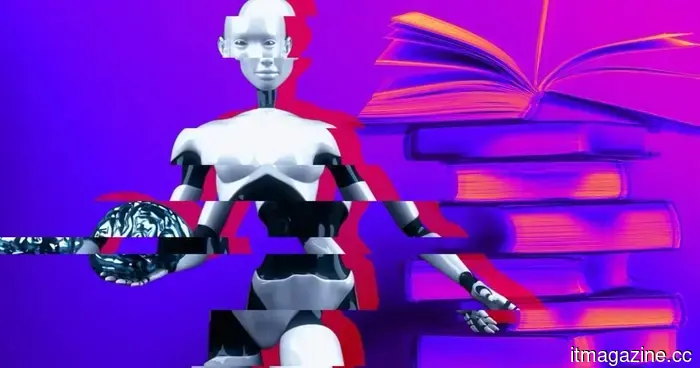
AI might have recently secured a literary award. It pains me to witness this tarnish our affection for books.
I found it difficult to process this news. As someone who has cherished stories since childhood and has been influenced by the works of Arthur Conan Doyle, Terry Pratchett, J.R.R. Tolkien, and other esteemed authors, it is hard to accept that an AI-generated story has won a significant writing award.
If you're not aware, the winners of the 2026 Commonwealth Short Story Prize were announced, revealing that three out of five winning regional stories were either entirely or partially created by AI, according to the consensus among readers. As an avid reader and a novice fiction writer, this news affected me more deeply than any previous accounts of AI encroaching on our lives.
So, which stories are in question?
The issue arose when Granta released the five regional winners of the narrative competition. Users on X quickly noticed that some of the writing styles were strikingly similar to those typically produced by AI.
Researcher Nabeel S. Qureshi flagged this on X, highlighting what he described as characteristic AI syntax. The AI detection tool Pangram identified one story as 100% AI-generated, a finding that WIRED later confirmed independently.
This marks a significant milestone: a story produced by ChatGPT has secured a prestigious literary accolade (the Commonwealth Prize). With phrases like “Not X, not Y, but Z” appearing throughout, along with the “hums” trope and other distinct indications of AI writing, it's a notable achievement for AI, nonetheless… @GrantaMag https://t.co/BWGBpRasNz pic.twitter.com/U6jWejprFv— Nabeel S. Qureshi (@nabeelqu) May 18, 2026
Pangram also identified “The Bastion’s Shadow” by Maltese author John Edward DeMicoli as fully AI-generated, while “Mehendi Nights” by Indian writer Sharon Aruparayil was flagged as partially AI-generated. Only the stories by Holly Ann Miller and Lisa-Anne Julien were confirmed as entirely human-written.
Regarding how this oversight occurred, Razmi Farook, the Director-General of the Commonwealth Foundation, stated that they do not utilize AI checkers to verify the originality of submissions. “Providing unpublished original work to an AI checker would significantly raise concerns regarding consent and artistic ownership,” he noted.
This situation highlights the serious lack of AI literacy among literary critics and publishers. Sigrid Rausing, the publisher of Granta and one of the most prestigious literary magazines in the English-speaking realm, holds a PhD in social anthropology… pic.twitter.com/NHrJ2KVHah— Mushtaq Bilal, PhD (@MushtaqBilalPhD) May 19, 2026
Granta, for its part, claims its editors did not partake in the editing or selection of the shortlisted stories. Furthermore, Granta mentioned it employed an AI tool, Anthropic’s Claude, to check for AI plagiarism, but the results were inconclusive. Consequently, the publication has chosen to retain these stories on its website without any repercussions.
Naturally, no AI detector is completely accurate, and even the developers of these tools caution against placing absolute trust in them. This is a sadly ironic and concerning situation. The trend here suggests that we are using AI tools to verify that content was not generated by AI. It's an ironic predicament, and I would certainly read a critique of this situation authored by a human.
A prestigious competition should not depend on the honor system.
I empathize with the foundation and the judges, as it’s challenging to definitively label a piece of writing as AI-generated. However, we can no longer depend solely on the honor system. Even Princeton University was compelled to abandon its honor code and implement supervised exams for the first time in 133 years.
I am not opposed to using AI writing tools; I utilize them for mundane tasks like responding to emails and summarizing lengthy texts for easier consumption. While I disagree with employing AI for storytelling, I do not mind if others choose to do so, provided they clearly indicate their work as AI-generated.
Using AI-generated stories to compete with authors who have battled imposter syndrome and invested their emotions into their writing is not only unethical but also a profound betrayal of the human vulnerability and experience that traditional storytelling embodies.
The joy of creation is unparalleled when you write the final period of your story or novel. Competing with AI-generated stories is merely a money grab, and those who do so should be disqualified from future competitions.
As research consistently shows, humans are increasingly struggling to identify AI content, and in blind tests, we even exhibit a preference for it. Let’s also not ignore that AI is dulling our cognitive abilities. However, I remain optimistic. As Sir Terry Pratchett said in Hogfather, “Real stupidity beats artificial intelligence every time.” I have complete faith in our ability to overcome any challenges presented by AI through our own flaws.
Other articles
 YEEDI S20 Infinity Ultra: transforming the standard of what robot vacuums are meant to clean.
Robot vacuums have become proficient at navigation, but actual cleaning still reveals certain shortcomings. The YEEDI S20 Infinity Ultra tackles this issue with its spray-before-clean pre-treatment and a design aimed at managing tough, everyday dirt in just one pass.
YEEDI S20 Infinity Ultra: transforming the standard of what robot vacuums are meant to clean.
Robot vacuums have become proficient at navigation, but actual cleaning still reveals certain shortcomings. The YEEDI S20 Infinity Ultra tackles this issue with its spray-before-clean pre-treatment and a design aimed at managing tough, everyday dirt in just one pass.
 YEEDI S20 Infinity Ultra: transforming the standards of robot vacuum cleaning.
Robot vacuums have perfected navigation, but their cleaning capabilities still reveal shortcomings in real-world scenarios. The YEEDI S20 Infinity Ultra tackles this issue with a pre-treatment spray feature and a design intended to manage tough, daily messes in just one pass.
YEEDI S20 Infinity Ultra: transforming the standards of robot vacuum cleaning.
Robot vacuums have perfected navigation, but their cleaning capabilities still reveal shortcomings in real-world scenarios. The YEEDI S20 Infinity Ultra tackles this issue with a pre-treatment spray feature and a design intended to manage tough, daily messes in just one pass.
 Canva and Adobe are joining Gemini, aiming to make everything conversational.
Adobe and Canva are integrating with Google Gemini, transforming the assistant into a launching pad for design tasks and prompting larger inquiries regarding the control of the creative process.
Canva and Adobe are joining Gemini, aiming to make everything conversational.
Adobe and Canva are integrating with Google Gemini, transforming the assistant into a launching pad for design tasks and prompting larger inquiries regarding the control of the creative process.
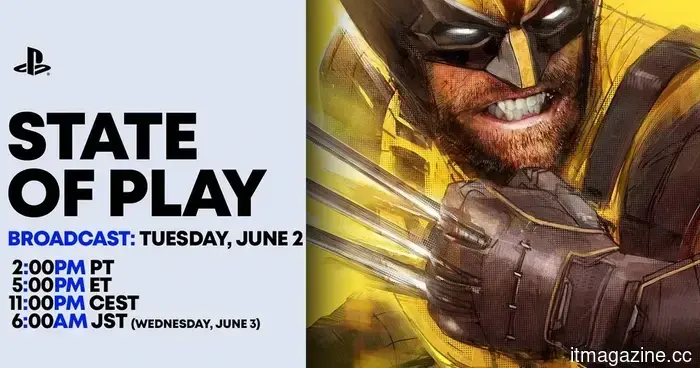 The PlayStation State of Play is back on June 2, featuring Marvel’s Wolverine as the highlight of the event.
Sony has officially revealed a new PlayStation State of Play showcase scheduled for June 2, which will include more than 60 minutes of PS5 game announcements and an exclusive preview of Marvel’s Wolverine.
The PlayStation State of Play is back on June 2, featuring Marvel’s Wolverine as the highlight of the event.
Sony has officially revealed a new PlayStation State of Play showcase scheduled for June 2, which will include more than 60 minutes of PS5 game announcements and an exclusive preview of Marvel’s Wolverine.
 YEEDI S20 Infinity Ultra: transforming the standards of robot vacuum cleaning.
Robot vacuums have excelled in navigation, yet actual cleaning still reveals shortcomings. The YEEDI S20 Infinity Ultra tackles this issue with a pre-treatment spray followed by cleaning, along with a system designed to manage tough, daily dirt in one go.
YEEDI S20 Infinity Ultra: transforming the standards of robot vacuum cleaning.
Robot vacuums have excelled in navigation, yet actual cleaning still reveals shortcomings. The YEEDI S20 Infinity Ultra tackles this issue with a pre-treatment spray followed by cleaning, along with a system designed to manage tough, daily dirt in one go.
 Canva and Adobe are joining Gemini, aiming to introduce more conversational elements.
Adobe and Canva are integrating with Google Gemini, transforming the assistant into a launching pad for design projects and prompting larger discussions about control over the creative process.
Canva and Adobe are joining Gemini, aiming to introduce more conversational elements.
Adobe and Canva are integrating with Google Gemini, transforming the assistant into a launching pad for design projects and prompting larger discussions about control over the creative process.
AI might have recently secured a literary award. It pains me to witness this tarnish our affection for books.
Out of the five winning stories in the 2026 Commonwealth Short Story Prize, three have been identified as AI-generated, and this is a much more significant issue than one might realize.