
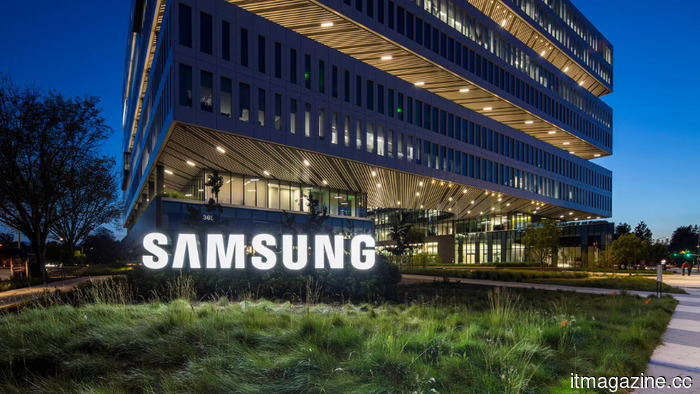
The Samsung union has set May 21 as the strike date as mediation begins on Monday in Sejong.
Discussions resumed in Sejong on Monday. Choi Seung-ho entered the National Labor Relations Commission building in Sejong Monday morning, approximately 110 km south of Seoul, and informed reporters that he would "participate in this second round in good faith." The leader of Samsung Electronics' largest union, as indicated on Friday, had been preparing for talks with the company set for June 7, just three days after his members concluded an 18-day strike. By Monday, the schedule had shifted forward by three weeks, with only three days left before the planned walkout.
In the interim, three notable events unfolded. On Saturday, Samsung's chairman Lee Jae-yong publicly bowed and apologized, using the formal language typically employed by chaebol leaders addressing the nation, for the "worry and anxiety" the dispute was causing. The country’s president, Lee Jae-myung, posted on X, stating that in South Korea—where democracy and a free market economy are upheld—labor must be respected just as much as companies, and corporate management rights should be honored as much as labor rights. Meanwhile, Samsung, after ten days of asserting that its last proposal was final, arrived at the negotiating table with a new offer.
However, the key issue remains whether the profits from the AI memory cycle benefiting Samsung will translate into a portion for the workforce that is stipulated in employment contracts or whether it will be determined at the chairman's discretion. The meeting in Sejong is the third government-assisted round in two weeks, centering around the bonus formula. It's not merely a matter of whether workers receive more pay; it's about who has the authority to decide and where that decision is documented.
The nature of the disagreement has remained consistent since the collapse of the first round of mediation earlier this month. Samsung proposed a one-time payment for 2026, along with what its negotiators described as "about 13%" of chip division operational profits; the union is insisting on 15%, the removal of the current cap limiting performance bonuses to 50% of base salary, and a written commitment to uphold this formula in future years. On May 14, the union’s representative characterized their stance as "institutionalization and transparency," a consistent phrase since then.
Samsung's new proposal on Monday brought a different offering to the table: a bonus pool calculated as the greater of either 10% of operating profit or an "economic value added" figure, along with a "special compensation" add-on meant to serve as a flexibility buffer. The Korea Herald, citing Yonhap, interpreted this shift as a significant change from the company’s previous fixed one-time payment stance, while the union viewed it in a different light.
The 10% minimum is nearer to the SK Hynix precedent that the workers have referenced for a year, yet it still falls short of the 15% sought, and notably, the proposal lacks the contractual assurance the union has stated is necessary to ensure it survives beyond the chairman's discretion.
The events of the past four days have been unusually transparent for a Samsung labor dispute. On Friday, the company invited the union to negotiations without prerequisites, to which the union responded by setting a meeting for June. By Saturday morning, the chairman had issued an apology. By Sunday evening, the union agreed to meet sooner. By Monday morning, both parties convened in Sejong, with no deadline established for the negotiation round, yet only three days left before the scheduled strike.
President Lee’s post on X that same morning loomed over these developments, serving as a reminder that the government had not dismissed the possibility of employing an emergency-arbitration mechanism that would pause industrial actions for 30 days. The leverage involved is something many foreign observers may undervalue. Should a strike commence on Thursday, it would be the largest in Samsung's 56-year history. The union estimates that the damage to Samsung could reach around 30 trillion won (approximately $20 billion), while the Korea Herald, citing industry observers, suggests the figure might be as high as 100 trillion won (about $66.7 billion) to the broader South Korean economy, influenced by the country’s semiconductor concentration and AI-cycle dynamics that have substantially increased the Lee family’s wealth over the past year.
This 100 trillion-won figure is on the higher end of available estimates and not directly attributed to specific analysts; it is noted for that reason. Nonetheless, the underlying concern remains relevant.
The emphasis on the bonus formula as the focal point for negotiations is underscored by SK Hynix’s previous agreement to eliminate its bonus cap, allocating 10% of annual operating profit to employees, contractually secured for ten years. For 2026 projections, this arrangement resulted in an average payout of about $477,000 per employee this year and nearly $900,000 next year, across roughly 35,000 staff members. The Samsung workforce, observing this scenario at a comparable company, has sought
Other articles
 OpenAI is providing a ChatGPT Plus subscription to an entire country.
OpenAI has collaborated with Malta to offer nationwide access to ChatGPT Plus, representing one of the company's most significant government AI initiatives to date.
OpenAI is providing a ChatGPT Plus subscription to an entire country.
OpenAI has collaborated with Malta to offer nationwide access to ChatGPT Plus, representing one of the company's most significant government AI initiatives to date.
 Amazon employees are performing counterfeit tasks because they are compelled to utilize more AI and demonstrate its use.
It has been reported that Amazon employees are utilizing AI for superfluous tasks in an effort to boost internal usage metrics, as companies continue to push for the widespread adoption of workplace AI.
Amazon employees are performing counterfeit tasks because they are compelled to utilize more AI and demonstrate its use.
It has been reported that Amazon employees are utilizing AI for superfluous tasks in an effort to boost internal usage metrics, as companies continue to push for the widespread adoption of workplace AI.
 Kenya informs Microsoft that a $1 billion AI data center would consume half of the nation's electricity.
Kenya has allegedly expressed concerns regarding Microsoft's proposed $1 billion AI data center, cautioning that the venture could significantly deplete the nation's electricity resources.
Kenya informs Microsoft that a $1 billion AI data center would consume half of the nation's electricity.
Kenya has allegedly expressed concerns regarding Microsoft's proposed $1 billion AI data center, cautioning that the venture could significantly deplete the nation's electricity resources.
 Owners of older Kindles are rebelling against Amazon's termination of support by resorting to jailbreaking.
Amazon's support termination has driven segments of the Kindle community to openly resist, with jailbreaks emerging as a method to combat planned obsolescence and prevent functional e-readers from ending up in the e-waste collection.
Owners of older Kindles are rebelling against Amazon's termination of support by resorting to jailbreaking.
Amazon's support termination has driven segments of the Kindle community to openly resist, with jailbreaks emerging as a method to combat planned obsolescence and prevent functional e-readers from ending up in the e-waste collection.
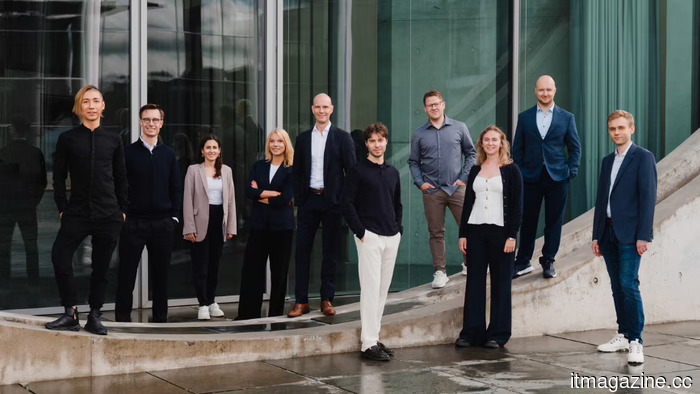 Berlin’s LawX secures €7.5 million to develop the backend infrastructure for legal AI.
LawX has secured €7.5 million in a seed round led by Motive Partners to develop an AI operating system for law firms and notaries in Germany.
Berlin’s LawX secures €7.5 million to develop the backend infrastructure for legal AI.
LawX has secured €7.5 million in a seed round led by Motive Partners to develop an AI operating system for law firms and notaries in Germany.
The Samsung union has set May 21 as the strike date as mediation begins on Monday in Sejong.
Samsung and the NSEU resumed mediation in Sejong on Monday, just three days before an 18-day strike is set to begin. The agreement will hinge on the bonus formula rather than the amount of the offer.