

Kenya informs Microsoft that a $1 billion AI data center would consume half of the nation's electricity.
Digital Trends may receive a commission if you make a purchase through the links provided on our site. Why should you trust us?
The proposed facility reportedly requires an amount of electricity that the country cannot currently afford.
The AI sector frequently discusses the need for larger models, more powerful chips, and futures with trillion parameters. However, it talks far less about the staggering amount of electricity necessary to sustain all of this. This reality has recently encountered a significant hurdle in Kenya, where reports suggest that Microsoft’s planned $1 billion AI data center project is facing opposition after government officials warned that the facility might consume so much power that it could necessitate “shutting down half the country” to keep it running.
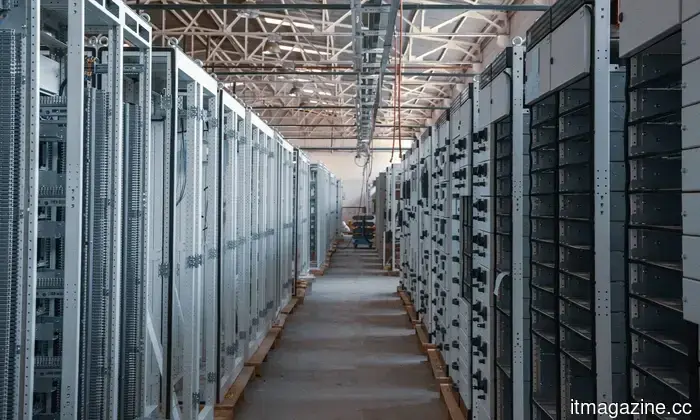
Microsoft's AI data center in Kenya is said to demand more power than the energy grid can reliably provide.
The initiative, announced in collaboration with the Abu Dhabi-based AI firm G42, was initially designed to create a substantial Azure cloud and AI region in East Africa, fueled by geothermal energy from Kenya’s Rift Valley. Early plans reportedly aimed for a capacity of around 100MW, with long-term goals increasing to as much as 1GW.
However, this scale is now the primary concern. According to a Bloomberg report, Kenya’s peak electricity demand already reached approximately 2,444MW earlier this year, indicating that a fully scaled 1GW AI facility could consume a significant portion of the nation’s power infrastructure. Reports indicate that discussions between Microsoft, G42, and Kenyan officials have stalled due to concerns over power commitments and infrastructure, although authorities maintain that the project has not been canceled entirely.
The AI surge is subtly transforming into an energy crisis that many were unprepared for.
Kenya’s predicament feels less like a unique issue and more like an early warning of what the global AI race could evolve into shortly. AI data centers are becoming so energy-intensive that entire nations are beginning to reconsider whether their power grids can realistically support these initiatives without negatively impacting regular citizens.
The troubling reality is that the massive energy requirements of AI are becoming increasingly impossible to overlook around the world, with data centers already consuming a considerable share of electricity in major markets. Kenya has candidly highlighted what many countries may have to address in the near future: supporting the AI boom is starting to resemble an infrastructure challenge just as much as a technological one.
Varun is a seasoned technology journalist and editor with more than eight years of experience in consumer tech media. His work covers…
Japan has developed robotic wolves to prevent bear attacks, and demand is surging.
Orders for the “Monster Wolf” have reportedly tripled due to an increase in wildlife encounters. Few headlines can be as believable as both a robotics innovation and the premise of a low-budget sci-fi horror film. Japan's use of glowing robotic wolves to deter bears is definitely one of those cases. According to AFP, the country’s unusual robots are experiencing a notable rise in demand as bear attacks and sightings continue to grow in Japan.
Japan's robotic wolves are quickly gaining popularity as anti-bear measures.
OpenAI is providing ChatGPT Plus subscriptions to an entire nation.
Malta’s initiative could encourage governments to view AI access as a public service. ChatGPT Plus once seemed like one of those optional internet subscriptions that people quietly rationalized each month. Now, OpenAI is collaborating with governments to implement it at a national level, which feels like a markedly different discussion. OpenAI has officially announced a partnership with Malta that will grant all Maltese citizens and residents access to ChatGPT Plus for one year after they complete a free AI literacy course. This initiative, called “AI for All,” is being developed in partnership with the University of Malta and is described as the company’s first nationwide collaboration of this nature.
Amazon employees are performing unnecessary tasks as they are pressured to use more AI and demonstrate their compliance.
The corporate push for AI is beginning to resemble less of an innovative drive and more of a performance art piece. Companies are eager for employees to “embrace AI,” while employees are desperate for management to ease their demands, resulting in a situation where everyone appears to be automating tasks that were never truly necessary in the first place. A new report from the Financial Times reveals that Amazon employees are utilizing the company's internal AI tool, “MeshClaw,” for redundant tasks solely to boost their AI usage metrics and appear more aligned with the company’s increasing AI-centric culture. For context, Amazon’s MeshClaw is capable of initiating code deployments, managing emails, and interacting with applications like Slack, according to sources familiar with the situation.






Other articles
 Berlin’s LawX secures €7.5 million to develop the backend infrastructure for legal AI.
LawX has secured €7.5 million in a seed round led by Motive Partners to develop an AI operating system for law firms and notaries in Germany.
Berlin’s LawX secures €7.5 million to develop the backend infrastructure for legal AI.
LawX has secured €7.5 million in a seed round led by Motive Partners to develop an AI operating system for law firms and notaries in Germany.
 Owners of older Kindles are rebelling against Amazon's termination of support by resorting to jailbreaking.
Amazon's support termination has driven segments of the Kindle community to openly resist, with jailbreaks emerging as a method to combat planned obsolescence and prevent functional e-readers from ending up in the e-waste collection.
Owners of older Kindles are rebelling against Amazon's termination of support by resorting to jailbreaking.
Amazon's support termination has driven segments of the Kindle community to openly resist, with jailbreaks emerging as a method to combat planned obsolescence and prevent functional e-readers from ending up in the e-waste collection.
 The Samsung union has set May 21 as the strike date as mediation begins on Monday in Sejong.
Samsung and the NSEU resumed mediation in Sejong on Monday, just three days before an 18-day strike is set to begin. The agreement will hinge on the bonus formula rather than the amount of the offer.
The Samsung union has set May 21 as the strike date as mediation begins on Monday in Sejong.
Samsung and the NSEU resumed mediation in Sejong on Monday, just three days before an 18-day strike is set to begin. The agreement will hinge on the bonus formula rather than the amount of the offer.
 Amazon employees are performing counterfeit tasks because they are compelled to utilize more AI and demonstrate its use.
It has been reported that Amazon employees are utilizing AI for superfluous tasks in an effort to boost internal usage metrics, as companies continue to push for the widespread adoption of workplace AI.
Amazon employees are performing counterfeit tasks because they are compelled to utilize more AI and demonstrate its use.
It has been reported that Amazon employees are utilizing AI for superfluous tasks in an effort to boost internal usage metrics, as companies continue to push for the widespread adoption of workplace AI.
 OpenAI is providing a ChatGPT Plus subscription to an entire country.
OpenAI has collaborated with Malta to offer nationwide access to ChatGPT Plus, representing one of the company's most significant government AI initiatives to date.
OpenAI is providing a ChatGPT Plus subscription to an entire country.
OpenAI has collaborated with Malta to offer nationwide access to ChatGPT Plus, representing one of the company's most significant government AI initiatives to date.
Kenya informs Microsoft that a $1 billion AI data center would consume half of the nation's electricity.
Kenya has allegedly expressed concerns regarding Microsoft's proposed $1 billion AI data center, cautioning that the venture could significantly deplete the nation's electricity resources.