
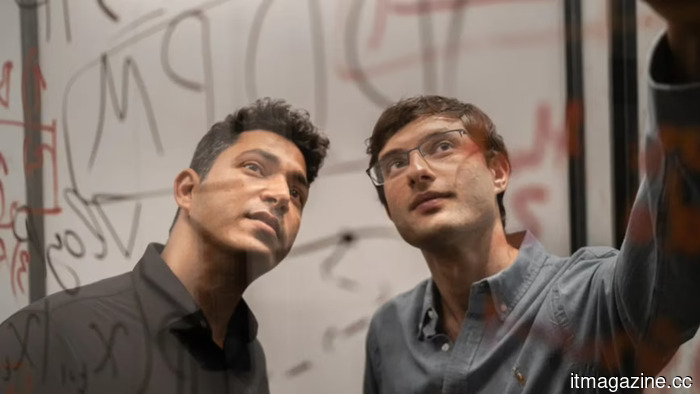
Decart secures $300 million to develop a real-time world model utilizing Amazon’s chips.
Radical Ventures led the funding round, joined by Nvidia, Sequoia, Benchmark, Adobe, and Toyota. Angels in the round include Andrej Karpathy, Michael Eisner, and the Nintendo family. The total amount raised has now surpassed $450 million.
On Monday, Decart, an AI research lab focused on real-time video and world models, announced it secured $300 million in new funding led by Radical Ventures. This recent round brings the two-year-old company's total funding to over $450 million, with new investors such as Nvidia, Atreides Management, Valor Equity Partners, Adobe Ventures, Toyota Ventures, and eBay Ventures, in addition to returning investors Sequoia Capital, Benchmark, and Zeev Ventures.
The presence of notable angel investors like Andrej Karpathy, co-founder of OpenAI and former head of AI at Tesla, along with ex-Disney CEO Michael Eisner, the Nintendo family, and gaming investor Moritz Baier-Lentz, indicates how Decart is positioning itself in the market.
The focus of the investors is on media, gaming, and infrastructure, rather than solely software engineering, aligning with the use cases Decart claims its products are being utilized for.
Decart offers three primary products:
1. **DOS (Decart Optimization Stack)**, an inference and training platform that operates on Nvidia GPUs, Google TPUs, and Amazon Trainium, reportedly achieving 1,600 tokens per second for agentic inference, significantly above the industry average of around 200, as well as full-HD video inference at up to 100 frames per second.
2. **Lucy**, described as their ‘world model for immersive experiences’, reacts to user input in under 30 milliseconds and is currently deployed in virtual try-on, live streaming, and dynamic in-video advertising.
3. **Oasis**, aimed at physical AI, has been geared towards robotics and autonomous-systems customers since its original real-time Minecraft-style demonstration gained popularity in October 2024.
A key commercial aspect of the announcement is Decart's partnership with Amazon. The company states it is among the first to utilize real-time AI models of this type and scale on AWS Trainium, with the Lucy2 model operating on Trainium3.
Nafea Bshara, vice president of Amazon's Annapurna Labs, commented that Lucy2 achieves over 80% Model FLOPS Utilization, indicating that more of the chip's raw power is engaged in productive tasks.
Dean Leitersdorf, Decart’s CEO, emphasized the importance of world models for transitioning AI from the virtual to the physical realm, asserting that language models primarily function in textual formats and lack an understanding of the physical world's dynamics.
The funding history illustrates the company's growth trajectory: Decart closed a $32 million Series A at a $500 million valuation in December 2024, following its $21 million seed round four months prior. In August 2025, it was reported that Decart raised $100 million at a $3.1 billion valuation. The latest round of funding raises the total above $450 million. Leitersdorf and co-founder Moshe Shalev have been developing the company since 2023, and their appearance on the Sequoia podcast effectively communicates their belief that vertically integrated optimization is a crucial component of the real-time AI stack, rather than merely larger models.
The investor mix reflects an identifiable Nvidia-equity trend, with the chip manufacturer reportedly committing over $40 billion in AI equity in 2026 alone. This trend typically involves Nvidia taking a stake, the company entering a long-term GPU agreement, and subsequently some GPU revenue returning to Nvidia as a return on investment.
Decart, which asserts that its DOS stack operates across all three leading chip families, serves as a clear example of this pattern; it is both a Nvidia portfolio asset and a public reference for Amazon Trainium and Google TPU in terms of customer relationships.
The identified end markets align with the angel investments made. Lucy is currently in use by retailers and streaming platforms for virtual try-on and dynamic advertising; Oasis is being marketed for robotics and autonomous vehicle simulations, while gaming and live experience applications lie across both segments.
As the industry gathers at events like Cannes and as discussions about AI-generated media evolve from potential to actual procurement, the market faces challenges in achieving real-time, low-latency inference at production scale, a gap that many existing video models have yet to overcome.
Decart did not disclose its run-rate revenue, the new valuation, or the hyperscaler clients noted to be licensing DOS. Upcoming public milestones include the release of DOS 2.0, announced with the funding, alongside Lucy 2.5 and Oasis 3, both anticipated in the weeks ahead.
Other articles
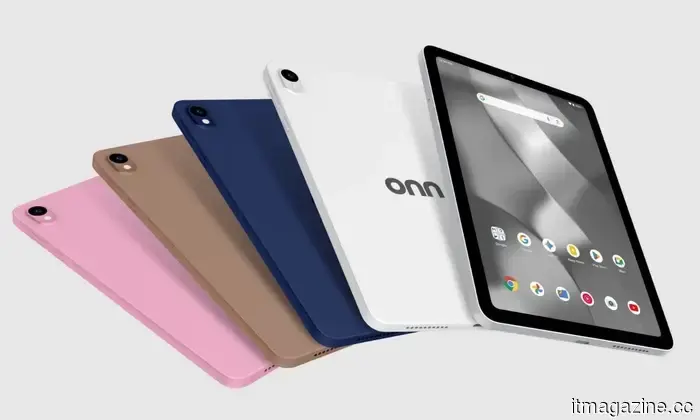 Walmart's new ONN tablets are budget-friendly while offering great value.
Walmart is offering budget tablet customers two new Onn options, which include a compact 8.1-inch version and a larger 13-inch Pro model featuring a big screen, stylus, and Android 16.
Walmart's new ONN tablets are budget-friendly while offering great value.
Walmart is offering budget tablet customers two new Onn options, which include a compact 8.1-inch version and a larger 13-inch Pro model featuring a big screen, stylus, and Android 16.
 Perhaps consider moving away from Gemini and ChatGPT for your AI images. I recently found an alternative that you might like.
Ideogram may not be a substitute for every AI image generator, but its precision in text, formatting options, and remixing features make it worthwhile for creating posters, thumbnails, social media graphics, and other visually-driven designs.
Perhaps consider moving away from Gemini and ChatGPT for your AI images. I recently found an alternative that you might like.
Ideogram may not be a substitute for every AI image generator, but its precision in text, formatting options, and remixing features make it worthwhile for creating posters, thumbnails, social media graphics, and other visually-driven designs.
 Google has sold so much TPU capacity that its own researchers are now waiting their turn for the remaining resources.
Google's TPU framework supports partnerships with Anthropic and Meta. According to Bloomberg, this level of success has turned internal compute access at Google and DeepMind into a highly sought-after asset.
Google has sold so much TPU capacity that its own researchers are now waiting their turn for the remaining resources.
Google's TPU framework supports partnerships with Anthropic and Meta. According to Bloomberg, this level of success has turned internal compute access at Google and DeepMind into a highly sought-after asset.
 Perhaps consider using a different option for your AI images instead of Gemini and ChatGPT. I just found an alternative that might interest you.
Ideogram may not replace all AI image generators, but its precision with text, format controls, and remix features make it a worthwhile option for creating posters, thumbnails, social graphics, and other visuals that require strong design elements.
Perhaps consider using a different option for your AI images instead of Gemini and ChatGPT. I just found an alternative that might interest you.
Ideogram may not replace all AI image generators, but its precision with text, format controls, and remix features make it a worthwhile option for creating posters, thumbnails, social graphics, and other visuals that require strong design elements.
 US and Philippines take action
Under Secretary Helberg toured the New Clark City site alongside American companies. The BCDA proposed a two-year lease grace period but declined Washington's request for diplomatic immunity at the facility.
US and Philippines take action
Under Secretary Helberg toured the New Clark City site alongside American companies. The BCDA proposed a two-year lease grace period but declined Washington's request for diplomatic immunity at the facility.
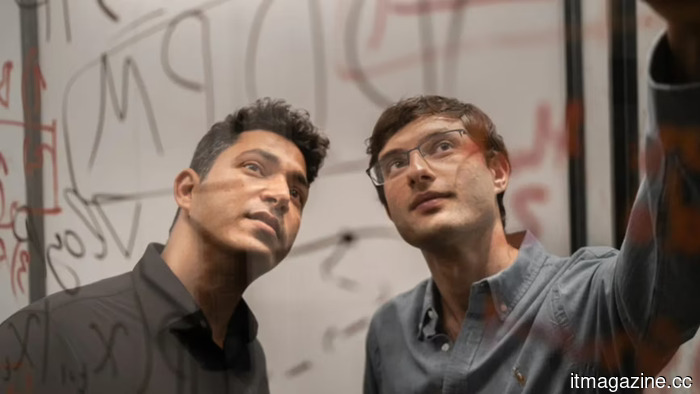 Decart secures $300 million to develop a real-time world model utilizing Amazon's chips.
Decart has secured $300 million, with Radical Ventures leading the round, bringing the total funding for the real-time world-model lab to over $450 million. Participating in this round were NVIDIA, Adobe, Toyota, and eBay Ventures, along with angel investors Karpathy and Eisner.
Decart secures $300 million to develop a real-time world model utilizing Amazon's chips.
Decart has secured $300 million, with Radical Ventures leading the round, bringing the total funding for the real-time world-model lab to over $450 million. Participating in this round were NVIDIA, Adobe, Toyota, and eBay Ventures, along with angel investors Karpathy and Eisner.
Decart secures $300 million to develop a real-time world model utilizing Amazon’s chips.
Decart has secured $300 million in a funding round led by Radical Ventures, bringing the total funding for the real-time world-model lab to over $450 million. NVIDIA, Adobe, Toyota, and eBay Ventures participated in the round, with Karpathy and Eisner also contributing as angel investors.