
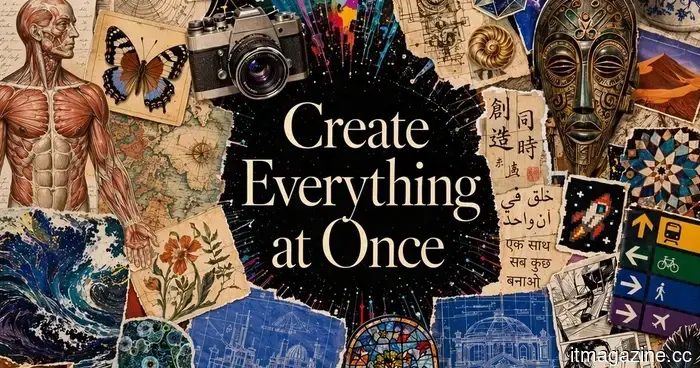
Perhaps consider using a different option for your AI images instead of Gemini and ChatGPT. I just found an alternative that might interest you.
Gemini and ChatGPT are prominent in discussions about AI image generators, yet Ideogram presents a compelling case for attention. It emphasizes the visual work that needs to be produced, such as creator assets and layouts that must adhere to platform specifications on the first attempt.
Its key strength lies in typography. Ideogram is designed for creating posters, banners, social media posts, newsletter graphics, and video thumbnails, excelling at generating readable text within designs. Even a single jumbled word can ruin an otherwise effective graphic.
Users benefit from practical controls, including the ability to refine prompts, four image options for each request, public galleries for inspiration, style selections, dimensions, remixing capabilities, and paid editing through Canvas. These features assist in transforming a rough request into a nearly publishable product.
Reasons users keep returning to Ideogram
Ideogram integrates text placement and format choices from the very beginning of the workflow. For creators working with visually dense assets, this can reduce the repair cycle typically associated with flawed AI-generated images.
Each use of the service provides four generated options, offering a valuable layer of choice before the editing process begins. Its automatic prompt refinement can enhance a vague idea, and public galleries facilitate the exploration of existing images to build upon other concepts.
Limitations of larger tools
Gemini and ChatGPT maintain advantages that Ideogram does not eliminate. Gemini’s Nano Banana Pro is marketed as being adaptable for various applications such as logos, infographics, slide presentations, portraits, and abstract visuals, while ChatGPT excels at creating diagrams and guiding image edits through conversation.
Ideogram
Gemini
ChatGPT
Ideogram excels in a more specific niche. It addresses tasks where creator assets often fall short due to minor details, notably text within the design, reusable styles, adaptable aspect ratios, and quick revisions. For graphics aimed at the public, such minor aspects can be more significant than brand recognition.
Limitations of Ideogram
However, Ideogram does not provide a seamless solution for all users. The free plan comes with limitations, such as restricted daily generations, slower processing, public image creation, and lower-quality JPEG downloads. Paid plans offer additional images, quicker output, more dimensions, negative prompts, and Canvas editing options.
The best strategy is to view Ideogram as a specialist tool. Other platforms like Flux, Adobe Firefly, Gemini, and ChatGPT each possess their own strengths, but Ideogram warrants experimentation when the project relies on clear design copy and standardized formats.
Begin with the free version, but don’t form a judgment based on a single request. Its true value emerges after several iterations, style modifications, and format adjustments.




Other articles
 Decart secures $300 million to develop a real-time world model utilizing Amazon's chips.
Decart has secured $300 million, with Radical Ventures leading the round, bringing the total funding for the real-time world-model lab to over $450 million. Participating in this round were NVIDIA, Adobe, Toyota, and eBay Ventures, along with angel investors Karpathy and Eisner.
Decart secures $300 million to develop a real-time world model utilizing Amazon's chips.
Decart has secured $300 million, with Radical Ventures leading the round, bringing the total funding for the real-time world-model lab to over $450 million. Participating in this round were NVIDIA, Adobe, Toyota, and eBay Ventures, along with angel investors Karpathy and Eisner.
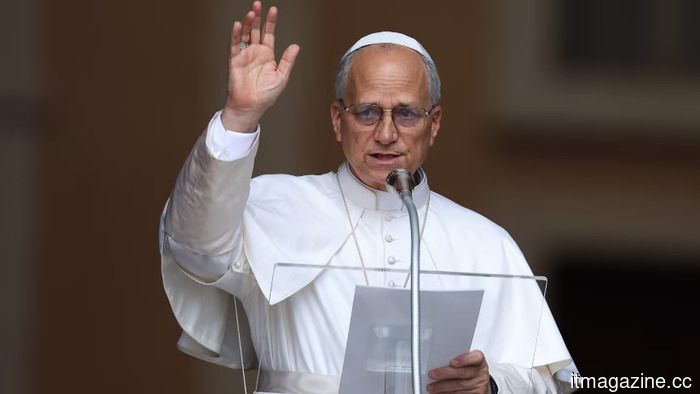 Pope Leo XIV condemns AI warfare and the rearmament in Europe during his first papal visit to La Sapienza since 2008.
The pope cautioned that the conflicts occurring in Ukraine, Gaza, Lebanon, and Iran demonstrate the "inhuman evolution" of warfare and technology. His initial encyclical addressing AI and human dignity is anticipated in the coming weeks.
Pope Leo XIV condemns AI warfare and the rearmament in Europe during his first papal visit to La Sapienza since 2008.
The pope cautioned that the conflicts occurring in Ukraine, Gaza, Lebanon, and Iran demonstrate the "inhuman evolution" of warfare and technology. His initial encyclical addressing AI and human dignity is anticipated in the coming weeks.
 NextEra has reached a $67 billion all-stock agreement to acquire Dominion, marking the largest power acquisition in history.
NextEra Energy has reached an agreement to purchase Dominion Energy for approximately $67 billion in an all-stock transaction, marking the largest acquisition in the power sector to date.
NextEra has reached a $67 billion all-stock agreement to acquire Dominion, marking the largest power acquisition in history.
NextEra Energy has reached an agreement to purchase Dominion Energy for approximately $67 billion in an all-stock transaction, marking the largest acquisition in the power sector to date.
 Two cryptocurrency billionaires are involved in both the Trump family token and the sanctions-evasion mechanism for Iran.
A Reuters investigation connects $2.3 billion in transactions from Iran's largest cryptocurrency exchange, Nobitex, to Tron and BNB Chain.
Two cryptocurrency billionaires are involved in both the Trump family token and the sanctions-evasion mechanism for Iran.
A Reuters investigation connects $2.3 billion in transactions from Iran's largest cryptocurrency exchange, Nobitex, to Tron and BNB Chain.
 US and Philippines take action
Under Secretary Helberg toured the New Clark City site alongside American companies. The BCDA proposed a two-year lease grace period but declined Washington's request for diplomatic immunity at the facility.
US and Philippines take action
Under Secretary Helberg toured the New Clark City site alongside American companies. The BCDA proposed a two-year lease grace period but declined Washington's request for diplomatic immunity at the facility.
 Dust secures $40 million to advance enterprise AI beyond the single-user phase.
Dust has secured $40 million in a Series B funding round co-led by Abstract and Sequoia, with participation from Snowflake and Datadog, to expand its 'multiplayer' agentic workspace for businesses.
Dust secures $40 million to advance enterprise AI beyond the single-user phase.
Dust has secured $40 million in a Series B funding round co-led by Abstract and Sequoia, with participation from Snowflake and Datadog, to expand its 'multiplayer' agentic workspace for businesses.
Perhaps consider using a different option for your AI images instead of Gemini and ChatGPT. I just found an alternative that might interest you.
Ideogram may not replace all AI image generators, but its precision with text, format controls, and remix features make it a worthwhile option for creating posters, thumbnails, social graphics, and other visuals that require strong design elements.