
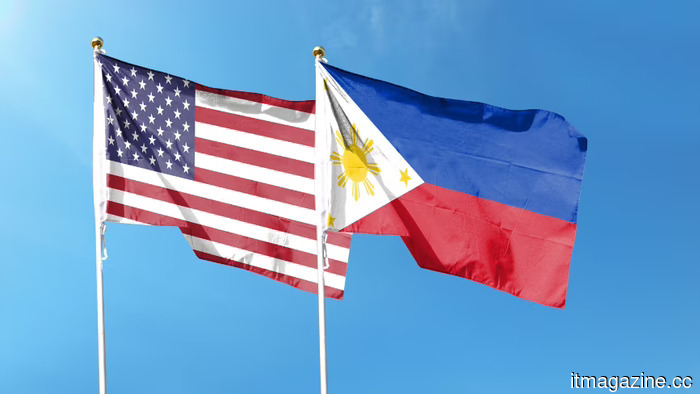
US and Philippines take action
**TL;DR** The United States and the Philippines are rapidly advancing on a 4,000-acre AI and supply chain hub in New Clark City, marking the first physical project under the Pax Silica initiative. Under Secretary of State Jacob Helberg visited the site with American companies, while the Philippines declined a US request for diplomatic immunity at the facility.
The US and the Philippines are quickly progressing on a 4,000-acre AI and supply chain hub in New Clark City, located north of Manila, as reported by Jacob Helberg, the Under Secretary of State for Economic Affairs. On Monday, Helberg toured the prospective site with over a dozen American companies, marking the first high-profile assessment of land designated to become the first "AI-native industrial acceleration hub" under the Pax Silica initiative, which is Washington’s key program for protecting AI and semiconductor supply chains among allied countries.
Situated within the Luzon Economic Corridor, the hub aims to support emerging sectors in AI, digital infrastructure, advanced manufacturing, and critical mineral processing. The Philippines joined Pax Silica in April as the 13th member, joining nations like Australia, Finland, India, Israel, Japan, the Netherlands, Qatar, Singapore, South Korea, the UAE, and the UK. This Clark site represents the first physical facility under the initiative, and its development will serve as a test of whether Pax Silica can transition from diplomatic promises to tangible infrastructure.
**What Pax Silica is building**
The Bases Conversion and Development Authority (BCDA), which oversees the former US military base at Clark, has set aside a 1,618-hectare parcel within New Clark City for this project. The US State Department has labeled it a "Golden Node," a term used for AI-native investment acceleration hubs that aim to function as pivotal points in the alliance’s supply chain strategy. The site is anticipated to serve as a hub for technology firms, research institutions, and government agencies focusing on AI computing infrastructure, semiconductor packaging, and processing essential minerals like nickel, cobalt, and copper, all of which the Philippines produces significantly.
This initiative is part of a broader US strategy to reshape global technology supply chains away from reliance on China, which currently controls about 90 percent of rare earth refining capabilities and dominates various stages of semiconductor production. The strategic premise of Pax Silica is to develop alternative production nodes in allied countries, thereby diminishing the influence any single nation, particularly China, holds over the inputs essential for AI and advanced computing. The Philippines is a fitting choice, as semiconductors comprise about 60 percent of the country's total merchandise exports, though its industry is primarily engaged in the lower-value segments of assembly, testing, and packaging rather than fabrication.
**The investor protection question**
During his remarks on Monday, Helberg emphasized the necessity for “durability and certainty” for American investors. “Investors who are going to spend billions of dollars to construct costly capex need to ensure these investments outlast administrations in both of our countries,” he noted, referring to capital expenditure. This reflects a significant concern, as the Philippines has a six-year presidential term without re-election, making investment agreements arranged by one administration vulnerable to reversal by the next.
A key contentious issue regarding the arrangement is the determination of legal jurisdiction. Reports have indicated that American personnel stationed at the site would receive diplomatic immunity once the hub becomes operational. In contrast, Joshua Bingcang, the CEO of the BCDA, explicitly stated: “That's their request, but we did not agree to that.” This distinction is crucial; placing a 4,000-acre industrial zone under US common law with diplomatic protections would be unprecedented for an overseas commercial installation, raising considerable sovereignty issues for a nation that has spent years negotiating the closure of US military bases in Clark and Subic Bay.
Bingcang has described the arrangement as a “normal commercial agreement,” akin to past projects in Clark involving companies from Japan, Singapore, and South Korea. The BCDA has proposed a two-year grace period on lease payments, considered an in-kind contribution towards the project's development, with annual lease rates determined separately from the third year onward. Although the terms are favorable, they are not exceptional by Southeast Asian special economic zone standards, where governments regularly offer tax incentives and reduced land costs to attract foreign investment.
**The geopolitical context**
The Clark hub is part of a larger US strategy to establish allied infrastructure that mitigates reliance on supply chains dominated by China. This strategy also encompasses chip equipment export controls and domestic manufacturing incentives under the CHIPS Act. The Philippines’ involvement in Pax Silica secures its position more firmly within Washington’s sphere amid intensifying US-China competition for influence in Southeast Asia.
For Manila, the decision has both economic and strategic implications. The Philippines has long aimed to ascend the semiconductor value chain, shifting from assembly and packaging to higher-value design and fabrication. The BCDA has actively sought partnerships with Taiwanese firms like TSMC and UMC, framing the Pax
Other articles
 Google has sold so much TPU capacity that its own researchers are now waiting their turn for the remaining resources.
Google's TPU framework supports partnerships with Anthropic and Meta. According to Bloomberg, this level of success has turned internal compute access at Google and DeepMind into a highly sought-after asset.
Google has sold so much TPU capacity that its own researchers are now waiting their turn for the remaining resources.
Google's TPU framework supports partnerships with Anthropic and Meta. According to Bloomberg, this level of success has turned internal compute access at Google and DeepMind into a highly sought-after asset.
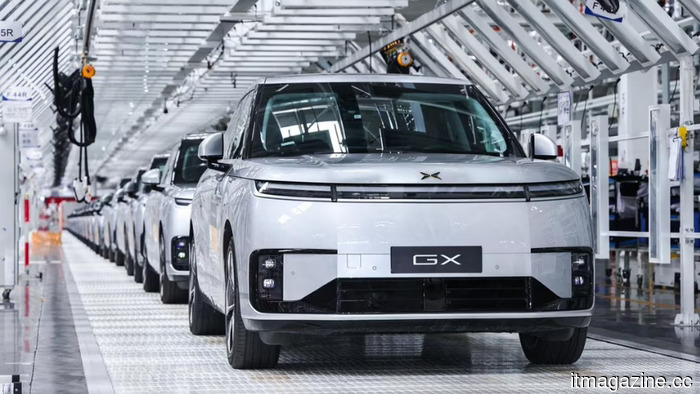 XPeng launches its robotaxi service in Guangzhou, three years later than the frontrunners and ahead of any other Chinese car manufacturer.
XPeng started the production of its robotaxi in Guangzhou on Monday, utilizing VLA 2.0, four Turing chips, and aiming for a fully driverless operation by 2027.
XPeng launches its robotaxi service in Guangzhou, three years later than the frontrunners and ahead of any other Chinese car manufacturer.
XPeng started the production of its robotaxi in Guangzhou on Monday, utilizing VLA 2.0, four Turing chips, and aiming for a fully driverless operation by 2027.
 Google I/O 2026: Gemini Intelligence, Google Books, Android XR glasses, and what to anticipate from the keynote address.
The two-day developer conference is set to start on May 19. Google has already announced agentic AI for Android, a new category of laptops, and Gemini-powered smart glasses from Samsung, Warby Parker, and Gentle Monster.
Google I/O 2026: Gemini Intelligence, Google Books, Android XR glasses, and what to anticipate from the keynote address.
The two-day developer conference is set to start on May 19. Google has already announced agentic AI for Android, a new category of laptops, and Gemini-powered smart glasses from Samsung, Warby Parker, and Gentle Monster.
 Musk’s xAI assured employees they would receive $420 for their tax information. However, two months later, they have yet to see any payment.
xAI, the company founded by Elon Musk, proposed a payment of $420 to its employees for their tax returns to use as training data for Grok before the April 15 deadline. However, two months later, Bloomberg reports that the payments have yet to be issued.
Musk’s xAI assured employees they would receive $420 for their tax information. However, two months later, they have yet to see any payment.
xAI, the company founded by Elon Musk, proposed a payment of $420 to its employees for their tax returns to use as training data for Grok before the April 15 deadline. However, two months later, Bloomberg reports that the payments have yet to be issued.
 Two crypto billionaires are behind both the Trump family token and the mechanism for evading Iran's sanctions.
A Reuters investigation shows that $2.3 billion in transactions from Iran's largest cryptocurrency exchange, Nobitex, are connected to Tron and BNB Chain.
Two crypto billionaires are behind both the Trump family token and the mechanism for evading Iran's sanctions.
A Reuters investigation shows that $2.3 billion in transactions from Iran's largest cryptocurrency exchange, Nobitex, are connected to Tron and BNB Chain.
 Dust secures $40 million to advance enterprise AI beyond the single-user phase.
Dust has secured $40 million in a Series B funding round co-led by Abstract and Sequoia, with participation from Snowflake and Datadog, to expand its 'multiplayer' agentic workspace for businesses.
Dust secures $40 million to advance enterprise AI beyond the single-user phase.
Dust has secured $40 million in a Series B funding round co-led by Abstract and Sequoia, with participation from Snowflake and Datadog, to expand its 'multiplayer' agentic workspace for businesses.
US and Philippines take action
Under Secretary Helberg toured the New Clark City site alongside American companies. The BCDA proposed a two-year lease grace period but declined Washington's request for diplomatic immunity at the facility.