
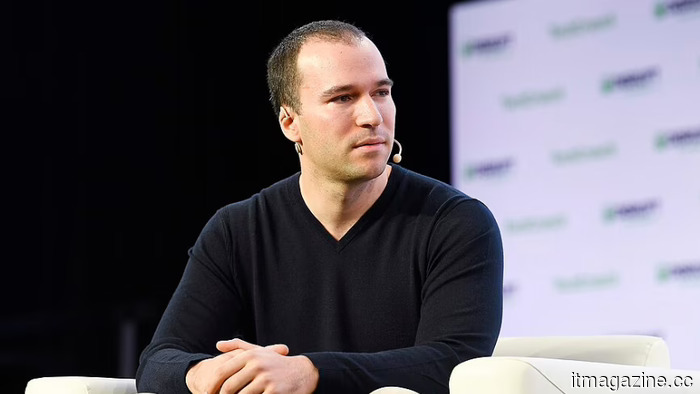
OpenAI has combined ChatGPT and Codex under the leadership of Greg Brockman. The additional projects have concluded.
TL;DR: OpenAI has consolidated ChatGPT, Codex, and its API under Brockman, discontinuing side projects to concentrate on a single platform ahead of its IPO. Co-founder and president Greg Brockman has permanently taken control of the company's product strategy by merging ChatGPT, Codex, and the developer API into one unified product organization. In an internal memo shared with Wired, Brockman stated OpenAI aims to "invest in a single agentic platform," integrating ChatGPT and Codex into a cohesive agentic experience. This restructuring formalizes a temporary setup that started in early April when CEO Fidji Simo took medical leave. Under Brockman, four main pillars have been established: Thibault Sottiaux, who previously advanced Codex’s development, will lead core products across consumer and enterprise sectors; Nick Turley, who expanded ChatGPT’s user base, will focus on enterprise products; Brockman will maintain oversight of AI infrastructure. While Simo worked with Brockman on these changes and is anticipated to return, a timeline has not been provided.
This consolidation follows a strategic shift that began in December when then-CEO Sam Altman announced a "code red," indicating the need to refocus on core ChatGPT functionalities. Since then, OpenAI has discontinued Sora, its video generation app, which consumed significant resources and halted potential investments; it also put away the adult mode for ChatGPT due to internal feedback. OpenAI has described these paused efforts as "side quests."
Brockman mentioned in a recent podcast that the limited computing resources were a driving factor for this consolidation, explaining the necessity to eliminate redundancy and concentrate on one product capable of handling conversation, code generation, tool utilization, and autonomous task execution.
The competitive landscape has ramped up, with Cursor reaching $2 billion in annual revenue and in discussions for a $50 billion valuation. Anthropic’s Claude Code and Google's Gemini have also been gaining traction, with the latter increasing its AI web traffic share from 5.7% to 21.5% over the last year, contrasted with ChatGPT's reduction from 86.7% to 64.5%. As Google I/O 2026 approaches, OpenAI isn’t launching a product but restructuring itself instead.
Additionally, the reorganization aims at preparing for an IPO, targeted for Q4 2026, with a valuation goal of roughly $852 billion. Presenting a streamlined product narrative to institutional investors and establishing a unified revenue model are focal points of this approach. The previous structures caused internal competition for resources and focus.
The timing of these changes coincides with the Musk v. Altman trial over significant damages and legal structure concerns, with key evidence potentially impacting the company’s operations.
The newly integrated platform, referred to internally as an agentic "super app," will be rolled out gradually, beginning with Codex's expansion into productivity tasks before integrating ChatGPT and research tools. No specific launch date has been disclosed. The goal is to create a singular application where users can converse, code, perform multi-step tasks, browse, manage files, and interact with external services, all through one interface supported by the same model and revenue system.
The board's decision to appoint Brockman to lead both product strategy and infrastructure reflects their trust in his capabilities, emphasizing the primary objective to build the platform, deliver the agent, and prepare for the IPO—all while eliminating side projects.
Other articles
 Why workplace infrastructure is a key factor influencing business performance.
Workplace infrastructure, including hybrid office arrangements, collaboration tools, and employee wellness, subtly influences a company's ability to grow or stagnate. Here’s where to allocate your investments.
Why workplace infrastructure is a key factor influencing business performance.
Workplace infrastructure, including hybrid office arrangements, collaboration tools, and employee wellness, subtly influences a company's ability to grow or stagnate. Here’s where to allocate your investments.
 YouTube is providing creators with a new tool to combat AI deepfakes.
YouTube is introducing a new AI safety feature designed to assist creators in identifying deepfake-style videos that use their likeness. This tool operates discreetly in the background, but its significance may grow as AI-generated content becomes more prevalent on the internet.
YouTube is providing creators with a new tool to combat AI deepfakes.
YouTube is introducing a new AI safety feature designed to assist creators in identifying deepfake-style videos that use their likeness. This tool operates discreetly in the background, but its significance may grow as AI-generated content becomes more prevalent on the internet.
 Microsoft is finally addressing the most frustrating aspect of Windows 11.
Microsoft is currently testing one of the most significant interface updates for Windows 11, which subtly reintroduces a feature that many users have longed for over the years. Additionally, the Start menu is undergoing changes, and some of the enhancements appear to be quite considerate.
Microsoft is finally addressing the most frustrating aspect of Windows 11.
Microsoft is currently testing one of the most significant interface updates for Windows 11, which subtly reintroduces a feature that many users have longed for over the years. Additionally, the Start menu is undergoing changes, and some of the enhancements appear to be quite considerate.
 The seven new job titles that have emerged due to AI, ranging from Claude Evangelist to Chief AI Officer.
AI firms are employing philosophers, advocates, vibe coders, and engineers who are strategically placed. Salaries begin at $108,000 and can go up to almost $500,000.
In iOS 27, Apple's Siri app will automatically delete your conversations. It might also be re-released as a beta version.
The independent Siri application provides options for chat retention of 30 days, one year, or indefinitely. Apple seems to be using privacy as a justification for an AI assistant that is two years behind schedule.
The seven new job titles that have emerged due to AI, ranging from Claude Evangelist to Chief AI Officer.
AI firms are employing philosophers, advocates, vibe coders, and engineers who are strategically placed. Salaries begin at $108,000 and can go up to almost $500,000.
In iOS 27, Apple's Siri app will automatically delete your conversations. It might also be re-released as a beta version.
The independent Siri application provides options for chat retention of 30 days, one year, or indefinitely. Apple seems to be using privacy as a justification for an AI assistant that is two years behind schedule.
 Soderbergh utilized Meta's AI in his documentary about Lennon, which received criticism from reviewers. He claims that this was intentional.
The director collaborated with Meta to create 10% of the visuals for his Cannes documentary. He describes transparency as the guiding principle and necessity as the measure of success.
Soderbergh utilized Meta's AI in his documentary about Lennon, which received criticism from reviewers. He claims that this was intentional.
The director collaborated with Meta to create 10% of the visuals for his Cannes documentary. He describes transparency as the guiding principle and necessity as the measure of success.
OpenAI has combined ChatGPT and Codex under the leadership of Greg Brockman. The additional projects have concluded.
Brockman assumes full control of product strategy, combining ChatGPT, Codex, and the API into a single agentic platform in anticipation of a possible IPO in Q4.