
In iOS 27, Apple's Siri app will automatically delete your conversations. It might also be re-released as a beta version.
**TL;DR** Apple’s iOS 27 Siri app will automatically erase chats after 30 days or one year. Despite a two-year delay, it might still be released as a beta version.
Apple's inaugural standalone Siri app, set to debut in iOS 27, will feature an auto-delete option for chat histories similar to that of the Messages app. Users will have the choice to keep conversations for 30 days, one year, or indefinitely. This feature, detailed by Bloomberg’s Mark Gurman in his Power On newsletter, aims to differentiate Apple's AI privacy approach from competitors that provide temporary or incognito chat modes as optional features that require user activation.
The Siri app will operate as a chatbot, akin to ChatGPT or Claude, enabling users to search, continue, or delete their previous interactions. It can be accessed through the typical Siri activation methods, like the side button or wake word, or via a new “Search or Ask” mode activated by swiping down from the top center of the screen. The app will accommodate both voice and text inputs, alongside file uploads and web-sourced responses that include images and bullet points. Users can choose whether the app opens to a grid of past conversations or starts a new chat each time.
Apple’s privacy architecture serves as its competitive edge and justification. Competing chatbots depend significantly on chat histories and memory systems to tailor responses and enhance performance over time. In contrast, Apple imposes stricter limits on data retention, embedding these restrictions in the system rather than presenting them as optional features. This comes amid the backdrop of Meta launching a temporary chat feature recently, with Apple asserting that such privacy measures should not necessitate user consent.
The strategic landscape surrounding this privacy positioning adds an intriguing layer. Apple has quietly transitioned much of its AI infrastructure to Google’s Gemini, investing approximately $1 billion annually for a custom 1.2-trillion-parameter model that will power the future Siri. Meanwhile, the company's partnership with OpenAI seems to be deteriorating, particularly as OpenAI’s legal team contemplates action over an unfruitful ChatGPT-Siri deal that fell short of expected subscription revenue. iOS 27 will introduce a system called Extensions, allowing users to access alternative AI chatbots and direct Siri queries through any model of their choice, including Claude and Gemini, effectively demoting ChatGPT from a key partner to just one of several options.
Gurman points out that Apple has not provided detailed insights into the hosting and operation of the new Siri infrastructure at scale. While the company has mentioned that the redesigned Siri will utilize Private Cloud Compute, which extends the iPhone’s security features to the cloud, it has not confirmed whether it will rely on the same Apple-designed chips, data centers, and security systems as the existing setup. This suggests that part of the workload may be handled by Google’s cloud services—an aspect Apple is reluctant to highlight given its privacy stance.
The auto-delete feature serves as a smart marketing strategy regardless of the coherence of the privacy argument. By establishing structured retention limits instead of permanent storage, Apple can portray its AI assistant as being designed to forget, contrasting it with systems intended to remember everything for improvement. Whether users will appreciate this distinction hinges on their awareness of the trade-off: a Siri that forgets preferences after 30 days is also one that cannot learn from user history like ChatGPT or Claude can.
A notable aspect from Gurman’s report is that the new Siri may launch as a beta, even after a two-year delay. Initially, the upgraded assistant was slated for 2024. Current test versions of iOS 27 in Apple carry a beta label for the new Siri, with an option for users to opt out. Additionally, Apple is concurrently developing AI smart glasses for 2027, which will utilize the same Gemini-powered Siri as their main interface, necessitating that the assistant functions effectively across various formats by next year.
Gurman clearly outlines the stakes: Tim Cook aims to ensure his final launch as CEO is not a setback. Apple received "some slack" with the original rollout of Apple Intelligence in 2024, but the competitive and regulatory landscape has evolved. Google’s Gemini has increased its web traffic share significantly, and the EU is likely to compel both Apple and Google to make their AI assistants accessible to rivals under the Digital Markets Act. The announcement of Android 17, which will come equipped with a Gemini Intelligence system and a new Googlebook laptop platform, adds to the pressure on Apple, which is entering the market with a Siri that is two years overdue, relying on a competitor's model, and potentially still marked as unfinished.
The Genmoji upgrade represents the lightest aspect of the iOS 27 narrative but follows a similar trend. Apple’s AI-generated emoji feature faced criticism at launch due to images not matching advertised appearances and excessive power consumption that caused devices to overheat and drain batteries. iOS 27 will introduce “Suggested Genmoji,”
Other articles
 Dr. Jeffrey L. Brown discusses the need to reevaluate hormone health by utilizing advanced testing methods.
Dr. Jeffrey L. Brown utilizes saliva, stool, and food sensitivity testing to identify hormonal imbalances that typical blood tests overlook, providing tailored care through a primarily virtual approach.
Dr. Jeffrey L. Brown discusses the need to reevaluate hormone health by utilizing advanced testing methods.
Dr. Jeffrey L. Brown utilizes saliva, stool, and food sensitivity testing to identify hormonal imbalances that typical blood tests overlook, providing tailored care through a primarily virtual approach.
 Why workplace infrastructure is a key factor influencing business performance.
Workplace infrastructure, including hybrid office arrangements, collaboration tools, and employee wellness, subtly influences a company's ability to grow or stagnate. Here’s where to allocate your investments.
Why workplace infrastructure is a key factor influencing business performance.
Workplace infrastructure, including hybrid office arrangements, collaboration tools, and employee wellness, subtly influences a company's ability to grow or stagnate. Here’s where to allocate your investments.
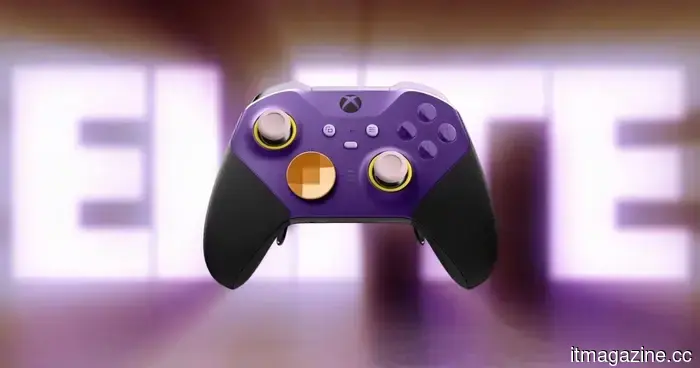 A leak regarding the Xbox Elite 3 controller reveals a recognizable design adorned with some intriguing buttons.
A leaked Xbox Elite Controller Series 3 seems to maintain Microsoft's signature pro design, while incorporating Wi-Fi 6, Bluetooth, and two unknown controls at the bottom.
A leak regarding the Xbox Elite 3 controller reveals a recognizable design adorned with some intriguing buttons.
A leaked Xbox Elite Controller Series 3 seems to maintain Microsoft's signature pro design, while incorporating Wi-Fi 6, Bluetooth, and two unknown controls at the bottom.
 Why workplace infrastructure is a subtle catalyst for business performance.
Workplace infrastructure, including hybrid office arrangements, collaboration tools, and employee wellness, subtly influences a company's growth or stagnation. Here’s what to focus your investments on.
Why workplace infrastructure is a subtle catalyst for business performance.
Workplace infrastructure, including hybrid office arrangements, collaboration tools, and employee wellness, subtly influences a company's growth or stagnation. Here’s what to focus your investments on.
 Edifier’s latest budget headphones feature song lyrics displayed on the earcups, and I'm perplexed.
Edifier has introduced the Auro Ace budget headphones, featuring a customizable dot-matrix display capable of displaying synchronized lyrics and animations in real time.
Edifier’s latest budget headphones feature song lyrics displayed on the earcups, and I'm perplexed.
Edifier has introduced the Auro Ace budget headphones, featuring a customizable dot-matrix display capable of displaying synchronized lyrics and animations in real time.
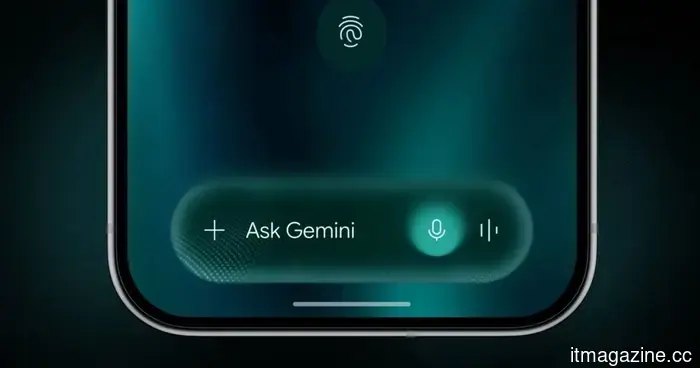 Google's Rambler might make voice typing an experience I actually enjoy.
Google's Rambler appears to be a minor enhancement to Gboard, yet it could discreetly address a genuine issue by transforming chaotic spoken ideas into messages that you would likely send.
Google's Rambler might make voice typing an experience I actually enjoy.
Google's Rambler appears to be a minor enhancement to Gboard, yet it could discreetly address a genuine issue by transforming chaotic spoken ideas into messages that you would likely send.
In iOS 27, Apple's Siri app will automatically delete your conversations. It might also be re-released as a beta version.
The independent Siri application provides options for chat retention of 30 days, one year, or indefinitely. Apple seems to be using privacy as a justification for an AI assistant that is two years behind schedule.