
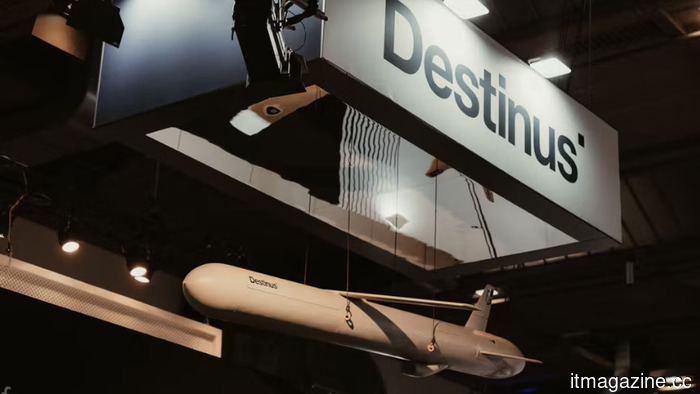
Destinus is seeking to raise €200 million prior to its initial public offering (IPO). The manufacturer of cruise missiles aims for a valuation of €5 billion.
**TL;DR:** Dutch defense startup Destinus is aiming to secure €200 million at a valuation exceeding €5 billion prior to a planned IPO in Amsterdam, according to Bloomberg reports.
Based in the Netherlands, Destinus specializes in cruise missiles and autonomous drones and is currently negotiating to raise about €200 million ahead of its initial public offering (IPO). Bloomberg noted that the company is striving for a valuation above €5 billion, supported by anticipated annual revenues of approximately €500 million.
Founded in 2021 by Mikhail Kokorich, a physicist and serial entrepreneur from Russia who renounced his citizenship in 2024 in protest of the conflict in Ukraine, Destinus has evolved from a hypersonic aviation research initiative into a key player in Europe’s defense industry. The startup has a workforce of 750 engineers and specialists across production sites in the Netherlands, Germany, Spain, and Ukraine, producing over 2,000 cruise missile systems each year.
The company's primary product is the Ruta, a cruise missile system that has been validated for operational use and deployed by Ukrainian forces since 2023. In early 2026, Destinus introduced the Ruta Block2, which can carry a 250-kilogram payload over a distance of up to 450 kilometers. The product lineup also features the Hornet interceptor drone, currently undergoing testing by the French Army, and various long-range autonomous strike platforms that are still in development.
To date, Destinus has raised nearly €400 million, which includes €140 million in convertible instruments and shareholder loans, as well as a €50 million financing facility from Commerzbank secured in December 2025, marking the startup's initial commercial banking support. Last year, the company also reached an agreement to acquire the Swiss autonomous pilot startup Daedalean for $225 million, one of Europe’s largest defense technology acquisitions, aimed at enhancing its AI and autonomous flight capabilities.
A significant recent development is the joint venture with Rheinmetall, Germany's largest defense contractor. Announced in April, Rheinmetall Destinus Strike Systems will focus on manufacturing, marketing, and delivering cruise missiles and ballistic rocket artillery, with operations expected to commence in the latter half of 2026. Rheinmetall will hold a 51% stake, while Destinus will retain 49%. This partnership will merge Destinus’s design and engineering capabilities with Rheinmetall’s industrial capacity for qualification and mass production, addressing the gap between European defense demand and its limited manufacturing capabilities.
If successful, the pre-IPO capital raise would enable Destinus to proceed with its listing on the Amsterdam stock exchange. The defense-tech sector is attracting investment at an unprecedented pace: recently, US-based Anduril raised $5 billion at a valuation of $61 billion. In Europe, Munich-based Helsing is attempting to raise $1.2 billion at an $18 billion valuation, potentially placing it among the continent's five most valuable private tech companies. Last year, Quantum Systems became Germany's first defense-tech unicorn. Global defense tech venture capital reached a record $49.1 billion in 2025, nearly double the amount from the previous year.
Destinus's valuation target of €5 billion at a 10x revenue multiple is ambitious but aligns with current sector pricing. Helsing’s latest funding round suggests a multiple of around 15x projected revenue, while Anduril’s valuation indicates a similar premium. These multiples reflect investors’ confidence that European defense spending, fueled by the Ukraine conflict, rising tensions with Russia, and the EU’s ReArm Europe initiative, which aims to mobilize up to €800 billion over four years, will maintain demand for autonomous strike systems beyond the production capabilities of traditional defense contractors.
Kokorich’s background adds both credibility and complexity to the narrative. Prior to founding Destinus, he established Russia’s first private space company, Dauria, in 2011, then moved to the United States in 2012 to create satellite companies Astro Digital and Momentus. Momentus secured over $100 million in funding and reached a valuation of $4 billion prior to its SPAC merger. In 2021, Kokorich shifted to Europe to start Destinus. His track record in establishing and leveraging technology firms across various regions is well established. Despite renouncing his Russian citizenship, his origins may still raise considerations for defense-minded investors; however, this has not hindered collaborations with Rheinmetall, Thales, or the Ukrainian military.
The landscape of the European defense-tech sector is expanding beyond a few unicorns that have dominated headlines. Recently, Norwegian counter-drone startup Stendr completed a pre-seed funding round. The EU’s European Defence Industry Programme, which received adoption in March 2026 with a budget of €1.47 billion, allocates funding specifically for counter-drone acquisitions. The sector is transitioning from venture-backed prototyping to large-scale production, and Destinus, with
Other articles
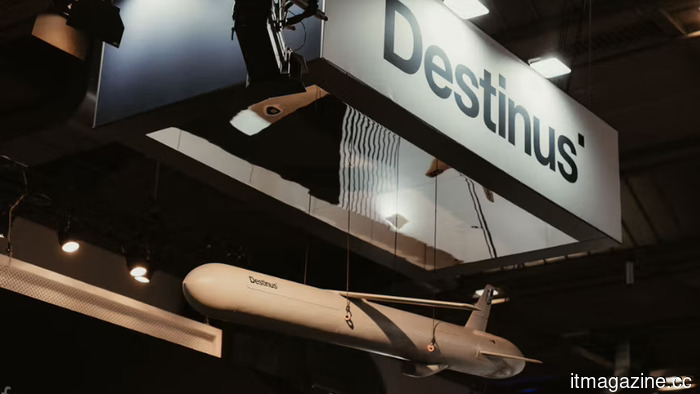 Destinus is seeking to raise €200 million in preparation for an IPO. The cruise missile manufacturer aims for a valuation of €5 billion.
The Dutch defense startup produces drones and cruise missiles for Ukraine and its European partners. It has already established a joint venture with Rheinmetall.
Destinus is seeking to raise €200 million in preparation for an IPO. The cruise missile manufacturer aims for a valuation of €5 billion.
The Dutch defense startup produces drones and cruise missiles for Ukraine and its European partners. It has already established a joint venture with Rheinmetall.
 Chinese electric vehicles are making their way to Canada, with almost 400 dealerships already competing to sell them.
Canada has reduced tariffs on Chinese electric vehicles to 6.1% while setting a limit of 49,000 units. Dealers are eagerly preparing, Trump describes it as a disaster, and the initial cars have arrived.
Chinese electric vehicles are making their way to Canada, with almost 400 dealerships already competing to sell them.
Canada has reduced tariffs on Chinese electric vehicles to 6.1% while setting a limit of 49,000 units. Dealers are eagerly preparing, Trump describes it as a disaster, and the initial cars have arrived.
 The individual who introduced a Roomba to every household aims to substitute your dog with a soft robot.
Colin Angle's latest startup, Familiar Machines, has come out of stealth mode with an AI pet that accompanies you, adapts to your behaviors, and does not require feeding.
The individual who introduced a Roomba to every household aims to substitute your dog with a soft robot.
Colin Angle's latest startup, Familiar Machines, has come out of stealth mode with an AI pet that accompanies you, adapts to your behaviors, and does not require feeding.
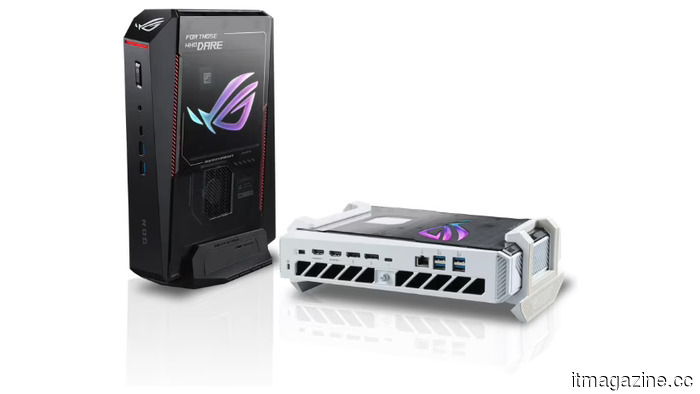 Asus packed an RTX 5080 into a 3-litre case. Priced at $4,400, it offers a performance increase of 2.3%.
The ROG NUC 16 combines Intel's Core Ultra 9 290HX with an RTX 5080 laptop GPU, all housed in a chassis smaller than a PS5. The anticipated global price is around $4,000.
Asus packed an RTX 5080 into a 3-litre case. Priced at $4,400, it offers a performance increase of 2.3%.
The ROG NUC 16 combines Intel's Core Ultra 9 290HX with an RTX 5080 laptop GPU, all housed in a chassis smaller than a PS5. The anticipated global price is around $4,000.
 Cerebras has just completed the largest tech IPO in the US since Snowflake. Next in line are SpaceX, OpenAI, and Anthropic.
Cerebras secured $5.55 billion and reached a valuation of $95 billion. However, the $3 trillion in total IPOs from SpaceX, OpenAI, and Anthropic makes everything else appear minor in comparison.
Cerebras has just completed the largest tech IPO in the US since Snowflake. Next in line are SpaceX, OpenAI, and Anthropic.
Cerebras secured $5.55 billion and reached a valuation of $95 billion. However, the $3 trillion in total IPOs from SpaceX, OpenAI, and Anthropic makes everything else appear minor in comparison.
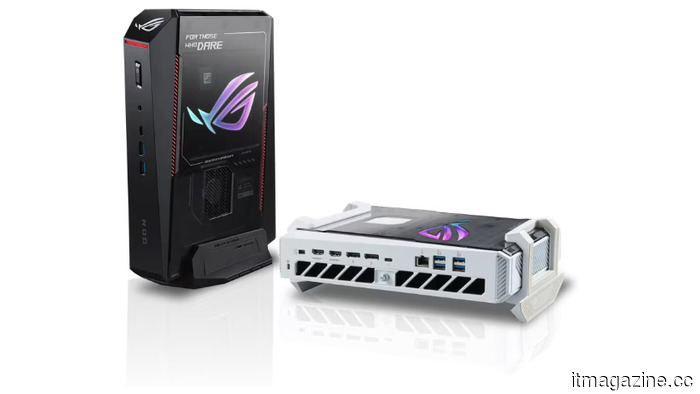 Asus packed an RTX 5080 into a 3-liter enclosure. Priced at $4,400, it offers a performance increase of 2.3%.
The ROG NUC 16 combines Intel's Core Ultra 9 290HX with an RTX 5080 laptop GPU in a case that is smaller than a PS5. The worldwide price is anticipated to be around $4,000.
Asus packed an RTX 5080 into a 3-liter enclosure. Priced at $4,400, it offers a performance increase of 2.3%.
The ROG NUC 16 combines Intel's Core Ultra 9 290HX with an RTX 5080 laptop GPU in a case that is smaller than a PS5. The worldwide price is anticipated to be around $4,000.
Destinus is seeking to raise €200 million prior to its initial public offering (IPO). The manufacturer of cruise missiles aims for a valuation of €5 billion.
The Dutch defense startup produces drones and cruise missiles for Ukraine and its European allies. It has already formed a joint venture with Rheinmetall.