
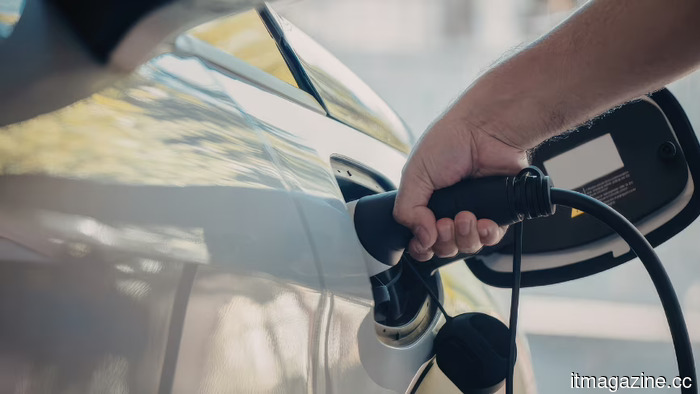
Chinese electric vehicles are making their way to Canada, with almost 400 dealerships already competing to sell them.
**TL;DR** Canada has reduced tariffs on Chinese electric vehicles (EVs) to 6.1% with a cap of 49,000 vehicles per year. Nearly 400 dealers are interested in selling BYD, Geely, and Chery.
Michael MacGillivray, CEO of Century Auto Group and Sigma Auto Group, manages 10 dealerships in Nova Scotia and New Brunswick. In April, he attended the Beijing Auto Show, where he interacted with Chinese automakers and tested their vehicles, returning impressed by their materials and styling. He is now aiming to be among the first Canadian dealers to offer imported Chinese EVs.
He is not the only one; Farid Ahmad, CEO of DSMA, an auto dealership brokerage in Toronto, reports that his company has received nearly 400 inquiries from dealers across Canada seeking to represent Chinese brands like BYD, Geely, and Chery. "From their perspective, it provides them with a foothold in the North American market,” Ahmad stated.
This shift follows a trade agreement made in January between Canadian Prime Minister Mark Carney and Chinese President Xi Jinping, which significantly cut Canada's tariff on Chinese EVs from 100% to 6.1% for the first 49,000 imports each year. Any vehicles beyond this cap will still incur the previous 100% surtax effective October 2024. In return, China has reduced tariffs on Canadian canola from 85% to around 15% and removed anti-discrimination tariffs on Canadian rapeseed meal, lobsters, crabs, and peas.
The quota operates from March to February, divided into two six-month periods of 24,500 permits each, allocated on a first-come-first-served basis by the Canada Border Services Agency. This 49,000-unit limit accounts for less than 3% of Canada’s annual new vehicle market, which saw over 1.9 million sales last year. By 2030, the quota is set to increase to 70,000 vehicles, and the Canadian government aims for at least half of these imports to consist of affordable models priced below C$35,000 (around US$26,000) within five years.
Initial shipments from Chinese manufacturers are already arriving, with Chery exporting vehicles from its Jaecoo, Omoda, and Exelantis sub-brands, and Geely's Lotus delivering 18 Eletre electric SUVs, marking the first Chinese vehicles to enter Canada under this new trade agreement. The price of the Lotus Eletre in Canada has approximately halved following the tariff reduction. BYD has also registered vehicles made in Shenzhen and Xi’an with Transport Canada. A BYD Seagull, priced at C$12,000 ex-factory, could enter Canada for about C$14,000 post-tariff and shipping, and may retail for between C$20,000 and C$25,000, offering a new entry point in the sub-C$30,000 EV segment which currently does not exist in Canada.
The political reaction has been strong. The Canadian Vehicle Manufacturers’ Association, representing GM, Ford, and Stellantis, has described the move as “deeply concerning,” asserting that Chinese state subsidies undermine domestic competitors and that connected vehicle hardware poses security risks. Ontario Premier Doug Ford referred to the imported vehicles as “spy vehicles.” In the US, over 120 House lawmakers urged President Trump to prohibit Chinese automakers, with bipartisan legislation introduced on May 12 aimed at banning the import of connected vehicles and components related to China.
Trump himself labeled Canada’s decision as “a disaster.” US Transportation Secretary Sean Duffy expressed on X that “Canada will regret the day they allowed the Chinese Communist Party to inundate North America with their EVs.” However, Trump has had mixed responses, later acknowledging at a White House event that Carney was right to finalize a trade deal with China, and showing interest in allowing Chinese automakers to establish factories in the US.
Chinese EVs are already gaining visibility on American TikTok and YouTube platforms, creating consumer interest in vehicles not legally available for sale in the US. Canada's trade openness allows North Americans to visit Canadian dealerships and experience vehicles from BYD or Chery firsthand, even if purchases cannot be made domestically. This proximity increases pressure on US policies that depend on a 100% tariff barrier to block Chinese vehicles from a market where the average new car costs over $49,000.
Michael Robinet, vice president of forecast strategy at S&P Global Mobility, characterized Canada’s approach as cautious. “A 3% to 5% market share is significant but will not drastically alter the competitive landscape,” he noted. However, the agreement is structured to escalate: the quota will rise to 70,000 by 2030, Chinese manufacturers must form joint ventures in Canada within three years, and pricing requirements will become stricter over time.
In 2025, BYD surpassed Tesla
Other articles
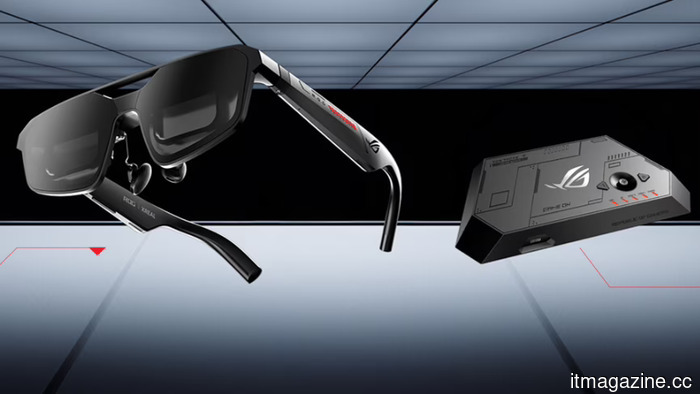 Asus ROG and Xreal have created the first AR gaming glasses with a 240Hz refresh rate. Priced at $849, they will be available for shipping in June.
The ROG Xreal R1 features dual Sony micro-OLED screens, a virtual display measuring 171 inches, and Bose audio, all within a weight of 91 grams. Pre-orders are available now on Best Buy.
Asus ROG and Xreal have created the first AR gaming glasses with a 240Hz refresh rate. Priced at $849, they will be available for shipping in June.
The ROG Xreal R1 features dual Sony micro-OLED screens, a virtual display measuring 171 inches, and Bose audio, all within a weight of 91 grams. Pre-orders are available now on Best Buy.
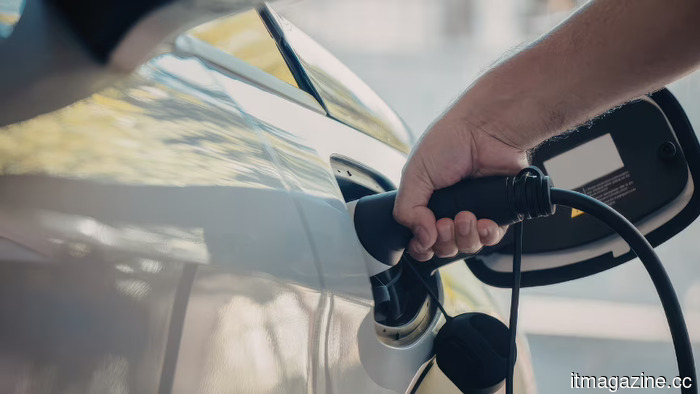 Chinese electric vehicles are making their way to Canada, with almost 400 dealers already competing to sell them.
Canada reduced tariffs on Chinese electric vehicles to 6.1%, setting a limit of 49,000 units. Dealers are eager to participate, Trump labels it a catastrophe, and the initial cars have arrived.
Chinese electric vehicles are making their way to Canada, with almost 400 dealers already competing to sell them.
Canada reduced tariffs on Chinese electric vehicles to 6.1%, setting a limit of 49,000 units. Dealers are eager to participate, Trump labels it a catastrophe, and the initial cars have arrived.
 ArXiv implements a one-year prohibition for researchers who submit papers containing unverified AI-generated material.
The preprint platform will impose penalties on authors whose manuscripts include fictional references or remnants of LLM directives. A study published in The Lancet revealed that instances of fabricated citations in biomedical research increased twelve times since 2023.
ArXiv implements a one-year prohibition for researchers who submit papers containing unverified AI-generated material.
The preprint platform will impose penalties on authors whose manuscripts include fictional references or remnants of LLM directives. A study published in The Lancet revealed that instances of fabricated citations in biomedical research increased twelve times since 2023.
 Cerebras has just completed the largest tech IPO in the US since Snowflake. Next in line are SpaceX, OpenAI, and Anthropic.
Cerebras secured $5.55 billion and reached a valuation of $95 billion. However, the $3 trillion in total IPOs from SpaceX, OpenAI, and Anthropic makes everything else appear minor in comparison.
Cerebras has just completed the largest tech IPO in the US since Snowflake. Next in line are SpaceX, OpenAI, and Anthropic.
Cerebras secured $5.55 billion and reached a valuation of $95 billion. However, the $3 trillion in total IPOs from SpaceX, OpenAI, and Anthropic makes everything else appear minor in comparison.
 A student equipped with a laptop and a radio was able to halt four high-speed trains. The encryption keys had remained unchanged for 19 years.
A 23-year-old in Taiwan took advantage of unaddressed TETRA radio vulnerabilities that have existed since 2007 to initiate emergency stops on four trains. He could be sentenced to as much as 10 years in prison.
A student equipped with a laptop and a radio was able to halt four high-speed trains. The encryption keys had remained unchanged for 19 years.
A 23-year-old in Taiwan took advantage of unaddressed TETRA radio vulnerabilities that have existed since 2007 to initiate emergency stops on four trains. He could be sentenced to as much as 10 years in prison.
 A student equipped with a laptop and a radio interrupted four high-speed trains. The crypto keys had remained unchanged for 19 years.
A 23-year-old in Taiwan took advantage of TETRA radio vulnerabilities that have remained unchanged since 2007 to activate emergency brakes on four trains. He could face a prison sentence of up to 10 years.
A student equipped with a laptop and a radio interrupted four high-speed trains. The crypto keys had remained unchanged for 19 years.
A 23-year-old in Taiwan took advantage of TETRA radio vulnerabilities that have remained unchanged since 2007 to activate emergency brakes on four trains. He could face a prison sentence of up to 10 years.
Chinese electric vehicles are making their way to Canada, with almost 400 dealerships already competing to sell them.
Canada has reduced tariffs on Chinese electric vehicles to 6.1% while setting a limit of 49,000 units. Dealers are eagerly preparing, Trump describes it as a disaster, and the initial cars have arrived.