
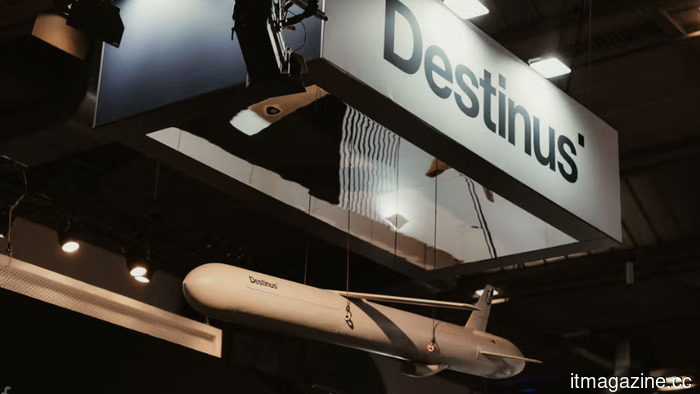
Destinus is seeking to raise €200 million in preparation for an IPO. The manufacturer of cruise missiles aims for a valuation of €5 billion.
TL;DR: Dutch defense startup Destinus is aiming to raise €200 million at a valuation exceeding €5 billion ahead of a prospective IPO in Amsterdam, according to Bloomberg.
Destinus, a defense startup based in the Netherlands that produces cruise missiles and autonomous drones, is in discussions to secure around €200 million prior to a planned initial public offering, as reported by Bloomberg on Friday, citing sources familiar with the situation. The company is targeting a valuation above €5 billion, supported by projected annual revenues of approximately €500 million.
Founded in 2021 by Mikhail Kokorich, a Russian-born physicist and serial entrepreneur who renounced his Russian citizenship in 2024 to protest the war in Ukraine, Destinus has evolved from a hypersonic aviation research initiative into one of Europe’s pivotal defense industry players. The startup employs 750 engineers and specialists in production facilities across the Netherlands, Germany, Spain, and Ukraine, manufacturing over 2,000 cruise missile systems annually.
The company's product range focuses on the Ruta, a cruise missile system that has been validated and utilized by Ukrainian armed forces since 2023. In early 2026, Destinus launched the Ruta Block2, which can carry a 250-kilogram payload and has a range of up to 450 kilometers. The lineup also features the Hornet interceptor drone, undergoing testing with the French Army, along with longer-range autonomous strike platforms being developed.
To date, Destinus has raised nearly €400 million, including €140 million through convertible instruments and shareholder loans, and a €50 million financing deal from Commerzbank secured in December 2025, marking the company's first commercial bank financing. Last year, it agreed to acquire the Swiss autonomous pilot startup Daedalean for $225 million, one of Europe's largest defense tech acquisitions, aimed at enhancing its AI and autonomous flight capabilities.
A significant recent development is a joint venture with Rheinmetall, Germany's leading defense contractor. Rheinmetall Destinus Strike Systems, announced in April, will manufacture, market, and deliver cruise missiles and ballistic rocket artillery, with operations expected to commence in the latter half of 2026. Rheinmetall will hold a 51% stake, while Destinus will hold 49%. This partnership merges Destinus's design and engineering expertise with Rheinmetall's industrial capacity for qualification and mass production, a model intended to address the gap between European defense demand and the continent’s limited manufacturing capabilities.
If successful, the pre-IPO fundraising would prepare Destinus for a listing on the Amsterdam stock exchange. The global defense-tech sector is attracting investment at an unprecedented rate, with the US-based company Anduril raising $5 billion at a valuation of $61 billion last week. In Europe, Munich's Helsing aims to raise $1.2 billion at an $18 billion valuation, which would position it among the continent's five most valuable private tech firms. Last year, Quantum Systems became Germany’s first defense-tech unicorn. Global defense tech venture capital reached a record $49.1 billion in 2025, nearly double that of the previous year.
Destinus's €5 billion target valuation at a 10x revenue multiple is ambitious but aligns with current market trends. Helsing's latest funding round suggests a valuation of roughly 15x projected revenue, reflecting a similar premium as seen with Anduril. These multiples indicate investor belief that European defense spending—fuelled by the Ukraine conflict, increased tensions with Russia, and the EU’s ReArm Europe initiative aiming to mobilize up to €800 billion over four years—will maintain demand for autonomous strike systems at levels that traditional defense contractors are unable to meet swiftly.
Kokorich's background brings both credibility and complexity. Prior to Destinus, he founded Russia's first private space company, Dauria, in 2011, then emigrated to the US in 2012, launching satellite companies Astro Digital and Momentus. Momentus raised over $100 million and reached a valuation of $4 billion before merging with a SPAC. In 2021, Kokorich moved to Europe and established Destinus. His track record in building and monetizing technology companies across different regions is well recognized. Although his Russian heritage remains a consideration for defense-focused investors, it has not hindered partnerships with Rheinmetall, Thales, or the Ukrainian military.
The European defense-tech ecosystem is expanding beyond a few unicorns that have previously dominated the news. Norwegian counter-drone startup Stendr secured a pre-seed funding round last week. The EU’s European Defence Industry Programme, adopted in March 2026 with a €1.47 billion budget, allocates specific funding for counter-drone acquisitions. The sector appears to be transitioning from startup prototyping to large-scale production, and Destinus, with its joint venture with Rheinmetall, its annual output of 2,000 missiles, and its operational success in Ukraine, is positioning itself as a
Other articles
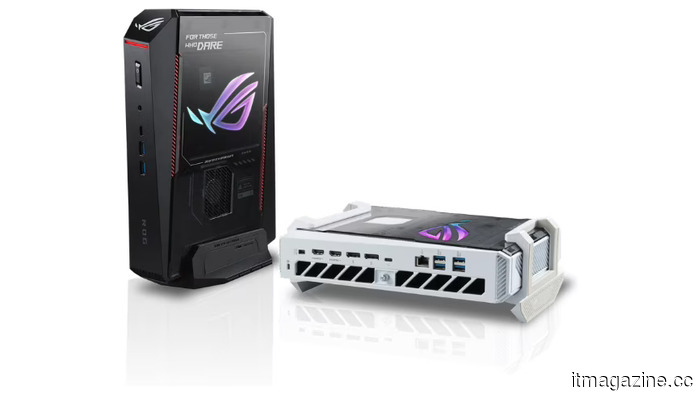 Asus packed an RTX 5080 into a 3-litre chassis. It is priced at $4,400, and the improvement in performance is 2.3%.
The ROG NUC 16 combines Intel's Core Ultra 9 290HX with an RTX 5080 laptop GPU in a case that is smaller than a PS5. The anticipated global price is around $4,000.
Asus packed an RTX 5080 into a 3-litre chassis. It is priced at $4,400, and the improvement in performance is 2.3%.
The ROG NUC 16 combines Intel's Core Ultra 9 290HX with an RTX 5080 laptop GPU in a case that is smaller than a PS5. The anticipated global price is around $4,000.
 Chinese electric vehicles are now making their way to Canada, with almost 400 dealers competing to sell them.
Canada has reduced tariffs on Chinese electric vehicles to 6.1%, imposing a limit of 49,000 units. Dealers are preparing for this opportunity, while Trump refers to it as a disaster, and the initial shipments of cars have arrived.
Chinese electric vehicles are now making their way to Canada, with almost 400 dealers competing to sell them.
Canada has reduced tariffs on Chinese electric vehicles to 6.1%, imposing a limit of 49,000 units. Dealers are preparing for this opportunity, while Trump refers to it as a disaster, and the initial shipments of cars have arrived.
 GM, Ford, and Stellantis have reduced their workforce by 20,000 white-collar positions. The trend is set to intensify with the rise of AI.
Since 2022, Detroit's Big Three have reduced their total salaried workforce by 19%. GM recently laid off an additional 500 IT employees while simultaneously recruiting for 250 positions in AI.
GM, Ford, and Stellantis have reduced their workforce by 20,000 white-collar positions. The trend is set to intensify with the rise of AI.
Since 2022, Detroit's Big Three have reduced their total salaried workforce by 19%. GM recently laid off an additional 500 IT employees while simultaneously recruiting for 250 positions in AI.
 Destinus is securing €200 million in preparation for an IPO. The manufacturer of cruise missiles aims for a valuation of €5 billion.
The Dutch defense startup produces drones and cruise missiles for Ukraine and its European allies. It has already formed a joint venture with Rheinmetall.
Destinus is securing €200 million in preparation for an IPO. The manufacturer of cruise missiles aims for a valuation of €5 billion.
The Dutch defense startup produces drones and cruise missiles for Ukraine and its European allies. It has already formed a joint venture with Rheinmetall.
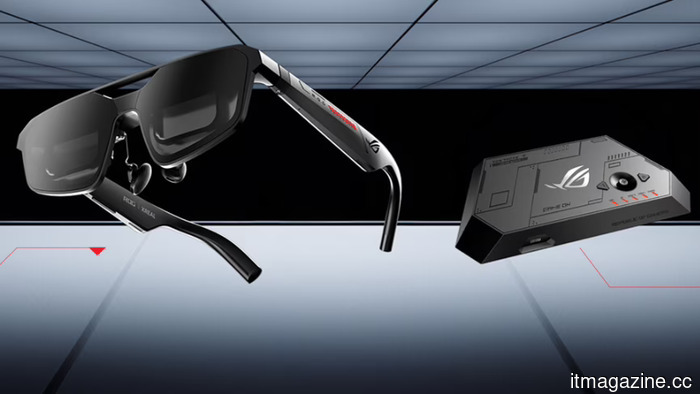 Asus ROG and Xreal have created the first AR gaming glasses with a 240Hz refresh rate. Priced at $849, they will be available for shipping in June.
The ROG Xreal R1 features dual Sony micro-OLED screens, a virtual display measuring 171 inches, and Bose audio, all within a weight of 91 grams. Pre-orders are available now on Best Buy.
Asus ROG and Xreal have created the first AR gaming glasses with a 240Hz refresh rate. Priced at $849, they will be available for shipping in June.
The ROG Xreal R1 features dual Sony micro-OLED screens, a virtual display measuring 171 inches, and Bose audio, all within a weight of 91 grams. Pre-orders are available now on Best Buy.
 Malta has recently become the first nation to provide all its citizens with complimentary access to ChatGPT Plus. However, there is one stipulation.
OpenAI has reached an agreement with Malta to offer ChatGPT Plus for one year to all residents who finish a complimentary AI literacy course created by a university.
Malta has recently become the first nation to provide all its citizens with complimentary access to ChatGPT Plus. However, there is one stipulation.
OpenAI has reached an agreement with Malta to offer ChatGPT Plus for one year to all residents who finish a complimentary AI literacy course created by a university.
Destinus is seeking to raise €200 million in preparation for an IPO. The manufacturer of cruise missiles aims for a valuation of €5 billion.
The Dutch defense startup produces drones and cruise missiles for Ukraine and its European partners. It has already established a joint venture with Rheinmetall.