
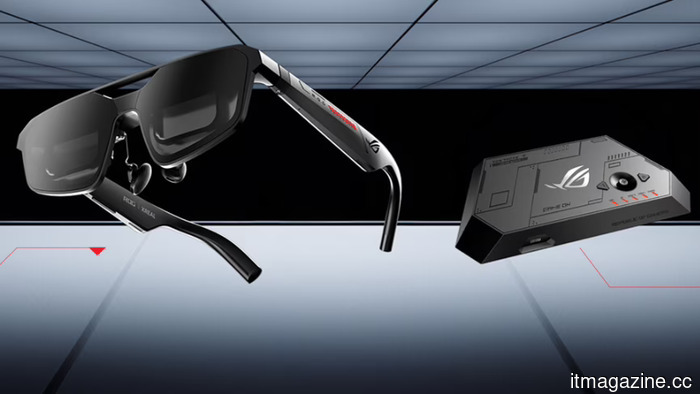
Asus ROG and Xreal have created the first AR gaming glasses with a 240Hz refresh rate. Priced at $849, they will be available for shipping in June.
TL;DR: The ROG Xreal R1 features 240Hz micro-OLED gaming on a 171-inch virtual screen, priced at $849, with pre-orders currently available and shipping starting on June 1.
Asus Republic of Gamers and Xreal have begun accepting pre-orders for the ROG Xreal R1, the first gaming AR glasses to offer a refresh rate of 240Hz. These glasses are available for $849 through Best Buy, while orders via Xreal’s own store started on May 17. Global shipping is set to commence on June 1.
The key feature of the R1 is its refresh rate, which at 240Hz surpasses that of any other AR glasses on the market, including Xreal’s own One Pro that maxes out at 120Hz and is priced at $650. The device employs dual 0.55-inch Sony micro-OLED displays with a peak brightness of 700 nits and a response time of 0.01ms, delivering Full HD (1,920 x 1,080) resolution for each eye. The field of view spans 57 degrees, which Xreal claims encompasses 95% of the user’s focused vision, resulting in a virtual screen size of 171 inches. The entire unit weighs 91 grams.
Internally, the X1 spatial coprocessor manages the menu interface, 3DoF tracking (with support for 6DoF), and latency regulation, boasting a motion-to-photon lag of just 3ms. The glasses include electrochromic dimming with three levels that automatically adjusts lens transparency based on head movement—becoming clear when the user turns away from the virtual screen and tinted when they focus back on it. Audio is delivered through built-in Bose-tuned speakers.
The R1 comes bundled with the ROG Control Dock, a docking station equipped with DisplayPort 1.4 and two HDMI 2.0 ports, allowing users to easily switch between three connected devices—such as a PC, PlayStation 5, Xbox Series X, or Nintendo Switch 2—using a single button press. Without the dock, the glasses can connect directly to any device with USB-C DisplayPort output, including smartphones, tablets, and laptops. The most advanced integration is with the ROG Ally, which serves as a live control panel for adjusting settings like brightness, screen size, aspect ratio, tint level, and spatial configurations while the glasses display gameplay.
The product was initially introduced at CES 2026 in January and has seen several months of optimization. Asus indicates that no additional software is necessary to operate it, requiring only a USB-C cable or the Control Dock. The glasses are also compatible with the Asus DisplayWidget Center app for making adjustments from a laptop or desktop.
The competitive landscape is complex. Meta sold over seven million Ray-Ban smart glasses in 2025 and holds approximately 82% of the smart glasses market, but these devices focus on AI-powered audio and photography rather than display technology. Meanwhile, the Meta Quest 3 offers a complete VR headset experience with 6DoF tracking and passthrough AR at a significantly lower price than the R1. The Xreal 1S, which provides a larger cinematic 500-inch screen at a higher resolution but only supports 120Hz, launched at CES 2026 for $449.
It’s important to note that the R1 is not a VR headset and does not compete in that space. Instead, it acts as a wearable external monitor—a pair of glasses that creates a flat virtual screen in front of the user, anchored in place or tracked by head movement depending on the selected mode. There is no hand tracking, passthrough camera feed, or app ecosystem. Its appeal lies in its 240Hz gaming display, which can easily fit into a glasses case, weighs less than most smartphones, and connects to any device with video output. For competitive gamers who prioritize refresh rate and response time above all, the specs are enticing. However, for others, the $849 price tag is considerable for a product with a singular function.
Apple is testing multiple frame designs for AI smart glasses aiming for a 2027 launch, with the first version lacking a display. Google is also working on Android XR glasses targeted for 2026 through collaborations with Samsung, Warby Parker, and Gentle Monster. The wearable display market is set to grow, but none of these upcoming products are aimed at 240Hz gaming. The ROG Xreal R1 fills a specific niche as the highest-refresh-rate wearable display available for gamers looking for a large screen without the bulk and isolation of a VR headset.
Ultimately, real-world performance will unveil whether the R1 is a groundbreaking product or merely a curiosity. The X1 coprocessor was originally developed for 120Hz glasses, and its capacity to effectively manage 240Hz is yet untested in consumer hands. While the 57
Other articles
 The individual who introduced a Roomba to every household aims to substitute your dog with a soft robot.
Colin Angle's latest startup, Familiar Machines, has come out of stealth mode with an AI pet that accompanies you, adapts to your behaviors, and does not require feeding.
The individual who introduced a Roomba to every household aims to substitute your dog with a soft robot.
Colin Angle's latest startup, Familiar Machines, has come out of stealth mode with an AI pet that accompanies you, adapts to your behaviors, and does not require feeding.
 The individual who introduced a Roomba to every household aims to substitute your dog with a stuffed robotic companion.
Colin Angle's new startup, Familiar Machines, has come out of stealth mode with an AI pet that accompanies you, adapts to your routines, and requires no feeding.
The individual who introduced a Roomba to every household aims to substitute your dog with a stuffed robotic companion.
Colin Angle's new startup, Familiar Machines, has come out of stealth mode with an AI pet that accompanies you, adapts to your routines, and requires no feeding.
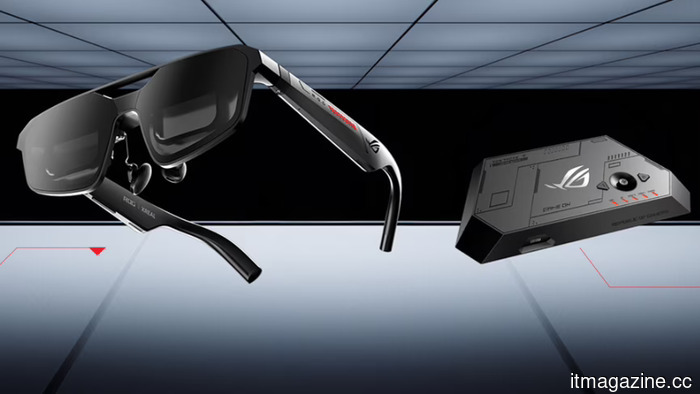 Asus ROG and Xreal have created the inaugural 240Hz AR gaming glasses. Priced at $849, they will be available for shipping in June.
The ROG Xreal R1 features dual Sony micro-OLED screens, offers a 171-inch virtual display, and includes Bose audio, all weighing just 91 grams. Pre-orders are now available on Best Buy.
Asus ROG and Xreal have created the inaugural 240Hz AR gaming glasses. Priced at $849, they will be available for shipping in June.
The ROG Xreal R1 features dual Sony micro-OLED screens, offers a 171-inch virtual display, and includes Bose audio, all weighing just 91 grams. Pre-orders are now available on Best Buy.
 Chinese electric vehicles are now making their way to Canada, with almost 400 dealers competing to sell them.
Canada has reduced tariffs on Chinese electric vehicles to 6.1%, imposing a limit of 49,000 units. Dealers are preparing for this opportunity, while Trump refers to it as a disaster, and the initial shipments of cars have arrived.
Chinese electric vehicles are now making their way to Canada, with almost 400 dealers competing to sell them.
Canada has reduced tariffs on Chinese electric vehicles to 6.1%, imposing a limit of 49,000 units. Dealers are preparing for this opportunity, while Trump refers to it as a disaster, and the initial shipments of cars have arrived.
 GM, Ford, and Stellantis have reduced their workforce by 20,000 white-collar positions. The trend is set to intensify with the rise of AI.
Since 2022, Detroit's Big Three have reduced their total salaried workforce by 19%. GM recently laid off an additional 500 IT employees while simultaneously recruiting for 250 positions in AI.
GM, Ford, and Stellantis have reduced their workforce by 20,000 white-collar positions. The trend is set to intensify with the rise of AI.
Since 2022, Detroit's Big Three have reduced their total salaried workforce by 19%. GM recently laid off an additional 500 IT employees while simultaneously recruiting for 250 positions in AI.
 Malta has recently become the first nation to provide all its citizens with complimentary access to ChatGPT Plus. However, there is one stipulation.
OpenAI has reached an agreement with Malta to offer ChatGPT Plus for one year to all residents who finish a complimentary AI literacy course created by a university.
Malta has recently become the first nation to provide all its citizens with complimentary access to ChatGPT Plus. However, there is one stipulation.
OpenAI has reached an agreement with Malta to offer ChatGPT Plus for one year to all residents who finish a complimentary AI literacy course created by a university.
Asus ROG and Xreal have created the first AR gaming glasses with a 240Hz refresh rate. Priced at $849, they will be available for shipping in June.
The ROG Xreal R1 features dual Sony micro-OLED screens, a virtual display measuring 171 inches, and Bose audio, all within a weight of 91 grams. Pre-orders are available now on Best Buy.