
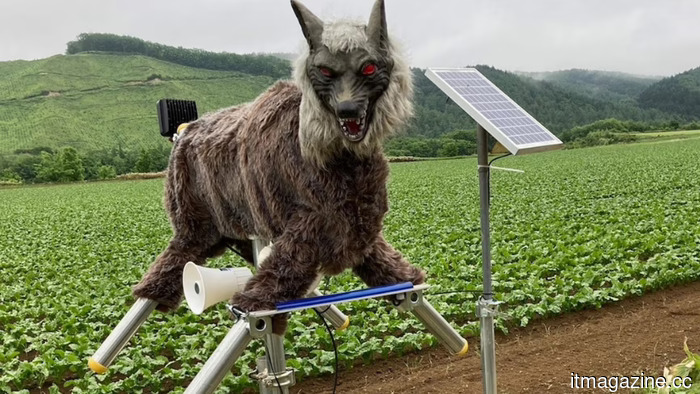
Japan's Monster Wolf robot, priced at $4,000, features red LED eyes and effectively serves as a scarecrow.
TL;DR Japan's unprecedented bear crisis has transformed a previously ridiculed animatronic wolf into vital technology for rural areas, with demand exceeding supply.
On a golf course in rural Hokkaido, a mechanical wolf with glowing red eyes rotates its head and howls aimlessly. It appears ridiculous, yet evidence suggests it is effective. The Monster Wolf, created by Ohta Seiki, a small Hokkaido manufacturer, has been producing animatronic scarecrows since 2016. This device consists of a pipe frame covered in synthetic fur, crowned with a menacing wolf head that includes red LED eyes and blue LED tail lights, all connected to a speaker system that can project over 50 recorded sounds—ranging from wolf howls to human voices—detectable from up to a kilometer away. Its infrared sensor senses nearby animals and activates the display, with prices starting around $4,000.
Historically viewed as a novelty, the product has garnered serious interest, with Ohta Seiki receiving about 50 orders in 2026 alone—exceeding its typical annual figure—resulting in a backlog of two to three months, with each unit handcrafted.
This surge is attributed to Japan's bear crisis, which has escalated from a recurring nuisance to a national emergency. In the fiscal year ending March 2026, bears were responsible for 13 fatalities nationwide, surpassing the previous record of six in fiscal 2023, as reported by preliminary data from Japan's Environment Ministry. Over 230 individuals sustained injuries, and bear sightings exceeded 50,000, approximately double the prior two-year record. The total of bears captured and culled reached 14,601, another historic peak.
Bears have been seen on airport runways, wandering golf courses, breaking into supermarkets, and approaching schools. Some northern prefectures documented sightings more than four times greater in April 2026 compared to the same month the previous year, as bears emerged from hibernation into areas now largely devoid of people. Japan has been experiencing a long-term decline in its rural population, recording its largest annual population drop of over 900,000 Japanese nationals in 2024 and a total fertility rate of 1.15, the lowest ever.
The relationship between rural depopulation and bear encounters is not coincidental. As people withdraw from rural regions, bears have begun to inhabit spaces that were previously too populated for them. Biologist Koji Yamazaki from Tokyo University of Agriculture succinctly explained that depopulation has allowed the bears to access areas once occupied by humans. The decrease in human population also results in fewer hunters. Japan's strict gun licensing laws and an aging demographic have significantly decreased the number of licensed hunters available to manage wildlife, prompting local governments to seek alternatives.
Monster Wolf serves as one such alternative. Orders primarily originate from farmers, golf course operators, and outdoor workers in rural construction. Initially intended to deter deer and boars from crops, its performance in the field was convincing enough to overcome initial skepticism. Japan has a history of employing robots for tasks that other countries might handle with human labor, including robotic bartenders in Tokyo and plans for autonomous vehicle pilots in its capital.
Ohta Seiki is currently enhancing the device. A wheeled variant that can patrol designated paths or chase away approaching animals is being developed. The company is also investigating AI-powered cameras to identify the species of oncoming animals and adjust responses accordingly, utilizing different sound profiles for bears, deer, and boars. There are plans for a handheld version geared toward hikers, fishermen, and schoolchildren.
The AI camera upgrade holds significant potential. If successful, it would evolve Monster Wolf from a broad deterrent that reacts indiscriminately to one that functions as a targeted wildlife management tool. The robotics industry overall is swiftly advancing towards AI-integrated systems, from humanoid robots in Chinese smartphone factories to wall-climbing inspection robots employed by the US Navy. Although Monster Wolf is simpler mechanically, it follows a similar trajectory: a physical device enhanced by sensors and software.
Japan's government has allocated 3.4 billion yen (approximately $22 million) for bear countermeasures, including subsidies for hunters, traps, and surveillance drones. In November 2025, Prime Minister Sanae Takaichi's administration updated its national countermeasure plan, and in March 2026, the central government released a roadmap with regional capture objectives. The broader question of whether robots can effectively replace human presence in physical spaces spans various industries, from elder care to logistics to home assistance. In Japan's depopulated rural areas, the inquiry is more precise: can a mechanical wolf with red eyes and 50 sound effects fulfill the role once held by an extinct species and a dwindling human population?
Currently, the answer seems to be yes, although the effectiveness is limited. However, Ohta Seiki's two-to-three-month backlog highlights an important issue; the high demand for a $4
Other articles
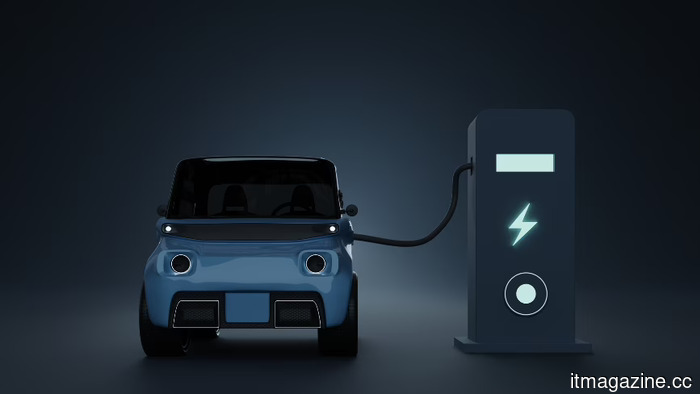 Chinese components are already powering American vehicles, and this is precisely why Congress is in a state of alarm.
Bipartisan legislators are advocating for a prohibition on Chinese vehicles in the United States; however, over 60 Chinese-owned suppliers are already part of the American auto supply chain.
Chinese components are already powering American vehicles, and this is precisely why Congress is in a state of alarm.
Bipartisan legislators are advocating for a prohibition on Chinese vehicles in the United States; however, over 60 Chinese-owned suppliers are already part of the American auto supply chain.
 OpenAI aims for ChatGPT to access your bank account, promoting it as a convenience. However, the associated risk is significant.
ChatGPT Pro users can now link their bank accounts through Plaid to receive tailored financial advice, following OpenAI's acquisition of the fintech startup Hiro a month ago.
OpenAI aims for ChatGPT to access your bank account, promoting it as a convenience. However, the associated risk is significant.
ChatGPT Pro users can now link their bank accounts through Plaid to receive tailored financial advice, following OpenAI's acquisition of the fintech startup Hiro a month ago.
 The BMW Motorrad Vision K18 is a raw metal, six-cylinder machine that will linger in your motorcycle fantasies.
The Vision K18 by BMW is a unique concept featuring an 1,800cc inline-six engine, and it sounds just as powerful and wild as its appearance suggests.
The BMW Motorrad Vision K18 is a raw metal, six-cylinder machine that will linger in your motorcycle fantasies.
The Vision K18 by BMW is a unique concept featuring an 1,800cc inline-six engine, and it sounds just as powerful and wild as its appearance suggests.
 Notice a mistake on your Instagram Story? You can now edit it after publishing.
Instagram is finally introducing the Edit Story feature, which has been highly requested and allows users to modify a Story even after it has been published.
Notice a mistake on your Instagram Story? You can now edit it after publishing.
Instagram is finally introducing the Edit Story feature, which has been highly requested and allows users to modify a Story even after it has been published.
 Salesforce plans to allocate $300 million for Anthropic tokens this year, and Benioff is looking to integrate coding functionality within Slack next.
Marc Benioff mentioned on the All-In podcast that AI coding agents are promoting unparalleled efficiency and hinted at upcoming coding tools for Slack.
Salesforce plans to allocate $300 million for Anthropic tokens this year, and Benioff is looking to integrate coding functionality within Slack next.
Marc Benioff mentioned on the All-In podcast that AI coding agents are promoting unparalleled efficiency and hinted at upcoming coding tools for Slack.
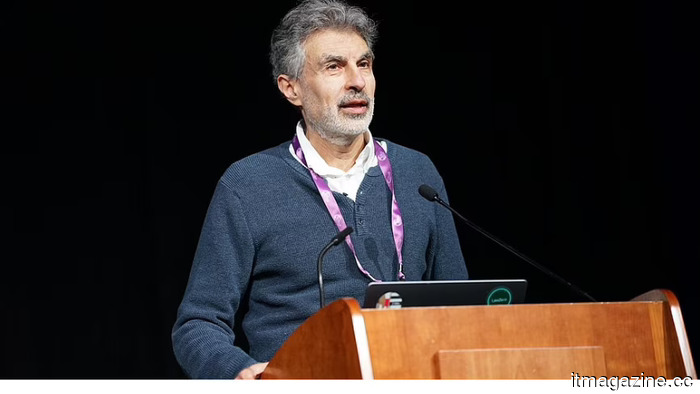 Yoshua Bengio cautions about hyperintelligent AI with
The Turing Award recipient established the nonprofit LawZero with $30 million to create AI that is safe by design. He points out that the industry's pursuit of agentic systems is transforming theoretical risks into real-world concerns.
Yoshua Bengio cautions about hyperintelligent AI with
The Turing Award recipient established the nonprofit LawZero with $30 million to create AI that is safe by design. He points out that the industry's pursuit of agentic systems is transforming theoretical risks into real-world concerns.
Japan's Monster Wolf robot, priced at $4,000, features red LED eyes and effectively serves as a scarecrow.
A company in Hokkaido is struggling to produce its animatronic wolf quickly enough, as Japan experiences unprecedented bear attacks and a declining rural population.