

Sony showcases camera samples from the AI-enhanced Xperia 1 VIII. It's an unbelievable misstep that I find hard to accept.
Sony has a legacy in camera technology that most brands envy, regardless of whether they manufacture cameras or smartphones. The company has transformed the capabilities of full-frame sensors with its Alpha series.
The specific way it captures skin tones, the careful handling of saturation, and the dedication to precise white balance; this is the essence of Sony’s color science, which is why cinematographers, videographers, and photographers in the consumer tech sector trust its color science and camera equipment.
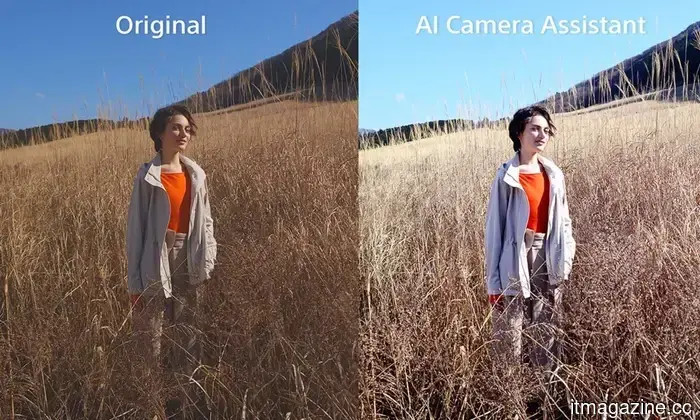
So when the official Sony Xperia X account shared side-by-side comparisons titled “Origin vs. AI Camera Assistant” to showcase Xperia Intelligence on the new Xperia 1 VIII, I found myself fixated on my screen for several minutes. Not out of admiration, but from sheer disbelief. I can say this plainly: the person who greenlighted those samples has likely either never used a Sony Alpha series camera or hasn’t spoken to someone who has.
What changes is Sony’s Xperia Intelligence making to these images?
Let me explain this in technical terms, because what’s taking place in those images deserves attention. In the first portrait shot, Sony’s Xperia Intelligence has overly enhanced mid-tone exposure to the point of clipping highlights in the grass and on the subject's face.
Detail has been lost, and the dynamic range is compromised. Similarly, in the shot featuring a vase, the new AI-driven algorithm has harshly crushed the shadows, resulting in a loss of texture on the floor. Whereas the original image retains depth and visible wood grain, the edited version appears flat, as if it has a high-contrast filter with the intensity maximized.
Then we move on to the sandwich. I honestly can’t comprehend what Sony’s AI detected that led it to desaturate those reds and greens. It seems like someone adjusted the exposure and brightness settings without realizing that it resulted in blown-out details and compromised colors.
In all three samples, the AI introduces an artificial yellow-orange warmth at varying levels, shifting the white balance unnaturally away from genuine colors toward something resembling an Instagram or Snapchat filter. They all seem as if they were taken with a sensor pushed far beyond its native ISO limit, producing noticeable noise.
I would argue that the original images were superior, but Sony’s AI Camera Assistant or Xperia Intelligence altered them in ways that go beyond typical post-production fixes. It’s noteworthy that these images were shared to market the impressive photography outcomes that consumers might achieve with the new Xperia 1 VIII.
Sony cannot afford to have an identity crisis.
The Xperia 1 series has consistently represented Sony’s vision for a smartphone camera that operates like a traditional camera. However, what Xperia Intelligence appears to be pursuing is a style that is aggressively and unnecessarily processed, taking on a high-vibrance aesthetic that I believe looks inferior to the processing done by smartphones from Samsung, Google, or Apple.
While the original images shared in the tweet are well-exposed, have realistic colors, and offer a good dynamic range, the AI variants seem as though the Xperia’s camera became disinterested in maintaining its quality. For those purchasing the Xperia 1 VIII specifically for its camera capabilities, which is most likely their motivation, getting acquainted with the settings menu early on is my only advice.


Other articles
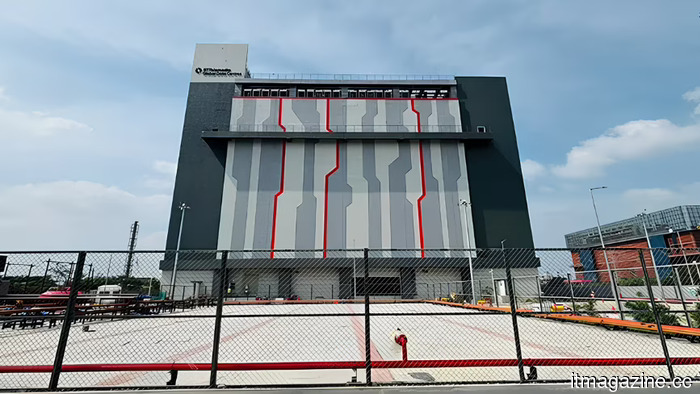 STT Global Data Centres is preparing for a $500 million listing in Mumbai, ahead of a crowded IPO lineup in 2026.
According to Bloomberg, STT Global Data Centres India is set to launch an IPO in Mumbai for up to $500 million, with bank presentations scheduled for next week and mandates expected to be finalized by the end of May. This IPO would position the company at the forefront of the 2026 data center listing lineup.
STT Global Data Centres is preparing for a $500 million listing in Mumbai, ahead of a crowded IPO lineup in 2026.
According to Bloomberg, STT Global Data Centres India is set to launch an IPO in Mumbai for up to $500 million, with bank presentations scheduled for next week and mandates expected to be finalized by the end of May. This IPO would position the company at the forefront of the 2026 data center listing lineup.
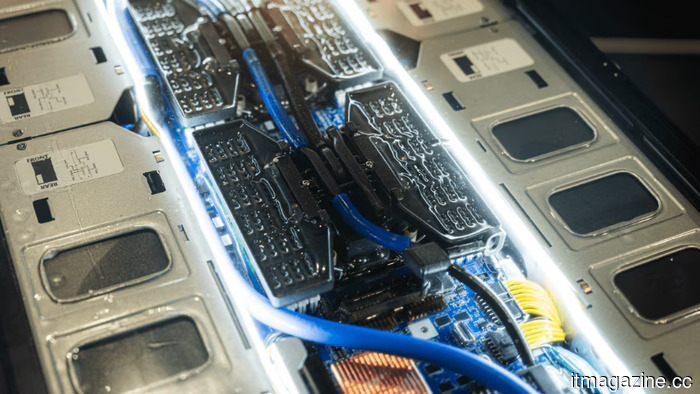 Iceotope secures $26 million as AI rack densities exceed the capabilities of air cooling.
The UK-based precision liquid cooling firm Iceotope has secured $26 million in a Series B funding round led by Two Seas Capital and Barclays Climate Ventures.
Iceotope secures $26 million as AI rack densities exceed the capabilities of air cooling.
The UK-based precision liquid cooling firm Iceotope has secured $26 million in a Series B funding round led by Two Seas Capital and Barclays Climate Ventures.
 Netflix has established its own AI studio, and AI-generated content will soon be appearing in your feed, regardless of your preference.
Netflix has been quietly establishing an AI animation studio named INKubator to create animated shorts and specials utilizing generative AI technologies.
Netflix has established its own AI studio, and AI-generated content will soon be appearing in your feed, regardless of your preference.
Netflix has been quietly establishing an AI animation studio named INKubator to create animated shorts and specials utilizing generative AI technologies.
 Samsung proposes to have discussions; the union indicates June, following the strike.
On Friday, Samsung proposed unconditional negotiations with the union. The NSEU accepted this offer on June 7, just three days after the conclusion of its 18-day strike. Shares dropped by as much as 7.6%.
Samsung proposes to have discussions; the union indicates June, following the strike.
On Friday, Samsung proposed unconditional negotiations with the union. The NSEU accepted this offer on June 7, just three days after the conclusion of its 18-day strike. Shares dropped by as much as 7.6%.
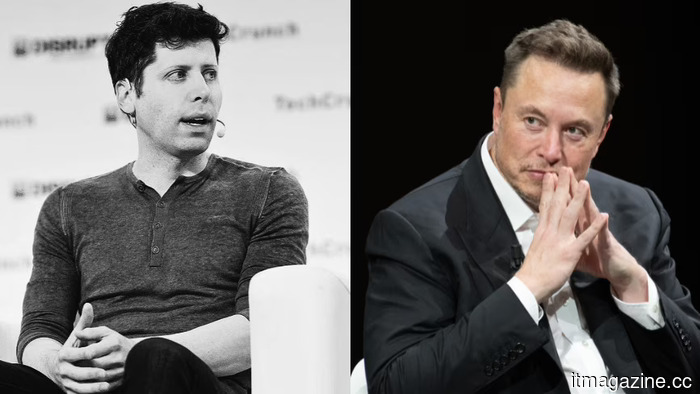 Jury deliberations will start in the trial involving the OpenAI nonprofit following Musk's absence from the closing sessions to attend an event in Beijing.
The closing arguments in the Musk v. Altman case concluded on Thursday in Oakland, with the jury set to begin deliberations on Monday. The case involves potential disgorgement of up to $134 billion and the structure of OpenAI.
Jury deliberations will start in the trial involving the OpenAI nonprofit following Musk's absence from the closing sessions to attend an event in Beijing.
The closing arguments in the Musk v. Altman case concluded on Thursday in Oakland, with the jury set to begin deliberations on Monday. The case involves potential disgorgement of up to $134 billion and the structure of OpenAI.
 OpenAI is introducing the powerful Codex tool to the ChatGPT application on your mobile device.
OpenAI has integrated its Codex coding agent into the ChatGPT mobile application for both iOS and Android, enabling users to handle coding tasks remotely from their smartphones.
OpenAI is introducing the powerful Codex tool to the ChatGPT application on your mobile device.
OpenAI has integrated its Codex coding agent into the ChatGPT mobile application for both iOS and Android, enabling users to handle coding tasks remotely from their smartphones.
Sony showcases camera samples from the AI-enhanced Xperia 1 VIII. It's an unbelievable misstep that I find hard to accept.
Sony shared before-and-after AI camera samples for the Xperia 1 VIII, inadvertently providing a masterclass in computational photography failures for everyone knowledgeable in photography online.