
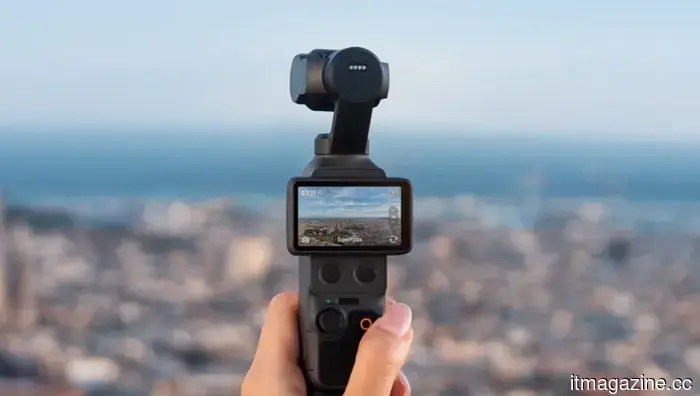
Oppo and Vivo are preparing to launch gimbal cameras by the end of the year to compete with DJI's Pocket series.
Oppo and Vivo are reportedly working on their own Pocket-style handheld gimbal cameras, with expected launches before the year concludes, as per China Star Market. The report indicates that both companies plan to leverage their strengths in imaging algorithms, AI capabilities, and ecosystem integration to penetrate the lightweight video creation market and further broaden their mobile imaging product lines.
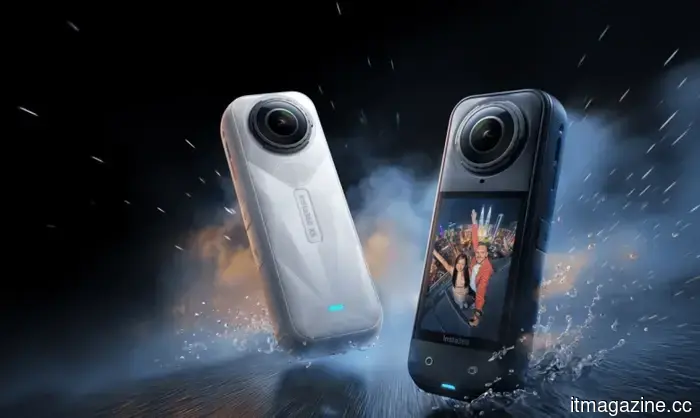
Currently, the handheld smart imaging device market is largely divided into action cameras and 360-degree cameras, with GoPro, Insta360, and DJI standing out as the leading brands.
In the action camera market, GoPro and DJI dominate the mid- to high-end segments, while the entry-level space is saturated with white-label manufacturers. On the other hand, Insta360 continues to lead in the 360-degree camera category.
Vivo launched a Vlog camera initiative in late 2025, aiming to directly compete with DJI's Pocket series. The company is said to have formed a team of nearly 100 personnel for this project. "We intend to introduce a product featuring a completely new design concept by the end of the year," expressed Vivo President Hu Baishan previously.
Recently, Vivo has begun recruiting users to test its first gimbal camera, prioritizing those with experience using similar products. The hands-on testing is set to commence on May 22 at Vivo's headquarters in Bao’an, Shenzhen.
Oppo is also in the process of developing its gimbal camera project, codenamed Fuyao, which is anticipated to be commercially launched before the end of 2026.
"From a supply chain standpoint, companies like Vivo still operate on a different scale compared to DJI and Insta360," mentioned Xue Miao, Research Manager at IDC China. "However, the entry of new players could lead to a diversification of pricing and product choices, providing consumers with more options while facilitating overall market growth."
The movement of smartphone brands into the gimbal camera sector is indicative of the rapid rise of short-form video and vlog content, which is increasing the need for more portable and creator-focused imaging solutions. Smartphone manufacturers possess solid foundations in mobile photography and videography, supported by well-established software ecosystems and vast user bases.
New entrants in this segment will encounter technical challenges in areas such as stabilization, motion tracking, imaging algorithms, and video quality enhancement—domains where established brands like DJI have spent years honing their expertise. Additionally, the risks associated with patents and intellectual property are expected to become more significant as competition intensifies.
Frost & Sullivan projects that the global handheld smart imaging device market will experience a compound annual growth rate (CAGR) of 15.9% from 2020 to 2030, predicting the market will reach RMB 79.93 billion ($11.3 billion) by 2030.
Jessie Wu is a technology reporter based in Shanghai, covering consumer electronics, semiconductors, and the gaming industry for TechNode. You can connect with her via email at jessie.wu@technode.com.
Other articles
 Jury deliberations are set to start in the OpenAI nonprofit trial following Musk's absence from the closing arguments to travel to Beijing.
Closing arguments in the case of Musk v. Altman concluded on Thursday in Oakland, and the jury will start deliberations on Monday. The case involves up to $134 billion in disgorgement and the structure of OpenAI.
Jury deliberations are set to start in the OpenAI nonprofit trial following Musk's absence from the closing arguments to travel to Beijing.
Closing arguments in the case of Musk v. Altman concluded on Thursday in Oakland, and the jury will start deliberations on Monday. The case involves up to $134 billion in disgorgement and the structure of OpenAI.
 Multiverse secures $70 million at a $2.1 billion valuation to promote its AI adoption strategy throughout Europe.
Multiverse secured $70 million in a funding round led by Schroders Capital, achieving a valuation of $2.1 billion. The company reported a 50% year-over-year revenue increase, highlighted its acquisition of StackFuel in January, and expressed its goal of becoming the leading AI adoption platform in Europe.
Multiverse secures $70 million at a $2.1 billion valuation to promote its AI adoption strategy throughout Europe.
Multiverse secured $70 million in a funding round led by Schroders Capital, achieving a valuation of $2.1 billion. The company reported a 50% year-over-year revenue increase, highlighted its acquisition of StackFuel in January, and expressed its goal of becoming the leading AI adoption platform in Europe.
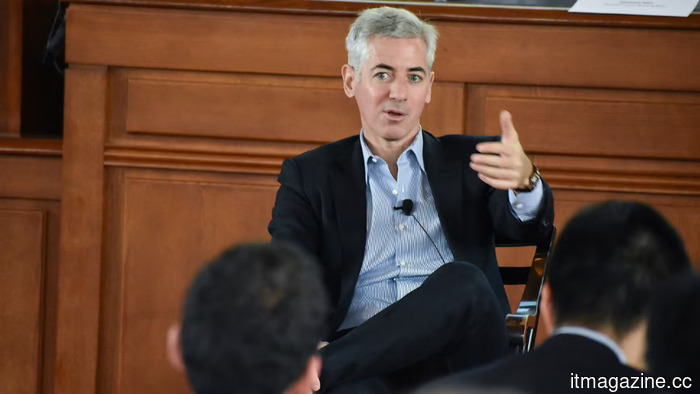 Bill Ackman invests in Microsoft, with details on the investment size to be revealed today.
On Friday, Bill Ackman announced that Pershing Square has acquired a new position in Microsoft following the stock's 16% decline since the beginning of the year. The 13F filing revealing the size of the stake is anticipated later in the day.
Bill Ackman invests in Microsoft, with details on the investment size to be revealed today.
On Friday, Bill Ackman announced that Pershing Square has acquired a new position in Microsoft following the stock's 16% decline since the beginning of the year. The 13F filing revealing the size of the stake is anticipated later in the day.
 Multiverse secures $70 million at a $2.1 billion valuation to promote its AI adoption strategy throughout Europe.
Multiverse secured $70 million in a funding round led by Schroders Capital, achieving a valuation of $2.1 billion. The company noted a year-over-year revenue growth of 50%, highlighted its acquisition of StackFuel in January, and expressed its goal to establish itself as Europe's AI adoption platform.
Multiverse secures $70 million at a $2.1 billion valuation to promote its AI adoption strategy throughout Europe.
Multiverse secured $70 million in a funding round led by Schroders Capital, achieving a valuation of $2.1 billion. The company noted a year-over-year revenue growth of 50%, highlighted its acquisition of StackFuel in January, and expressed its goal to establish itself as Europe's AI adoption platform.
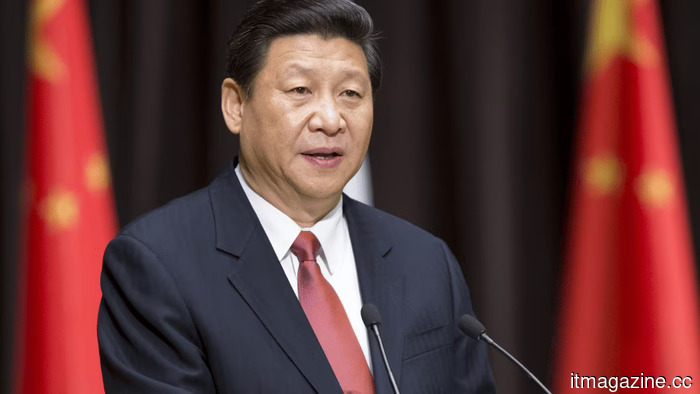 According to US Trade Representative Greer, chip export controls were not a significant issue discussed in Beijing.
According to US Trade Representative Jamieson Greer, chip export controls were 'not a significant issue' during the Trump-Xi meeting, despite Washington allowing Nvidia H200 sales to China, as reported by Bloomberg.
According to US Trade Representative Greer, chip export controls were not a significant issue discussed in Beijing.
According to US Trade Representative Jamieson Greer, chip export controls were 'not a significant issue' during the Trump-Xi meeting, despite Washington allowing Nvidia H200 sales to China, as reported by Bloomberg.
 Federal judge delays approval of Anthropic's $1.5 billion author settlement.
On Thursday, Judge Araceli Martínez-Olguín refused to give final approval to Anthropic's $1.5 billion settlement with the authors, requesting additional information regarding attorney fees and payments to the lead plaintiff.
Federal judge delays approval of Anthropic's $1.5 billion author settlement.
On Thursday, Judge Araceli Martínez-Olguín refused to give final approval to Anthropic's $1.5 billion settlement with the authors, requesting additional information regarding attorney fees and payments to the lead plaintiff.
Oppo and Vivo are preparing to launch gimbal cameras by the end of the year to compete with DJI's Pocket series.
Oppo and Vivo are said to be working on their own Pocket-style handheld gimbal cameras, with anticipated launches slated for later this year, according to reports.