

This transparent smart ring interprets sign language and functions almost like magic.
Science Advances
For individuals with hearing impairments, sign language serves not merely as a communication method, but as their main language. Unfortunately, sign language is typically not taught to those with normal hearing, which results in a significant communication gap. Recently, a group of researchers in South Korea may have developed a surprisingly effective solution to this longstanding issue.
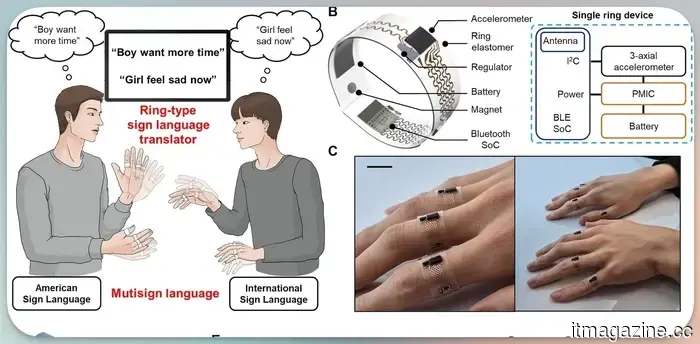
A new study featured in Science Advances discusses a system known as WRSLT (wirelessly connected, ring-type sign language translator), which can recognize and translate both American Sign Language and International Sign Language with approximately 88% accuracy, and it operates in real time.
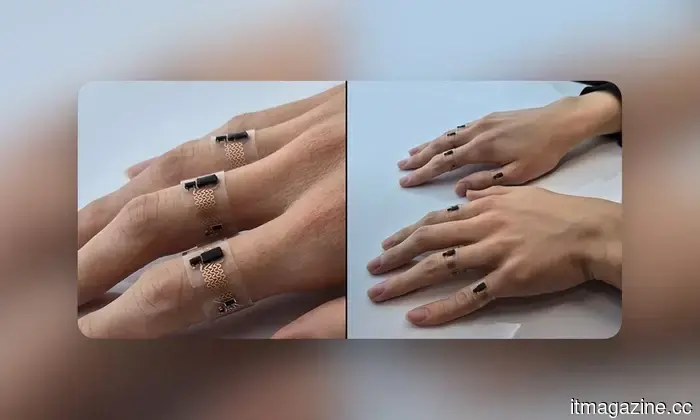
How do seven rings translate an entire language?
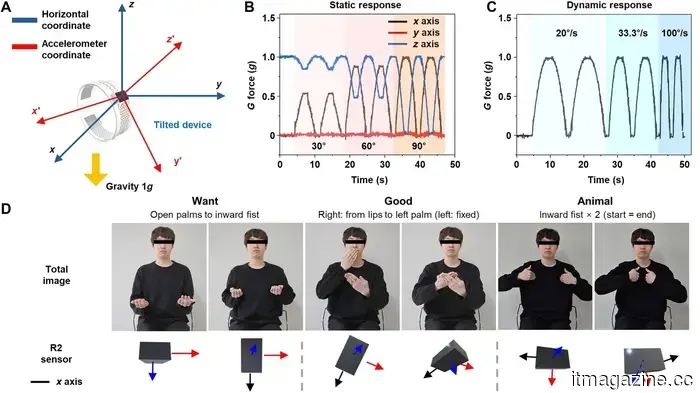
Each smart ring is equipped with a three-axis accelerometer that detects finger movements. When worn by a signer, the rings track finger positions and hand motions. This data is wirelessly transmitted via Bluetooth to a smartphone or computer, where artificial intelligence interprets the movements and converts them into text.
Science Advances
The greatest benefit compared to existing solutions is the freedom of movement it offers. Current sign language translation devices often rely on bulky gloves or wired sensors that limit natural hand motions and require recalibration for each user. The WRSLT avoids these issues.
Can it truly work for everyone?
The test results are very encouraging, and the researchers are confident in the system's ability to work for everyone. They trained the system on one group of users and tested it on an entirely different group. It successfully recognized ISL words with an accuracy of 88.5% and ASL words with 88.3%, which is impressive considering the variations in individual signing styles.
Science Advances
Currently, the system can recognize 100 words in each language, which is a solid beginning. The team aims to further miniaturize the rings and expand the AI's vocabulary to include more words and sign languages.
While it’s still in the early stages, this represents one of the more promising developments in sign language translation we have witnessed recently.
Rachit is an experienced tech journalist with over seven years of experience covering the consumer technology sector.
Alexa for Shopping is a new conversational AI assistant designed to enhance your shopping experience on Amazon.
Alexa now keeps track of your plans and compiles them into shopping lists.
After years of utilizing Alexa for answers, smart home control, music playback, and daily tasks, Amazon has identified a more straightforward role for it. Alexa is evolving into a personal shopping assistant, intended to help you quickly locate what you need and add it to your cart without a lot of second-guessing.
Amazon is launching Alexa for Shopping for U.S. customers across the Amazon Shopping app, Amazon.com, and Echo Show devices. This new feature merges the existing Rufus shopping chatbot with Alexa’s personalized capabilities, allowing the assistant to leverage product knowledge, shopping habits, browsing patterns, past purchases, preferences, and interactions to enhance recommendations. The service is available at no cost to logged-in Amazon customers and does not require a Prime membership, an Echo device, or the Alexa app.
Read more
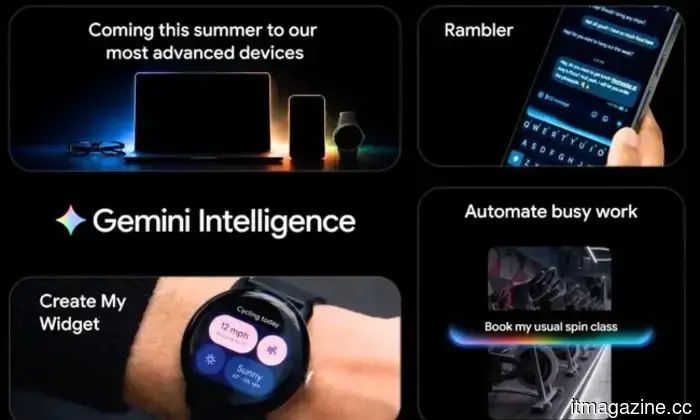
The Android Show 2026: Gemini Intelligence, Googlebooks, Android 17 updates, and more.
Gemini Intelligence, Googlebooks, Android 17, and a redesigned Android Auto. Google came prepared at its pre-I/O event, which still precedes the main conference by a week.
Each year, Google presents its Android announcements in a separate pre-show leading up to its annual I/O conference. This year was no exception, and The Android Show: I/O Edition lived up to expectations, showcasing substantial software updates and a major hardware surprise. In this recap, we’ll cover everything, including a comprehensive AI upgrade, a needed security enhancement, an Android Auto redesign that seems tailored for 2026, and an entirely new laptop category.
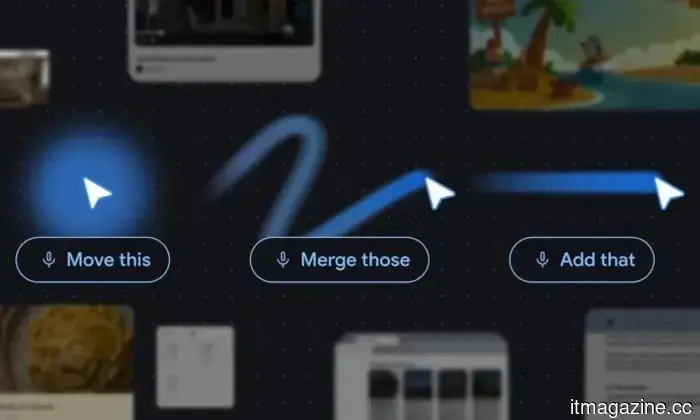
Google is reimagining the cursor for computers, and its AI-powered future looks intriguing.
Google’s Magic Pointer may represent the next advancement of AI for laptops.
The conventional mouse pointer has seen little change over the years. It moves, clicks, selects, drags, and sometimes transforms into an infuriating spinning wheel. Now, Google aims to elevate that simple arrow into one of the most powerful AI tools on your laptop, which may sound absurd until you consider its frequent use.
The company has introduced Magic Pointer for Googlebook, its new line of Gemini-powered laptops. This feature grants the cursor AI capabilities, enabling it to comprehend what you’re pointing at and assist you in taking action without the need for lengthy prompts or a separate chatbot interface.
Read more


Другие статьи
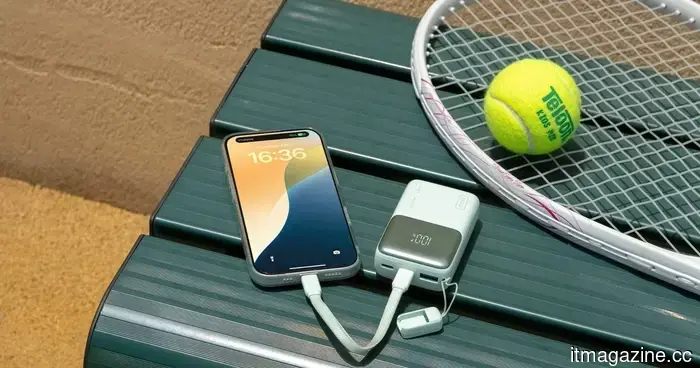 The Portable Chargers We Would Consider Purchasing This Spring
Seeking the top portable charger offers this spring? From the incredibly compact INIU Pocket Rocket P50 to rapid charging alternatives, these portable chargers are definitely worth considering for travel, work, and daily use in 2026.
The Portable Chargers We Would Consider Purchasing This Spring
Seeking the top portable charger offers this spring? From the incredibly compact INIU Pocket Rocket P50 to rapid charging alternatives, these portable chargers are definitely worth considering for travel, work, and daily use in 2026.
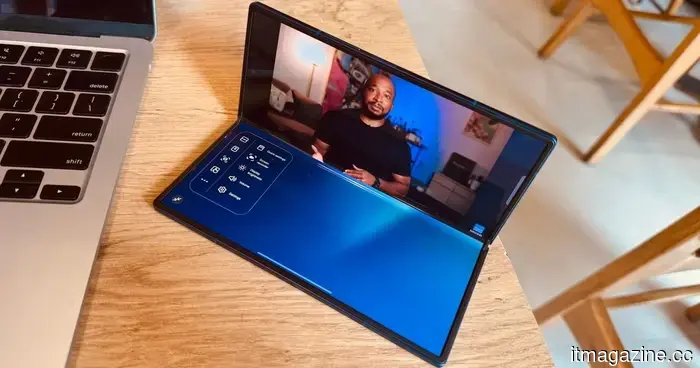 Samsung's upcoming Galaxy Z foldables will offer an abundance of AI features powered by Gemini Intelligence.
Samsung's upcoming foldable devices may introduce Gemini Intelligence, providing the Galaxy Z Fold 8 and Z Flip 8 with a more powerful AI assistant capable of managing related tasks across applications with a single command.
Samsung's upcoming Galaxy Z foldables will offer an abundance of AI features powered by Gemini Intelligence.
Samsung's upcoming foldable devices may introduce Gemini Intelligence, providing the Galaxy Z Fold 8 and Z Flip 8 with a more powerful AI assistant capable of managing related tasks across applications with a single command.
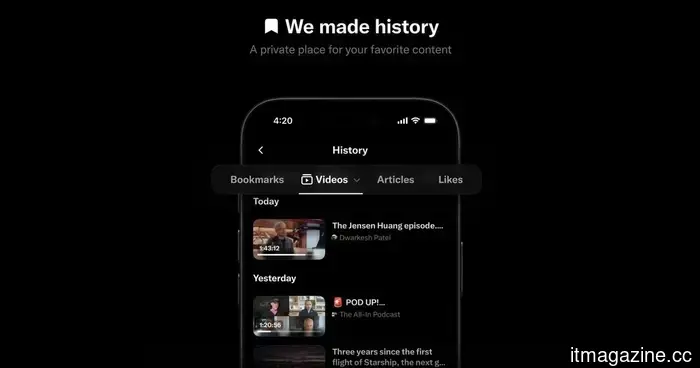 X features a History tab that allows you to revisit all the cursed items saved throughout the years.
X is launching a new History tab on iOS that brings together Bookmarks, long videos, Articles, and Likes into one area, providing users with a specific spot to go back to their saved content.
X features a History tab that allows you to revisit all the cursed items saved throughout the years.
X is launching a new History tab on iOS that brings together Bookmarks, long videos, Articles, and Likes into one area, providing users with a specific spot to go back to their saved content.
 AI tools are ubiquitous, so why do many individuals continue to utilize them as if it were 2015?
AI is integrated into nearly every tool we use, but many individuals continue to work as they did back in 2015. The issue isn't availability; it's the lack of adoption.
AI tools are ubiquitous, so why do many individuals continue to utilize them as if it were 2015?
AI is integrated into nearly every tool we use, but many individuals continue to work as they did back in 2015. The issue isn't availability; it's the lack of adoption.
 AI tools are ubiquitous, yet why do the majority of people continue to utilize them as if it were 2015?
AI is integrated into nearly every tool we use, but many individuals continue to operate as they did back in 2015. The issue isn't with access; it's with adoption.
AI tools are ubiquitous, yet why do the majority of people continue to utilize them as if it were 2015?
AI is integrated into nearly every tool we use, but many individuals continue to operate as they did back in 2015. The issue isn't with access; it's with adoption.
 Disney+ has officially announced the release date for VisionQuest, bringing the WandaVision trilogy closer to its conclusion.
Disney+ has officially announced the premiere date for VisionQuest, with Paul Bettany, Robert Downey Jr., and Tom Hiddleston revealing the initial teaser during Disney's Upfront presentation.
Disney+ has officially announced the release date for VisionQuest, bringing the WandaVision trilogy closer to its conclusion.
Disney+ has officially announced the premiere date for VisionQuest, with Paul Bettany, Robert Downey Jr., and Tom Hiddleston revealing the initial teaser during Disney's Upfront presentation.
This transparent smart ring interprets sign language and functions almost like magic.
Scientists in South Korea have created a ring-shaped sign language translator that functions wirelessly and can identify ASL and ISL words with an accuracy of approximately 88%.