
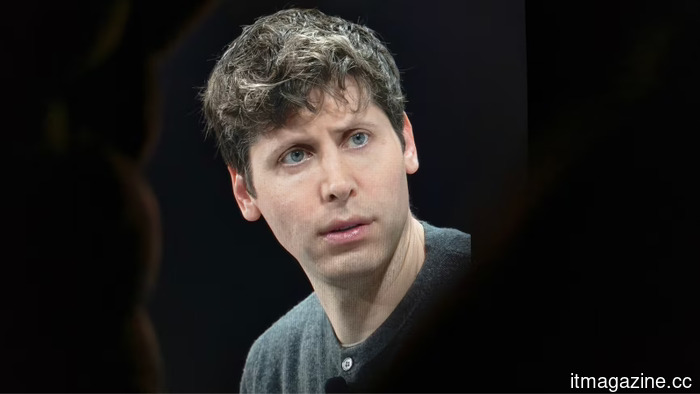
OpenAI has acquired Tomoro as a foundational component of its $14 billion Deployment Company.
TL;DR OpenAI is acquiring Tomoro, an AI consulting firm based in Edinburgh that it co-founded, as the inaugural acquisition for its $14 billion Deployment Company. This move mirrors Palantir's model of deploying engineers on-site to bridge the divide between AI capabilities and enterprise adoption.
Established in 2023 in partnership with OpenAI, Tomoro created AI concierges for Virgin Atlantic and support agents for Supercell, as well as deployment solutions for several notable companies, achieving a tenfold increase in monthly revenue within a year. The firm has committed 10 million pounds to nurture Scottish AI talent and employed around 150 engineers and specialists to integrate OpenAI's models into client operations.
On Monday, Tomoro revealed it has entered into an agreement to become the first acquisition of OpenAI's Deployment Company, a subsidiary launched with over four billion dollars in initial capital from a group of 19 investment firms. The agreement awaits regulatory approval and other customary closing conditions. OpenAI, which spent a decade developing intelligence, is now focusing on building a consulting team to implement it.
The subsidiary was established due to a stagnation in enterprise AI adoption that superior models alone cannot remedy. OpenAI’s annual revenue is projected to reach $25 billion by February 2026, with enterprise customers accounting for over 40% of that total. While more than a million businesses utilize OpenAI’s products, significant barriers still exist between product usage and full integration into core business functions, where issues such as integration complexity and redesigning processes present real challenges.
The Deployment Company aims to address these issues by embedding engineers directly within client organizations to collaborate with their teams in identifying valuable opportunities and building on-site production systems. This established model originated with Palantir, known for its forward-deployed engineer approach developed through years of working in defense and intelligence sectors where remote support wasn't viable.
Palantir’s model involved sending engineers directly into intelligence agencies and military clients to customize its platform for usability, leading to a remarkable 133% year-on-year growth in US commercial revenue and a 640% return for early investors. OpenAI intends to apply this concept in wider markets, utilizing Tomoro’s engineers as the foundational team for a deployment operation that will expand with further acquisitions supported by the initial four billion dollars. The engineers will not be marketing a software product, but will instead create systems that maximize the effectiveness of OpenAI’s software within businesses, creating lasting relationships and associated costs for switching to competitors.
Similarly, Anthropic has raised billions to evolve its AI model into enterprise services, building a joint venture with Blackstone, Hellman and Friedman, and Goldman Sachs. Google also invested 750 million dollars for partnerships focusing on deploying agentic AI and has chosen to enhance existing consulting ecosystems instead of competing with them. OpenAI, however, has opted to build its own platform within the industry.
Accenture and Cognizant saw stock declines following the announcement of OpenAI's move, suggesting the market perceives OpenAI's entry into the consulting business as a direct threat. While UBS remains optimistic about Accenture’s prospects, believing existing advantages will protect them, the long-term implications could alter the consulting landscape significantly.
This pattern of AI companies integrating vertically into services is evident across the industry, with numerous AI firms focused on deploying AI technologies within enterprises rather than solely developing them in labs. The trajectory of Tomoro, from an Edinburgh startup to a vital component of OpenAI’s enterprise strategy, epitomizes this shift.
SoftBank has even arranged a 40 billion dollar loan to support its OpenAI investment, channeling funds into the Deployment Company and its anticipated acquisitions. The financial foundation backing OpenAI's enterprise thrust relies on private equity rather than venture capital, structuring returns with leverage beyond the capabilities of traditional consulting firms.
In its announcement, Tomoro understatedly stated that while their belief in AI's potential remains, the mission's scale has significantly expanded. OpenAI aims to transition 300,000 enterprises from simply using AI to fully implementing it. Despite 88% of organizations reporting AI usage in one area, only a third have adopted it across their operations, highlighting the substantial market the Deployment Company will target. With Tomoro's engineers leading the charge and the four billion dollars allocated for rapid expansion, OpenAI's confidence in closing the deployment gap is exemplified in their investor returns. Tomoro marks the beginning of this installation journey.
Other articles
 Android 17 will simplify the process of preventing apps from discreetly tracking your location while running in the background.
Today at the Android Show I/O Edition, Google revealed a new series of updates for Android 17 focused on privacy and theft protection, featuring a new location button that automatically removes an app's access to your exact location when you close it.
Android 17 will simplify the process of preventing apps from discreetly tracking your location while running in the background.
Today at the Android Show I/O Edition, Google revealed a new series of updates for Android 17 focused on privacy and theft protection, featuring a new location button that automatically removes an app's access to your exact location when you close it.
 Two days before Trump's arrival, Beijing showcased Huawei's secret chip laboratory on national television. The intended audience was not the Chinese public.
China showcased Huawei's clandestine chip laboratory on national television just days prior to Trump's visit to Beijing. This airing indicates that US export restrictions have strengthened rather than stifled China's ambitions in the semiconductor sector.
Two days before Trump's arrival, Beijing showcased Huawei's secret chip laboratory on national television. The intended audience was not the Chinese public.
China showcased Huawei's clandestine chip laboratory on national television just days prior to Trump's visit to Beijing. This airing indicates that US export restrictions have strengthened rather than stifled China's ambitions in the semiconductor sector.
 6 actions Gemini Intelligence is set to take on your Android devices.
Google is introducing these Gemini features to Android, broadening their availability across applications and devices to automate daily activities, streamline browsing, and enhance your phone's helpfulness while ensuring you remain in control.
n8n integrated into SAP Joule Studio as an AI orchestration layer leads to a valuation increase to $5.2 billion.
SAP has integrated n8n within Joule Studio to link its 200 AI agents with non-SAP systems. The Berlin-based workflow automation startup is now recognized as Germany's most valuable AI firm.
6 actions Gemini Intelligence is set to take on your Android devices.
Google is introducing these Gemini features to Android, broadening their availability across applications and devices to automate daily activities, streamline browsing, and enhance your phone's helpfulness while ensuring you remain in control.
n8n integrated into SAP Joule Studio as an AI orchestration layer leads to a valuation increase to $5.2 billion.
SAP has integrated n8n within Joule Studio to link its 200 AI agents with non-SAP systems. The Berlin-based workflow automation startup is now recognized as Germany's most valuable AI firm.
OpenAI has acquired Tomoro as a foundational component of its $14 billion Deployment Company.
Tomorrow, the Edinburgh-based AI company established in partnership with OpenAI, is set to be the inaugural acquisition of a $14 billion subsidiary that integrates engineers within businesses. Accenture's stock declined by 3%.