
The creators of security-focused GrapheneOS are calling out the tactics used by Google and Apple.
Soon, encountering a web CAPTCHA may necessitate approval from either Apple or Google.
The GrapheneOS team, which develops a security-oriented alternative for Android, is criticizing Google and Apple for what they label as anti-competitive practices disguised as security enhancements.
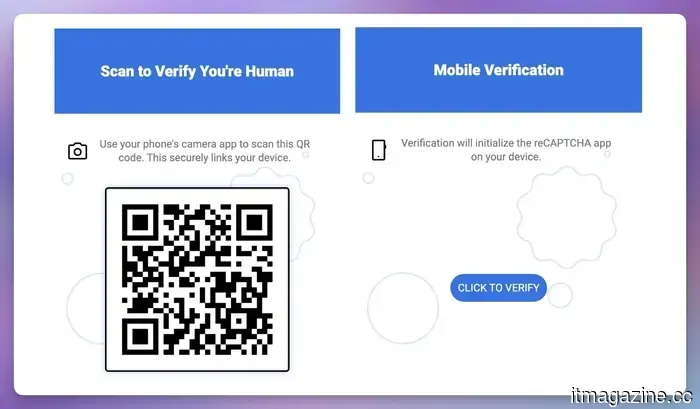
With the recent update to Google reCAPTCHA, users on platforms such as Windows PCs, Linux machines, or virtually any device that is not a smartphone may soon be required to scan a QR code with their mobile device to verify their humanity.
However, this mobile device must be either an Apple device or a Google-certified Android device.
Why should this matter to you?
Much of the media discourse surrounding this feature downplays it as a simple CAPTCHA update, but it is much more significant. Essentially, what Google is doing is implementing hardware attestation on the web, a procedure wherein your device must confirm to a server that it operates on approved hardware and software.
Both Apple and Google are progressively broadening their implementation of hardware-based attestation and are persuading an increasing number of services to adopt this system. Google’s Play Integrity API and Apple’s App Attest API share similarities. Apple has introduced this system to the web through Privacy Pass, which Google also utilizes.
Apple employs App Attest, while Google uses the Play Integrity API, both of which these companies rely on to authenticate apps. Financial institutions and government services have been quietly integrating these systems for some time.
Now, their intention is to extend this system to the web. Consequently, if you use a less common smartphone or a more private operating system such as GrapheneOS, an increasing number of applications and services will likely become inaccessible to you.
Google is already tightening its APK sideloading regulations, and it appears that the company seeks to monopolize the web as well.
So, who gets excluded?
Google’s Play Integrity API disqualifies GrapheneOS, which is actually more secure than many certified devices. In contrast, it readily approves Android phones that haven’t received a security update for years. This discrepancy indicates that security isn’t the actual concern.
The underlying issue is control. Google determines what qualifies as a certified Android device, and its criteria conveniently compel manufacturers to bundle Google’s applications and services.
The GrapheneOS team has criticized Google, asserting that this move is about maintaining monopolies rather than safeguarding users. Given that reCAPTCHA is integral to a vast portion of the web, this gives two companies considerable influence over everyone’s online experience.
Rachit is an experienced technology journalist with over seven years of experience in the consumer technology sector.
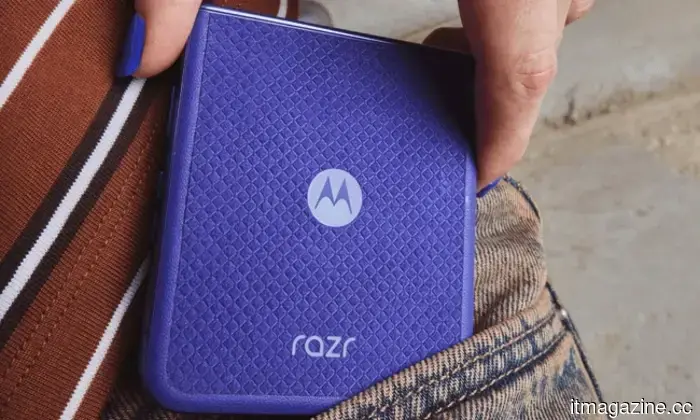
The Razr Ultra 2026 exemplifies what a flip phone should be, but I’m not willing to pay $1,500 for it.
A flip phone was never intended to carry such a hefty price tag. At $1,500, the Razr Ultra faces stiff competition against other products that your money can buy.
To be frank: $1,500 is a substantial amount to invest in the Razr Ultra, a clamshell phone that folds in half. In fact, it’s a considerable amount for any smartphone, particularly when a Galaxy S26 Ultra or iPhone 17 Pro Max can be acquired for less and still leave you with a few hundred dollars, or with a couple of additional hundred bucks, you could get a complete book-style foldable.
For me, the Razr Ultra doesn’t justify its price at $1,500. In a single view, it is indeed an impressive flip phone that successfully covers all the essentials and provides the premium experience expected at this price point. The Alcantara back, 5,000-nit display, silicon-carbon battery, and dual cameras on the rear create the impression of a comprehensive offering.
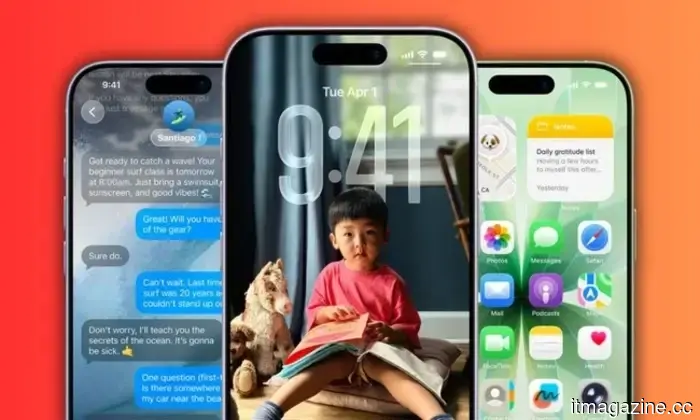
In further news, the front camera technology of the iPhone 17 may soon be found on an Android device, but with enhancements.
Apple’s iPhone 17 series has introduced one of the most beneficial upgrades for selfie cameras in recent memory, and Android may be gearing up to present an even superior counterpart. A notable Weibo leaker has disclosed that at least one Android brand is developing a selfie camera setup inspired by Apple’s Center Stage feature.
What makes Apple’s selfie innovation unique?
Additionally, a Samsung leak implies that the company has not abandoned its tri-fold phone ambitions.
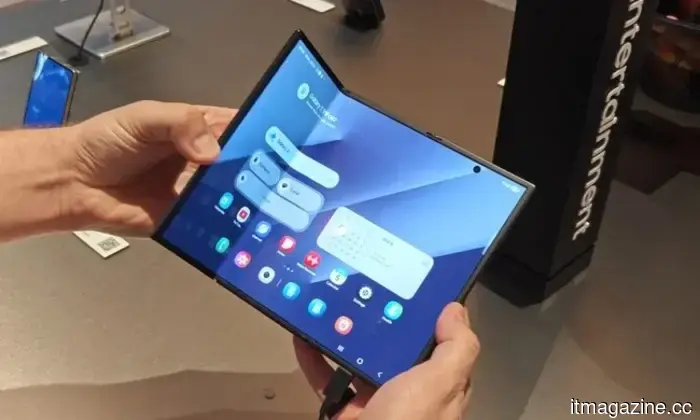
The Galaxy Z TriFold 2 could feature an innovative S Pen slot design.
Samsung’s experiment with tri-fold phones may not be a one-time endeavor. A new leak based on a patent suggests that Samsung is pursuing a sequel to its Galaxy Z TriFold phone, and the most intriguing aspect isn’t solely the folding screen. The leak indicates a design that incorporates an S Pen slot within one of the hinges, potentially addressing a longstanding issue with foldable devices.
What can we expect in the upcoming tri-fold model?

Other articles
 OpenAI introduces a $4 billion Deployment Company in collaboration with TPG, Advent, Bain, and Brookfield.
OpenAI has established OpenAI Deployment Company, backed by over $4 billion in initial funding from a syndicate of 19 firms led by TPG.
OpenAI introduces a $4 billion Deployment Company in collaboration with TPG, Advent, Bain, and Brookfield.
OpenAI has established OpenAI Deployment Company, backed by over $4 billion in initial funding from a syndicate of 19 firms led by TPG.
 Alphabet is set to conduct its inaugural yen bond sale to finance its AI developments.
Alphabet has appointed Mizuho, Bank of America, and Morgan Stanley to lead its inaugural bond sale denominated in yen.
Alphabet is set to conduct its inaugural yen bond sale to finance its AI developments.
Alphabet has appointed Mizuho, Bank of America, and Morgan Stanley to lead its inaugural bond sale denominated in yen.
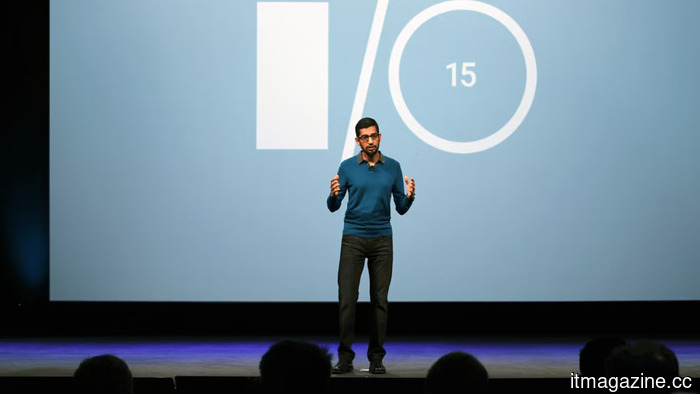 Alphabet intends to conduct its inaugural yen bond offering to finance its artificial intelligence development.
Alphabet has appointed Mizuho, Bank of America, and Morgan Stanley to manage its inaugural bond sale denominated in yen.
Alphabet intends to conduct its inaugural yen bond offering to finance its artificial intelligence development.
Alphabet has appointed Mizuho, Bank of America, and Morgan Stanley to manage its inaugural bond sale denominated in yen.
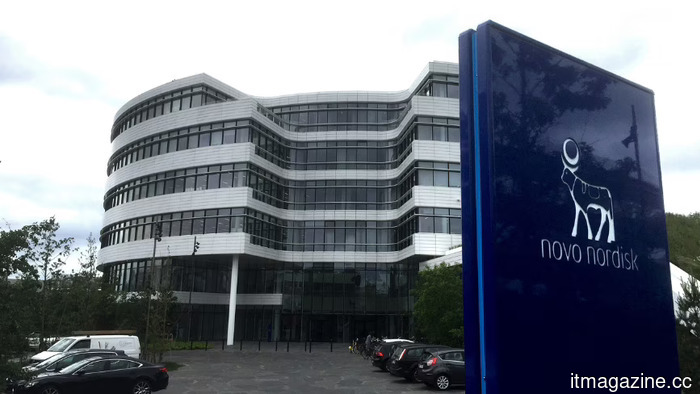 Novo Nordisk transfers Parkinson's cell therapy to Cellular Intelligence, which is backed by Zuckerberg.
Novo Nordisk has transferred its Parkinson's cell therapy, STEM-PD, which was previously on hold, to the AI biotech company Cellular Intelligence in exchange for equity and milestone payments.
Novo Nordisk transfers Parkinson's cell therapy to Cellular Intelligence, which is backed by Zuckerberg.
Novo Nordisk has transferred its Parkinson's cell therapy, STEM-PD, which was previously on hold, to the AI biotech company Cellular Intelligence in exchange for equity and milestone payments.
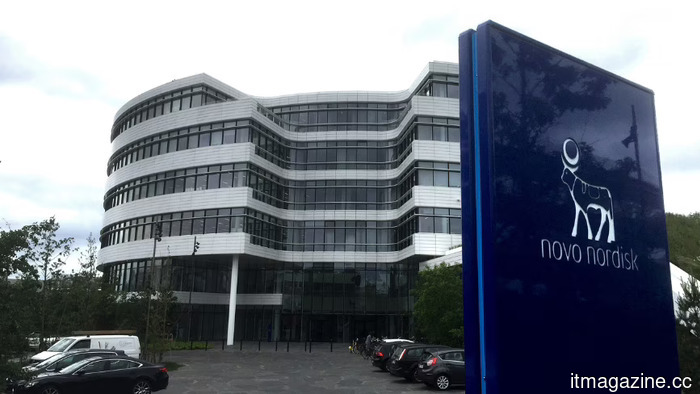 Novo Nordisk transfers Parkinson's cell therapy to Cellular Intelligence, which is supported by Zuckerberg.
Novo Nordisk has transferred STEM-PD, an unused cell therapy for Parkinson's, to the AI biotechnology company Cellular Intelligence in exchange for equity and certain milestones.
Novo Nordisk transfers Parkinson's cell therapy to Cellular Intelligence, which is supported by Zuckerberg.
Novo Nordisk has transferred STEM-PD, an unused cell therapy for Parkinson's, to the AI biotechnology company Cellular Intelligence in exchange for equity and certain milestones.
 Fervo Energy, backed by Bill Gates, has increased its IPO target to $1.82 billion with a valuation of $7.4 billion.
The geothermal developer Fervo Energy has increased its US IPO target to a maximum of $1.82 billion, up from the previous $1.33 billion, according to a filing with the SEC on Monday.
Fervo Energy, backed by Bill Gates, has increased its IPO target to $1.82 billion with a valuation of $7.4 billion.
The geothermal developer Fervo Energy has increased its US IPO target to a maximum of $1.82 billion, up from the previous $1.33 billion, according to a filing with the SEC on Monday.
The creators of security-focused GrapheneOS are calling out the tactics used by Google and Apple.
Google's reCAPTCHA is experimenting with a system that asks you to scan a QR code using an Apple or Google-certified device. Here's why this is more significant than it appears.