

OpenAI introduces a $4 billion Deployment Company in collaboration with TPG, Advent, Bain, and Brookfield.
OpenAI has launched a new initiative known as OpenAI Deployment Company, supported by over $4 billion in initial funding from a consortium of 19 firms led by TPG, which includes Advent International, Bain Capital, and Brookfield as co-lead founding partners, as announced on Monday.
This new entity, which will be mainly owned and controlled by OpenAI, is designed to integrate advanced AI engineers into enterprise clients and manage complex multi-team implementations of OpenAI’s models. To accelerate staffing, OpenAI is acquiring Tomoro, a London-based AI consulting firm established in 2023, which already has clients like Mattel, Red Bull, Tesco, and Virgin Atlantic.
The structure can be seen as a combination of a joint venture, a consulting acquisition, and a strategic move in response to competition from Anthropic. OpenAI's products have been highly successful in consumer markets, with ChatGPT being the most widely used AI application ever. However, in the past year, enterprise contract conversions—the segment with the highest revenue per customer—have favored Anthropic. Eight of the top ten Fortune 500 companies are using Claude, which has generated over $2.5 billion in annualized revenue since its launch. The OpenAI Deployment Company represents a significant effort to bridge this gap.
In his statement regarding the launch, OpenAI’s Chief Operating Officer Brad Lightcap highlighted, “Our customers indicate they require assistance transitioning from pilot projects to full-scale production. The Deployment Company will embed our engineers within their teams, equipped with the necessary resources to deliver.”
This statement reflects the current landscape of enterprise AI in 2026: model performance is no longer the biggest hurdle. The real challenges lie in integration, change management, evaluation tools, security assessments, and the slow process of redesigning business workflows necessary for genuine adoption.
Anthropic has been heavily investing in these capabilities through its partner network and various focused acquisitions, while OpenAI is now responding with a different strategy.
The involvement of TPG is noteworthy; the private equity firm has been a significant investor in technology services recently, holding positions in major global consultancies like Cognizant, Mantras, and MEMSA. TPG's partnership with Advent and Bain represents capital that can help build the operational foundation around a software company. Brookfield’s participation brings in an infrastructure investor whose portfolio increasingly includes AI-related data center assets; this combination allows the Deployment Company to grow its delivery organization without OpenAI having to shoulder the entire cost on its financial statements.
The price for the acquisition of Tomoro has not been revealed. Founded in 2023, Tomoro was created as an OpenAI-aligned consultancy and effectively acted as the unofficial deployment partner for OpenAI in Europe and the UK, with several of its founders having previously worked at OpenAI or within its commercial team. Integrating Tomoro into the formal structure eliminates the ambiguity between partnership and employment that had complicated large customer relationships.
The listed clients (Mattel, Red Bull, Tesco, Virgin Atlantic) serve as useful marketing and evidence that the consulting operations have been generating revenue. OpenAI aims to reverse Anthropic’s 32% lead in the enterprise LLM API market, and the acquisition of Tomoro is the first step in this initiative.
The rationale behind the $4 billion investment is worth noting. The Deployment Company is not merely an internal consulting unit; it has been established with enough capital to support its own research and development, hiring, and partner integrations, suggesting OpenAI anticipates the entity will initially operate at a significant loss.
Analysts project that the unit may grow to employ between 2,000 and 4,000 deployment engineers within three years; this workforce, with fully-loaded compensation, supports a multi-billion-dollar annual run rate even before any revenue from customer engagements is recognized. OpenAI’s strategic belief is that the projects these engineers execute will recover costs via enterprise contract conversions that would have otherwise benefitted Anthropic or internal customer engineering teams.
Some investors may scrutinize this premise skeptically. The secondary-market interest in OpenAI’s $852 billion valuation has been increasing through 2026, with secondary-market prices for OpenAI shares falling below the primary market value.
The structure of the Deployment Company is partly a response to this scrutiny; it turns what would typically be hard-to-evaluate “future enterprise revenue” into a tangible delivery asset whose progress can be tracked through customer wins and bookings. The due diligence from the private equity consortium on the entity’s economics signals that TPG, Advent, Bain, and Brookfield do not invest large amounts in structures that do not demonstrate viable unit economics.
Anthropic’s next moves are an intriguing short-term variable. The company is enhancing its enterprise capabilities through a different strategy (partnering with major Wall Street firms, a partner-network program, and a marketplace for Claude-powered applications). These two approaches illustrate differing theories on delivering enterprise AI.
OpenAI’s model resembles a Goldman Sachs-style embedded expert approach, while Anthropic’s
Other articles
 A $13,500 Unitree robot was 'blessed' at the Jogyesa Temple in Seoul.
A Unitree robot was 'blessed' at the Jogyesa Temple in Seoul. Amidst the event, the Jogye Order established five AI ethics guidelines that are worth considering.
A $13,500 Unitree robot was 'blessed' at the Jogyesa Temple in Seoul.
A Unitree robot was 'blessed' at the Jogyesa Temple in Seoul. Amidst the event, the Jogye Order established five AI ethics guidelines that are worth considering.
 BYD's incredibly rapid Flash charging technology for electric vehicles became so hot that it could roast a turkey.
A practical evaluation of BYD's Megawatt Flash Charge technology showed battery temperatures reaching 169.6°F, significantly exceeding China's advised safety limit for lithium iron phosphate cells, which has sparked worries regarding the long-term health of the batteries.
Demand for Mac mini is reaching new heights due to Claude AI agents.
The Mac mini from Apple has become the standard hardware for self-hosted Claude and ChatGPT agents that utilize the OpenClaw framework.
BYD's incredibly rapid Flash charging technology for electric vehicles became so hot that it could roast a turkey.
A practical evaluation of BYD's Megawatt Flash Charge technology showed battery temperatures reaching 169.6°F, significantly exceeding China's advised safety limit for lithium iron phosphate cells, which has sparked worries regarding the long-term health of the batteries.
Demand for Mac mini is reaching new heights due to Claude AI agents.
The Mac mini from Apple has become the standard hardware for self-hosted Claude and ChatGPT agents that utilize the OpenClaw framework.
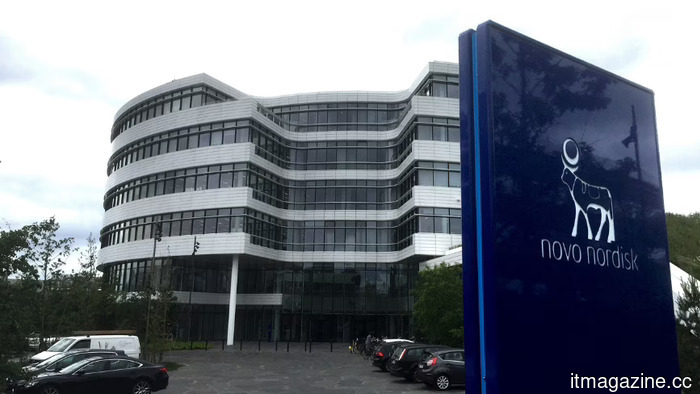 Novo Nordisk transfers Parkinson's cell therapy to Cellular Intelligence, which is supported by Zuckerberg.
Novo Nordisk has transferred STEM-PD, an unused Parkinson's cell therapy, to the AI biotech Cellular Intelligence in exchange for equity and certain milestones.
Novo Nordisk transfers Parkinson's cell therapy to Cellular Intelligence, which is supported by Zuckerberg.
Novo Nordisk has transferred STEM-PD, an unused Parkinson's cell therapy, to the AI biotech Cellular Intelligence in exchange for equity and certain milestones.
 A Samsung leak indicates that the company is still committed to developing tri-fold phones.
A recent leak based on a Samsung patent reveals a potential design for the Galaxy Z TriFold 2, featuring a slot for the S Pen integrated into the hinge area.
A Samsung leak indicates that the company is still committed to developing tri-fold phones.
A recent leak based on a Samsung patent reveals a potential design for the Galaxy Z TriFold 2, featuring a slot for the S Pen integrated into the hinge area.
 BYD's lightning-quick Flash charging technology for electric vehicles became so heated that it could roast a turkey.
A practical evaluation of BYD's Megawatt Flash Charge technology measured battery temperatures at 169.6°F, significantly exceeding China's advised safety limit for lithium iron phosphate batteries, which has sparked worries regarding the long-term health of the batteries.
BYD's lightning-quick Flash charging technology for electric vehicles became so heated that it could roast a turkey.
A practical evaluation of BYD's Megawatt Flash Charge technology measured battery temperatures at 169.6°F, significantly exceeding China's advised safety limit for lithium iron phosphate batteries, which has sparked worries regarding the long-term health of the batteries.
OpenAI introduces a $4 billion Deployment Company in collaboration with TPG, Advent, Bain, and Brookfield.
OpenAI has established OpenAI Deployment Company, backed by over $4 billion in initial funding from a syndicate of 19 firms led by TPG.