
Shein claims that Temu is engaged in large-scale copyright infringement.
The two-week trial began on Monday. Shein's lawsuit includes approximately 2,300 product images; Temu has relinquished its defense regarding those images and is presenting anti-competition allegations in return.
Shein has accused Temu of copyright violation on a significant scale as the trial commenced at London's High Court. Shein's lawyer, Benet Brandreth, informed the court that Temu has utilized around 2,300 product images created by Shein's staff to promote similar clothing on Temu's website.
"This was an effort to gain an advantage over an existing market participant, and we assert that Temu has attempted to achieve an unfair edge," Brandreth stated.
Temu has effectively given up its defense regarding the contested images, shifting the court's attention to issues of damages, injunctive relief, and the broader competition claims.
Temu's counter-claim argues that Shein partakes in anti-competitive conduct by binding suppliers in exclusive manufacturing contracts that prevent those same workshops from selling to rival platforms.
The hearings are taking place in the Business and Property Courts. The judge has allocated two weeks for evidence presentation, with a decision unlikely to be reached before late summer.
This London case is part of an ongoing multi-jurisdictional legal conflict between the two Chinese-founded companies, who have also filed lawsuits against each other in the US, the EU, and Singapore.
PDD Holdings, the parent company of Temu, is listed on Nasdaq, while Shein is in the process of preparing for a public listing, with plans oscillating between Hong Kong and London due to regulatory challenges.
The dispute unfolds amid increasing regulatory scrutiny for both parties. The UK's Competition and Markets Authority has been investigating the companies for consumer protection and pricing transparency issues since 2024. Additionally, the Financial Conduct Authority is reviewing Shein’s IPO disclosures. The Trump administration took steps in February 2025 to eliminate the US de minimis exemption, which has been crucial to both companies' growth strategies in the U.S.
Brandreth framed Shein’s business argument around the notion that Temu’s copying of images enabled them to produce complete product pages more quickly and economically than they could have otherwise achieved.
Temu's counter-claim is asking the court to evaluate whether Shein's exclusive supplier agreements amount to a trade restraint under UK law and if they should be dismantled.
Neither company provided additional comments outside of court on Monday.
The hearing is ongoing. The case is being monitored by competition regulators in Brussels, Washington, and London, as well as by the banks of both companies in anticipation of Shein’s listing process.
Other articles
 The Samsung Galaxy S25 series has recently received the significant One UI 8.5 update in the United States.
Samsung One UI 8.5 is being released for the Galaxy S25 series in the US, featuring customizable quick settings, enhanced photo editing tools, and several minor yet pleasing updates.
The Samsung Galaxy S25 series has recently received the significant One UI 8.5 update in the United States.
Samsung One UI 8.5 is being released for the Galaxy S25 series in the US, featuring customizable quick settings, enhanced photo editing tools, and several minor yet pleasing updates.
 Novo Nordisk transfers Parkinson's cell therapy to Cellular Intelligence, which is supported by Zuckerberg.
Novo Nordisk has transferred STEM-PD, an unused cell therapy for Parkinson's, to the AI biotechnology company Cellular Intelligence in exchange for equity and certain milestones.
Novo Nordisk transfers Parkinson's cell therapy to Cellular Intelligence, which is supported by Zuckerberg.
Novo Nordisk has transferred STEM-PD, an unused cell therapy for Parkinson's, to the AI biotechnology company Cellular Intelligence in exchange for equity and certain milestones.
 OpenAI introduces a $4 billion deployment firm in partnership with TPG, Advent, Bain, and Brookfield.
OpenAI has established OpenAI Deployment Company with an initial investment exceeding $4 billion from a syndicate of 19 firms, spearheaded by TPG.
OpenAI introduces a $4 billion deployment firm in partnership with TPG, Advent, Bain, and Brookfield.
OpenAI has established OpenAI Deployment Company with an initial investment exceeding $4 billion from a syndicate of 19 firms, spearheaded by TPG.
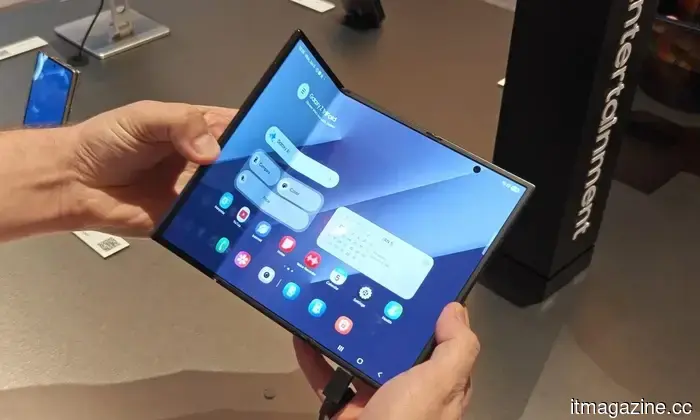 A Samsung leak indicates that the company is still committed to developing tri-fold phones.
A recent leak based on a Samsung patent reveals a potential design for the Galaxy Z TriFold 2, featuring a slot for the S Pen integrated into the hinge area.
A Samsung leak indicates that the company is still committed to developing tri-fold phones.
A recent leak based on a Samsung patent reveals a potential design for the Galaxy Z TriFold 2, featuring a slot for the S Pen integrated into the hinge area.
 The creators of security-focused GrapheneOS are calling out the tactics used by Google and Apple.
Google's reCAPTCHA is experimenting with a system that asks you to scan a QR code using an Apple or Google-certified device. Here's why this is more significant than it appears.
The creators of security-focused GrapheneOS are calling out the tactics used by Google and Apple.
Google's reCAPTCHA is experimenting with a system that asks you to scan a QR code using an Apple or Google-certified device. Here's why this is more significant than it appears.
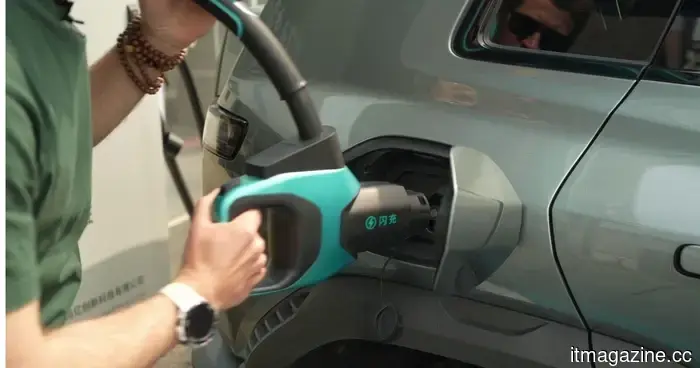 BYD's lightning-quick Flash charging technology for electric vehicles became so heated that it could roast a turkey.
A practical evaluation of BYD's Megawatt Flash Charge technology measured battery temperatures at 169.6°F, significantly exceeding China's advised safety limit for lithium iron phosphate batteries, which has sparked worries regarding the long-term health of the batteries.
BYD's lightning-quick Flash charging technology for electric vehicles became so heated that it could roast a turkey.
A practical evaluation of BYD's Megawatt Flash Charge technology measured battery temperatures at 169.6°F, significantly exceeding China's advised safety limit for lithium iron phosphate batteries, which has sparked worries regarding the long-term health of the batteries.
Shein claims that Temu is engaged in large-scale copyright infringement.
Shein has claimed that Temu has replicated approximately 2,300 product images on a large scale as a two-week trial commenced at London's High Court.