
How Lodestellar is Utilizing AI to Enhance EPD Quality in Construction
**TL;DR:** Lodestellar is leveraging AI to assist manufacturers in enhancing the quality of Environmental Product Declarations (EPDs), minimizing delays, compliance issues, and verification expenses in the construction sector. The platform functions like a “linter” for sustainability data, aiding businesses in generating clearer and more dependable environmental disclosures amid the growing global demand for verified carbon data. The days of greenwashing may be ending, particularly in construction, as manufacturers adopt a cost-effective solution to foster data-driven transparency regarding their environmental impacts.
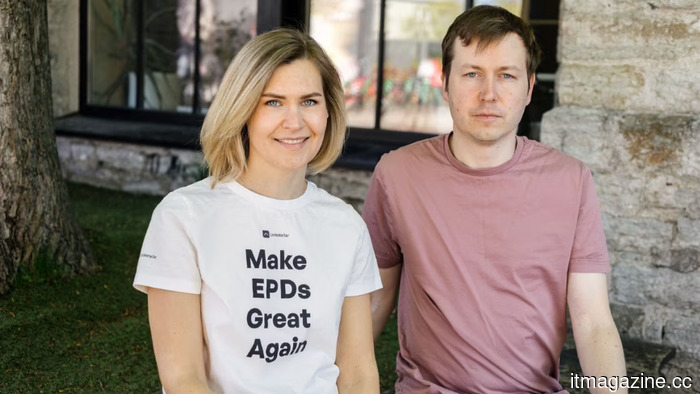
“We have observed that manufacturers are eager to move away from vague eco slogans and self-declared green certifications, which have proven ineffective,” states Lodestellar CEO Anni Oviir. “Sustainability is transitioning from marketing to a data science focus where it rightfully belongs.” Oviir heads a team of Life Cycle Assessment (LCA) experts in Estonia who developed Lodestellar to assess the quality of EPDs.
EPDs employ scientific methodologies and independent verification to disclose detailed environmental impacts for manufacturers of building products, prompting a rush to publish them lest they miss out on tenders. This is driven by impending regulations and increasing global market pressures, resulting in stricter limits on the carbon footprint of new constructions. The European Commission has recently introduced an EU-wide framework aimed at standardizing the calculation of building life cycle impacts, facilitating comparability across different construction products.
Consequently, specifiers are increasingly choosing suppliers based on the concrete data in their EPDs—if available. If a potential supplier lacks an EPD, specifiers must resort to assumed values, which tend to overestimate the carbon cost of production, thus providing a significant competitive edge to those with EPDs. Approximately 50 EPDs are published each day in the construction industry, continuing an upward trend that has inundated independent verifiers responsible for ensuring these declarations comply with complex standards.
EPD verifiers require proper qualifications, yet development is often performed by non-specialists, leading to a considerable bottleneck. Crafting a single EPD can exceed €10,000 and may take over six months, involving multiple revisions during verification and publication, with no guarantee of a successful outcome if the declaration doesn't meet established criteria.
Lodestellar was designed to address these challenges by offering EPD developers an automated quality review that delivers detailed line-by-line guidance based on all the intricate requirements necessary for successful verification. “When we identify quality issues early, even prior to submission for verification, we can help manufacturers avoid significant costs, hassle, and delays later in the process,” Oviir explains.
The tool is now aiding some prominent names in the building product sector in elevating the quality of their EPDs and expediting their publication.
**Other sectors are observing:**
Construction is responsible for around 40% of global greenhouse gas emissions, which has led to a proactive stance in carbon accountability by the sector. The EPD system commenced as a voluntary industry initiative in the Nordic region, where Oviir, an EPD verifier and LCA educator, has worked on harmonizing rules and co-authoring her nation's national carbon footprinting method.
Policymakers across the globe are now aiming to institutionalize EPD usage, hoping it will encourage more innovative low-carbon production and serve as a model for other sectors. Within the EU, EPD data will soon be integrated into new Digital Product Passports throughout Europe. “The broader accessibility of EPDs benefits everyone in the supply chain,” says Oviir. “Nevertheless, for this system to function effectively and yield maximum value at scale, we need to enhance both EPD quality and understanding across the construction industry. Results must be reliable and comprehensible, even for non-specialists.”
**A linter for EPDs:**
Estonia is well-known for its active tech ecosystem, producing more unicorns per capita than Silicon Valley, including companies like Skype, Wise, and Bolt. Additionally, Estonia houses construction product manufacturers that heavily export to Nordic countries and have been early adopters of EPDs to maintain a competitive edge.
In 2022, the Estonian Economic Ministry aimed to merge its two business arenas by bringing software experts and construction professionals together for a digital construction hackathon to spark “game-changing digital tools that could be utilized throughout the global construction sector.” A panel of experts awarded first place to Lodestellar, aiding its further development, which is now spearheaded by Tanel Teinemaa, an experienced software developer associated with several leading Estonian tech firms and the current CTO at Lodestellar.
Teinemaa highlights that even top-tier programmers conduct automated quality checks on their code, akin to using a linter, to catch minor errors beforehand and prevent larger issues later. Lodestellar is based on this model, he asserts. “Like any software developer, I regularly run automated quality checks on my code, which ultimately allows me to deliver added value,” says Teinemaa. “The creators of
Other articles
 Discord Nitro now offers Xbox Game Pass as a complimentary addition.
Discord Nitro now includes the Xbox Game Pass Starter Edition, enhancing its appeal for users who primarily enjoy gaming with friends.
Discord Nitro now offers Xbox Game Pass as a complimentary addition.
Discord Nitro now includes the Xbox Game Pass Starter Edition, enhancing its appeal for users who primarily enjoy gaming with friends.
 Beatbot Sora 70 Leads the Charge for This Summer's Smart Pool Enhancements, Alongside Sora 30 and AquaSense Expanding the Options
Beatbot’s newest pool robots, featuring the Sora 70, aim to address the shortcomings that many systems overlook. Boasting full coverage, AI-based navigation, and special Anniversary pricing for a limited time, this lineup provides a straightforward upgrade option for pool owners who want to minimize maintenance efforts and dedicate more time to enjoying their pool.
Beatbot Sora 70 Leads the Charge for This Summer's Smart Pool Enhancements, Alongside Sora 30 and AquaSense Expanding the Options
Beatbot’s newest pool robots, featuring the Sora 70, aim to address the shortcomings that many systems overlook. Boasting full coverage, AI-based navigation, and special Anniversary pricing for a limited time, this lineup provides a straightforward upgrade option for pool owners who want to minimize maintenance efforts and dedicate more time to enjoying their pool.
 ZoomInfo's stock fell by 29% following a reduction in guidance and a restructuring plan that will eliminate 600 jobs, as artificial intelligence reshapes the pricing of B2B sales intelligence.
ZoomInfo surpassed Q1 earnings expectations but reduced its full-year revenue forecast by $62 million and revealed a plan to restructure involving 600 job cuts. The stock dropped 29% to $4.32 in response, as AI competitors undermine the B2B database model.
ZoomInfo's stock fell by 29% following a reduction in guidance and a restructuring plan that will eliminate 600 jobs, as artificial intelligence reshapes the pricing of B2B sales intelligence.
ZoomInfo surpassed Q1 earnings expectations but reduced its full-year revenue forecast by $62 million and revealed a plan to restructure involving 600 job cuts. The stock dropped 29% to $4.32 in response, as AI competitors undermine the B2B database model.
 Windows 11 is experimenting with a low-latency mode that noticeably accelerates application launches.
Even on high-performance hardware, you've likely observed that Windows 11 can seem less reactive than expected. Small lags in fundamental tasks such as accessing the Start menu or moving through File Explorer can make the system feel more sluggish and less refined compared to competitors like macOS. Microsoft seems to be aware of this problem and may […]
Windows 11 is experimenting with a low-latency mode that noticeably accelerates application launches.
Even on high-performance hardware, you've likely observed that Windows 11 can seem less reactive than expected. Small lags in fundamental tasks such as accessing the Start menu or moving through File Explorer can make the system feel more sluggish and less refined compared to competitors like macOS. Microsoft seems to be aware of this problem and may […]
 Chuwi's CoreBook Air aims to be an uncommon ultra-light Copilot+ laptop that comes at an affordable price.
Priced at $800, Chuwi's CoreBook Air 226V offers Intel Lunar Lake performance, 97 TOPS of on-device AI, a 2.8K 90Hz display with 100% sRGB coverage, and features dual Thunderbolt 4 ports.
Chuwi's CoreBook Air aims to be an uncommon ultra-light Copilot+ laptop that comes at an affordable price.
Priced at $800, Chuwi's CoreBook Air 226V offers Intel Lunar Lake performance, 97 TOPS of on-device AI, a 2.8K 90Hz display with 100% sRGB coverage, and features dual Thunderbolt 4 ports.
 There's never been a more ideal moment to purchase an e-ink reading device.
The e-ink device market has seen remarkable growth. With options ranging from basic readers to color note-taking devices, there has never been a more opportune moment to set aside your phone screen and choose a specialized reading device.
There's never been a more ideal moment to purchase an e-ink reading device.
The e-ink device market has seen remarkable growth. With options ranging from basic readers to color note-taking devices, there has never been a more opportune moment to set aside your phone screen and choose a specialized reading device.
How Lodestellar is Utilizing AI to Enhance EPD Quality in Construction
Lodestellar is assisting manufacturers in enhancing the quality of Environmental Product Declarations through AI-driven evaluations, facilitating quicker compliance and increasing the transparency of construction data.