
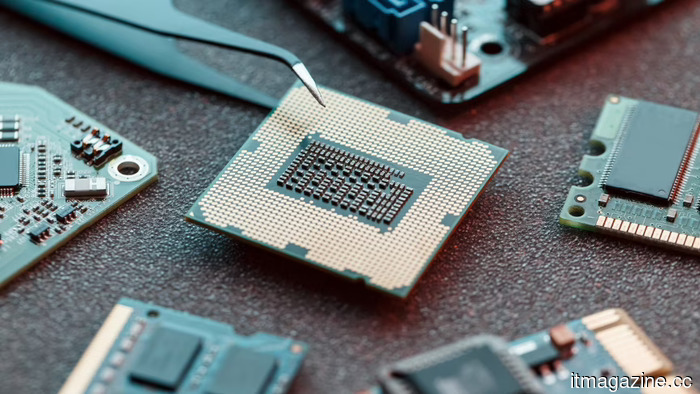
GPUaaS is bolstering the perception of European AI sovereignty.
Europe is investing billions into the development and infrastructure of AI. Access to GPUs (graphics processing units) is rapidly increasing through cloud platforms and GPU-as-a-service (GPUaaS) providers, becoming a critical enabler for AI creation and implementation. The basic premise is clear: by scaling computing power, capabilities are enhanced.
However, despite the initiatives undertaken by EU Member States, such as sovereign cloud projects and federated data infrastructures, the European AI environment faces a significant bottleneck: reliance on GPUs predominantly designed by non-European companies like NVIDIA and manufactured by Asian foundries, especially Taiwan's TSMC. Europe currently lacks the opportunity for chip independence at either level in the short term, which has direct consequences for its technological sovereignty.
The semiconductor sector is experiencing a structural boom fueled by increased demand for AI applications, including autonomous systems, robotics, and automated processes. According to Deloitte, the global semiconductor market is expected to approach $975 billion in annual sales by 2026, with generative AI chips expected to generate around $500 billion of that revenue.
Originally intended for graphics rendering, GPUs have become essential to modern AI systems because they can handle large-scale computations in parallel, making them crucial for the training and deployment of large language models (LLMs) and agentic AI systems. GPUaaS enables organizations to rent computing power by the minute or hour, reducing the costs and complexities associated with ownership.
Nonetheless, the GPUaaS landscape is largely dominated by U.S.-based hyperscalers and semiconductor companies. Firms like Amazon, Google, and Microsoft control a significant portion of global cloud infrastructure. This concentration marks semiconductors as a strategic asset, prompting governments to weigh export controls against domestic capacity-building initiatives, as ownership of AI technology and access to chips become vital for national security, supply chain resilience, and technological independence.
In response, the European Commission has launched initiatives such as the AI Continent Action Plan, which aims to bolster Europe's AI capabilities by enhancing large-scale AI data and computing infrastructure, ensuring access to extensive and high-quality data, developing and applying AI in key sectors, nurturing AI skills and talent, and establishing regulations. This includes €20 billion allocated for up to five AI gigafactories, as part of a larger €200 billion investment initiative with contributions from both public and private sectors. Previous efforts toward sovereign infrastructure include the EU's €180 million sovereign cloud contracts given to providers like Scaleway, StackIT, and Post Telecom.
Progress in infrastructure is already evident. By 2026, Europe will be operating 14 supercomputers and 19 AI factories under the EuroHPC JU (Joint Undertaking), supported by around €10 billion from the combined funding of the Commission and Member States between 2021 and 2027. European providers like French cloud leader OVHcloud, along with other initiatives such as Deutsche Telekom and T-Systems, which in early 2026 rolled out T Cloud Public along with their Industrial AI Cloud in Munich running 10,000 NVIDIA Blackwell GPUs, are advancing towards sovereign cloud and AI infrastructure.
Nonetheless, these endeavors are hindered by a persistent issue: reliance on external chip suppliers such as NVIDIA and AMD. The AI computing landscape is heavily concentrated among a few dominant players, with NVIDIA leading the global market in AI GPUs, constituting approximately 85% of the sector's share. Analysts predict this percentage may drop to about 75% by 2026 as AMD and other custom silicon gain ground, while companies like Advanced Micro Devices (AMD), Broadcom, and Qualcomm play essential roles in the performance-critical layer of AI infrastructure.
In terms of infrastructure, U.S. cloud providers monopolize GPUaaS in Europe: AWS, Microsoft Azure, and Google Cloud together account for a large majority of European cloud capacity, with hyperscalers overseeing roughly 70% of European cloud infrastructure revenue. Initiatives such as the Chips JU, the operational body of the EU Chips Act, aim to fortify Europe’s semiconductor ecosystem through coordinated efforts among member states and private entities. However, due to the high capital requirements and concentration of supply chains, localization of semiconductor manufacturing is structurally challenging. Consequently, dependency on GPUs and advanced chips is unlikely to diminish significantly in the short to medium term, with Europe still reliant on NVIDIA for about 85% of its AI GPUs.
While GPUaaS enhances access to computing resources, it does not alter the ownership dynamics. Beyond technical dependency, economic influence follows the control over computing resources. Hyperscalers reap disproportionate profits by mediating access to limited GPU resources, leaving European users vulnerable to externally determined pricing, allocations, and profit margins.
In 2026, the combined capital expenditure (CapEx) of Google, Amazon, Meta, and Microsoft for AI infrastructure is projected at roughly $725 billion, a 77% increase from $410 billion in 2025; this figure is greater than the GDP of many European nations, highlighting an investment capacity that Europe cannot realistically
Other articles
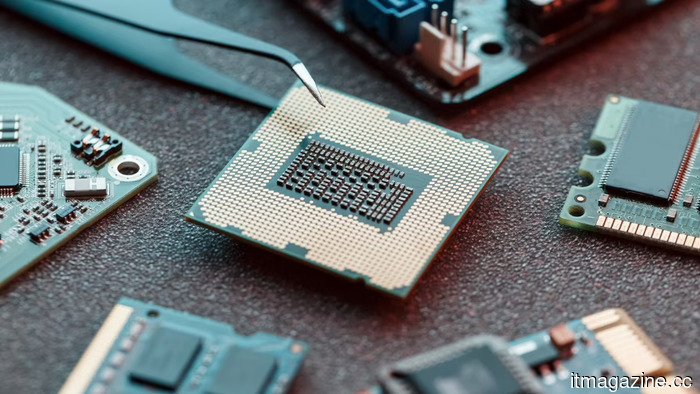 GPUaaS is strengthening the perception of AI sovereignty in Europe.
Access does not equate to sovereignty. Europe's €20 billion investment in AI gigafactories may increase its reliance on Nvidia and US hyperscalers, rather than lessen it.
GPUaaS is strengthening the perception of AI sovereignty in Europe.
Access does not equate to sovereignty. Europe's €20 billion investment in AI gigafactories may increase its reliance on Nvidia and US hyperscalers, rather than lessen it.
 The dimensions of a credit card: This completely operational computer also includes an e-ink display.
The open-source Muxcard combines a working computer, E Ink screen, NFC, and wireless connectivity within a design that is as slim and compact as a credit card.
The dimensions of a credit card: This completely operational computer also includes an e-ink display.
The open-source Muxcard combines a working computer, E Ink screen, NFC, and wireless connectivity within a design that is as slim and compact as a credit card.
 Jensen Huang addressed the class of 2026 at CMU:
Jensen Huang gave the commencement speech at Carnegie Mellon University, presenting AI as a pivotal moment for the reindustrialization of the United States.
Jensen Huang addressed the class of 2026 at CMU:
Jensen Huang gave the commencement speech at Carnegie Mellon University, presenting AI as a pivotal moment for the reindustrialization of the United States.
 I allowed this Galaxy S26 feature to manage my battery, and it truly functions well.
The Device Care functions of the Galaxy S26 manage battery health, background applications, and system optimization in a way that truly impacts performance over time. After initial setup, it generally remains unobtrusive, allowing you to use your phone with ease.
I allowed this Galaxy S26 feature to manage my battery, and it truly functions well.
The Device Care functions of the Galaxy S26 manage battery health, background applications, and system optimization in a way that truly impacts performance over time. After initial setup, it generally remains unobtrusive, allowing you to use your phone with ease.
 Anthropic claims that Claude acquired the ability to blackmail by studying narratives featuring malevolent AI.
Anthropic has linked Claude's pre-release blackmail actions to online content that depicts AI as malevolent and focused on self-preservation.
Anthropic claims that Claude acquired the ability to blackmail by studying narratives featuring malevolent AI.
Anthropic has linked Claude's pre-release blackmail actions to online content that depicts AI as malevolent and focused on self-preservation.
 Dua Lipa files a $15 million lawsuit against Samsung regarding a photo on the packaging of Crystal UHD TVs.
Dua Lipa has initiated a federal lawsuit for $15 million against Samsung Electronics, claiming that her backstage photo from 2024 has been utilized on the packaging for Crystal UHD TVs since 2025.
Dua Lipa files a $15 million lawsuit against Samsung regarding a photo on the packaging of Crystal UHD TVs.
Dua Lipa has initiated a federal lawsuit for $15 million against Samsung Electronics, claiming that her backstage photo from 2024 has been utilized on the packaging for Crystal UHD TVs since 2025.
GPUaaS is bolstering the perception of European AI sovereignty.
Access does not equate to sovereignty. Europe's €20 billion investment in an AI gigafactory may risk increasing its reliance on Nvidia and US hyperscalers rather than lessening it.