
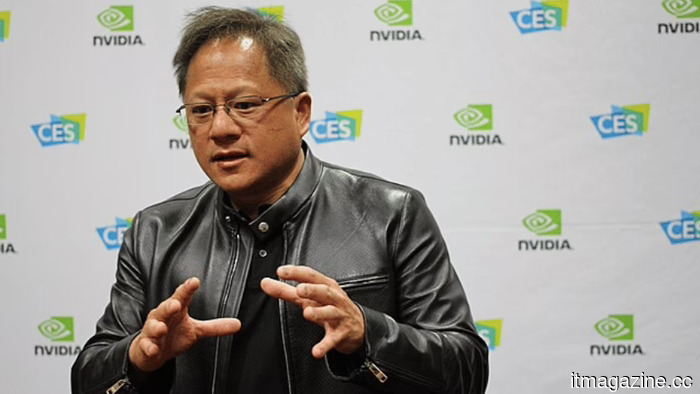
NVIDIA surpasses $40 billion in AI equity investments by 2026.
OpenAI received $30 billion, while the remaining funds are distributed among CoreWeave, IREN, Corning, Nebius, and about two dozen private funding rounds. This strategy resembles vertical integration more than typical venture investing, raising questions about circular-deal dynamics.
According to CNBC, NVIDIA has invested over $40 billion in AI equity within the first four months of 2026, based on public records and company disclosures. The largest single investment in this total is the $30 billion directed at OpenAI in late February. The additional $10 billion-plus is allocated across seven large-scale deals in publicly traded firms, as well as around two dozen rounds for private startups.
Among the public investments, disclosed amounts include as much as $3.2 billion in Corning, a maker of optical fiber and ceramics that provides infrastructure for AI data centers, and $2.1 billion in IREN, a data center operator transitioning from Bitcoin mining to GPU computing.
These investments were structured as warrants or commitments rather than traditional equity, with the timing of cash disbursement at NVIDIA's discretion. The company also increased its stakes in CoreWeave and Nebius during this period.
The investment in CoreWeave, initially $2 billion last January, is currently valued at approximately $4.4 billion, representing about 28% of NVIDIA’s equity portfolio. The $2 billion Nebius investment in March, while smaller financially, includes a clear five-gigawatt deployment commitment, mirroring the logic behind the new $2.1 billion warrant for IREN.
The consistent trend here is capital flowing into companies purchasing NVIDIA GPUs in large quantities to lease them to hyperscalers and developers of frontier models, a setup now labeled as neocloud.
NVIDIA clearly outlines its strategy. CFO Colette Kress mentioned in the latest earnings call that the firm invests where it identifies a need to ensure that computing capacity is being developed around its hardware. According to its 10-K filing, the company invested $17.5 billion in private firms and infrastructure funds last fiscal year, mainly in early-stage companies, with the current year's investment pace already surpassing the entirety of the previous year.
In relative terms, these investments are modest against NVIDIA's approximately $200 billion in cash and equivalents, meaning they do not put pressure on the balance sheet; however, they signal the chipmaker's perception of its position within the AI value chain.
NVIDIA is increasingly involved both upstream and downstream of its chips. The investment in OpenAI is not an independent wager; it comes with multi-year computing commitments and alignment with silicon roadmaps. Positions in CoreWeave and Nebius include capacity reservations and joint-architecture agreements. The investment in Corning underpins the optical-interconnect supply chain crucial for next-gen data-center fabrics.
From a holistic perspective, NVIDIA is enhancing its influence over the financing, deployment, and connectivity of its silicon. Some analysts refer to this as vertical integration; others call it circular financing.
The critique of circular deals has gained momentum over the last two quarters. NVIDIA invests in a company, which then commits to a long-term GPU purchase agreement with NVIDIA; revenue from those GPU sales could be seen as a return on NVIDIA’s investment.
Oracle's $300 billion deal with OpenAI and the concentration concerns it raised is often cited as an example of this broader issue; the revenue concentration among counterparties is one reason analysts have adopted a more cautious view of Oracle, even with growing headline figures.
The trend is similar with NVIDIA’s smaller portfolio companies, albeit involving a larger number of counterparties.
However, this comparison is not entirely fair. NVIDIA’s investments are typically minority shares in companies with diverse customer bases; for instance, Meta's additional $21 billion investment in CoreWeave illustrates that CoreWeave has clients beyond NVIDIA.
Companies like Mistral AI, Wayve, Lambda Labs, Genesis Therapeutics, Recraft, and JetBrains are all customers or investments with independent commercial rationales.
The criticism is more relevant for deals where NVIDIA is both a significant equity shareholder and a contractual customer of the same company; CoreWeave’s $6.3 billion purchase agreement with NVIDIA is the most frequently cited example.
A larger question remains: what will happen to the portfolio when demand for AI computing stabilizes? Most of NVIDIA’s investments are financially small compared to the parent company's revenue and cash reserves, meaning a write-down event would not affect its core operations.
The greater risk lies in reputational damage. Each new deal that bears similarities to previous ones adds to the perception that NVIDIA is essentially funding its own demand.
Both Wall Street and the SEC are beginning to consider whether the disclosure practices related to these deals are keeping pace with their scale.
Currently, the strategy appears to be yielding the desired results for NVIDIA. AI infrastructure capacity is being established in conjunction with where NVIDIA silicon operates, enabling model providers to secure computing resources they could not build independently, leading to
Other articles
 Trump Media announces a $405.9 million loss in Q1, primarily due to cryptocurrency write-downs.
In the first quarter of 2026, Trump Media & Technology Group reported a net loss of $405.9 million, primarily due to unrealized losses on its bitcoin and CRO investments.
Trump Media announces a $405.9 million loss in Q1, primarily due to cryptocurrency write-downs.
In the first quarter of 2026, Trump Media & Technology Group reported a net loss of $405.9 million, primarily due to unrealized losses on its bitcoin and CRO investments.
 A sensor the size of a rice grain could provide robots with a gentle touch, helping them avoid breaking items.
Scientists have developed a force sensor the size of a grain of rice that enables robots to detect pressure and twisting forces through light, and it is already being used to locate hidden tumors in tissue during initial tests.
A sensor the size of a rice grain could provide robots with a gentle touch, helping them avoid breaking items.
Scientists have developed a force sensor the size of a grain of rice that enables robots to detect pressure and twisting forces through light, and it is already being used to locate hidden tumors in tissue during initial tests.
 Alibaba combines Qwen AI with Taobao to enable a complete agentic shopping experience.
Alibaba is integrating its Qwen AI application with Taobao and Tmall, allowing the agent to access over 4 billion products.
Alibaba combines Qwen AI with Taobao to enable a complete agentic shopping experience.
Alibaba is integrating its Qwen AI application with Taobao and Tmall, allowing the agent to access over 4 billion products.
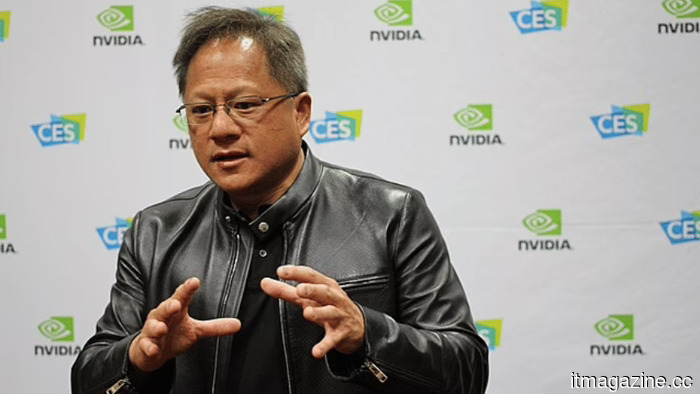 NVIDIA surpasses $40 billion in AI equity investments in 2026.
NVIDIA has pledged more than $40 billion to AI equity investments in early 2026, which encompasses $30 billion in OpenAI.
NVIDIA surpasses $40 billion in AI equity investments in 2026.
NVIDIA has pledged more than $40 billion to AI equity investments in early 2026, which encompasses $30 billion in OpenAI.
 Alibaba incorporates Qwen AI into Taobao for a complete agent-assisted shopping experience.
Alibaba is linking its Qwen AI application to Taobao and Tmall, enabling the agent to access over 4 billion products.
Alibaba incorporates Qwen AI into Taobao for a complete agent-assisted shopping experience.
Alibaba is linking its Qwen AI application to Taobao and Tmall, enabling the agent to access over 4 billion products.
 Trump Media announces a Q1 loss of $405.9 million, primarily due to reductions in cryptocurrency values.
In the first quarter of 2026, Trump Media & Technology Group reported a net loss of $405.9 million, primarily due to unrealized losses on its bitcoin and CRO investments.
Trump Media announces a Q1 loss of $405.9 million, primarily due to reductions in cryptocurrency values.
In the first quarter of 2026, Trump Media & Technology Group reported a net loss of $405.9 million, primarily due to unrealized losses on its bitcoin and CRO investments.
NVIDIA surpasses $40 billion in AI equity investments by 2026.
In early 2026, NVIDIA has pledged more than $40 billion towards AI equity investments, with $30 billion allocated to OpenAI.