
Alibaba incorporates Qwen AI into Taobao for a complete agent-assisted shopping experience.
The Qwen app is gaining access to the catalog of over 4 billion items from Taobao and Tmall, along with Alipay's integrated checkout, marking the most significant launch of agentic commerce by a Chinese platform to date. Alibaba is integrating its Qwen AI app with Taobao and Tmall, which are its two largest consumer marketplaces, representing the most ambitious trial of agentic shopping at scale, according to a Reuters report on Saturday, citing a reliable source.
With this integration, Qwen will have access to the full Taobao-Tmall catalog, surpassing four billion products, as well as a suite of Alibaba-developed tools for managing logistics, customer service, and after-sales processes. Shoppers using Qwen can request the AI to find products, compare prices from different sellers, perform virtual try-ons, track prices over a 30-day period, and place orders. The transaction is completed through Alipay, with the AI agent only stepping back for the final confirmation from the user. Within Taobao, the same Qwen models will drive a shopping assistant integrated with the existing app rather than existing as a separate feature.
This approach marks a significant departure from the way most Western e-commerce platforms have utilized generative AI. For example, ChatGPT's shopping integration with Shopify and Amazon’s Rufus assistant primarily offers search-style responses, while purchases take place on the retailer’s app or website, with separate systems handling payments, deliveries, and returns. In contrast, Alibaba’s framework allows the AI agent to manage the entire purchasing process, including payment and post-sale interactions, end-to-end. The vast four-billion-item catalog distinguishes it further; even a robust comparison with Western counterparts falls considerably short.
Wu Jia, Alibaba Group's VP, clearly articulated the company's strategy, stating it is focused on transitioning "from intelligence to agency." During a live demonstration, Qwen responded to a request for forty cups of bubble tea from a local chain, effortlessly placing the order via Taobao Instant Commerce, applying loyalty discounts, and completing the payment through Alipay, with delivery arriving shortly after. CEO Eddie Wu has positioned this investment as part of the more than $53 billion commitment Alibaba made to AI last year, emphasizing AGI as a pivotal strategic objective.
This launch occurs within a rapidly evolving Chinese agentic commerce market. Tencent recently introduced its enterprise-focused ClawPro agent, while ByteDance’s Doubao has integrated similar functionalities into WeChat-related platforms. Alibaba has been the most vocal about consumer-focused agentic flows, and this Qwen-Taobao integration represents its largest advancement thus far. Earlier in 2026, Qwen achieved 300 million monthly active users across Taobao, Tmall, Alipay, and other consumer platforms, recording approximately 140 million initial AI shopping experiences during the Chinese New Year campaign.
However, there are competitive and regulatory considerations to keep in mind. Alibaba’s e-commerce sector has been losing market share to PDD Holdings (the parent of Pinduoduo and Temu) and Douyin’s commerce functions, which partly explains why the company is willing to undertake such a significant UI shift. Furthermore, the move toward AI as a checkout layer relies on Beijing not choosing to regulate it differently from existing e-commerce frameworks—a risk underscored by the cautious relationship Alibaba has maintained with Beijing following the 2021 antitrust fine.
This 2021 fine remains fresh in memory, leading Alibaba to exercise more caution than its competitors in determining where to place the AI agent, the data it stores, and how it manages user consent. Additionally, the integration aligns with Alibaba’s broader strategy of recent years to reorganize its consumer internet, cloud, and logistics divisions into distinct units; the Qwen-Taobao integration appears to reverse that trend by incorporating cloud-based AI capabilities back into a consumer-facing platform, aiming to bolster the marketplace business. The underlying belief is that AI-driven commerce represents a significant leap forward, making the ownership of both aspects more critical than the previously advancing structural separation.
There are still some gaps that this launch does not address. Cross-border commerce, where Alibaba hopes to expand, presents greater challenges; the integration of Qwen with Alibaba’s international platforms has been approached with considerably more caution. Western retailers and platforms observing this launch will be keen to see whether the agentic checkout works for casual buyers as well as for the early adopters who typically experiment with new e-commerce interfaces. Metrics such as conversion data, average order value, and return rates will be crucial in determining whether this initiative transcends being a mere flagship demonstration. The company has not committed to sharing these metrics publicly.
For the moment, the proposition is straightforward and unmatched in scale. China's largest e-commerce platform is encouraging its users to engage with an AI instead of navigating through a product grid. Whether this becomes the standard purchasing method or if consumers retain their preference for the familiar app interface will be evident in the retail festival numbers during the latter half of the year.
Other articles
 Trump Media announces a Q1 loss of $405.9 million, primarily due to reductions in cryptocurrency values.
In the first quarter of 2026, Trump Media & Technology Group reported a net loss of $405.9 million, primarily due to unrealized losses on its bitcoin and CRO investments.
Trump Media announces a Q1 loss of $405.9 million, primarily due to reductions in cryptocurrency values.
In the first quarter of 2026, Trump Media & Technology Group reported a net loss of $405.9 million, primarily due to unrealized losses on its bitcoin and CRO investments.
 NVIDIA surpasses $40 billion in AI equity investments by 2026.
In early 2026, NVIDIA has pledged more than $40 billion towards AI equity investments, with $30 billion allocated to OpenAI.
NVIDIA surpasses $40 billion in AI equity investments by 2026.
In early 2026, NVIDIA has pledged more than $40 billion towards AI equity investments, with $30 billion allocated to OpenAI.
 Alibaba combines Qwen AI with Taobao to enable a complete agentic shopping experience.
Alibaba is integrating its Qwen AI application with Taobao and Tmall, allowing the agent to access over 4 billion products.
Alibaba combines Qwen AI with Taobao to enable a complete agentic shopping experience.
Alibaba is integrating its Qwen AI application with Taobao and Tmall, allowing the agent to access over 4 billion products.
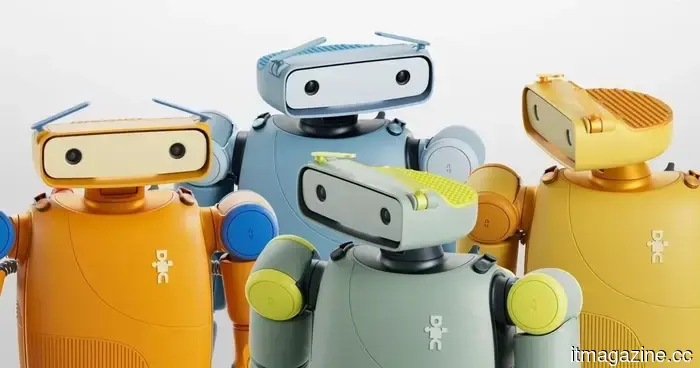 A sensor the size of a rice grain could provide robots with a gentle touch, helping them avoid breaking items.
Scientists have developed a force sensor the size of a grain of rice that enables robots to detect pressure and twisting forces through light, and it is already being used to locate hidden tumors in tissue during initial tests.
A sensor the size of a rice grain could provide robots with a gentle touch, helping them avoid breaking items.
Scientists have developed a force sensor the size of a grain of rice that enables robots to detect pressure and twisting forces through light, and it is already being used to locate hidden tumors in tissue during initial tests.
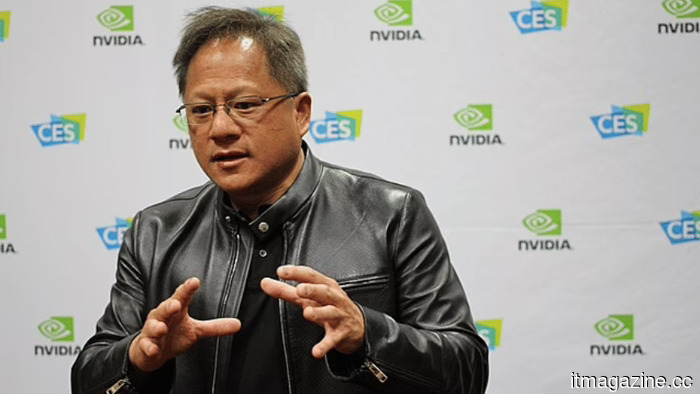 NVIDIA surpasses $40 billion in AI equity investments in 2026.
NVIDIA has pledged more than $40 billion to AI equity investments in early 2026, which encompasses $30 billion in OpenAI.
NVIDIA surpasses $40 billion in AI equity investments in 2026.
NVIDIA has pledged more than $40 billion to AI equity investments in early 2026, which encompasses $30 billion in OpenAI.
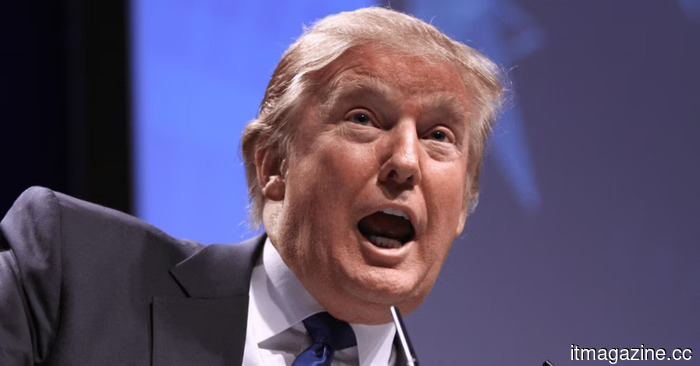 Trump Media announces a $405.9 million loss in Q1, primarily due to cryptocurrency write-downs.
In the first quarter of 2026, Trump Media & Technology Group reported a net loss of $405.9 million, primarily due to unrealized losses on its bitcoin and CRO investments.
Trump Media announces a $405.9 million loss in Q1, primarily due to cryptocurrency write-downs.
In the first quarter of 2026, Trump Media & Technology Group reported a net loss of $405.9 million, primarily due to unrealized losses on its bitcoin and CRO investments.
Alibaba incorporates Qwen AI into Taobao for a complete agent-assisted shopping experience.
Alibaba is linking its Qwen AI application to Taobao and Tmall, enabling the agent to access over 4 billion products.