

I stopped using physical books, and my reading experience has improved significantly.
If you are a book purist, you may hesitate when I suggest using an e-reader instead of acquiring physical books, and I understand your skepticism. The charm of the scent of pages, the weight of a book in your hands, and the entire reading ritual are indeed compelling.
However, if you permit me to persuade you, there are compelling reasons to favor e-readers over physical books. Allow me to present the case for e-readers; once you recognize what you’ve been missing, it’s difficult to revert.
Your entire collection fits in your bag
This is the most apparent benefit, but it rarely receives adequate acknowledgment. I tend to read multiple books concurrently, and toting around two or three physical ones isn’t practical. Hefty books can be a nuisance to carry.
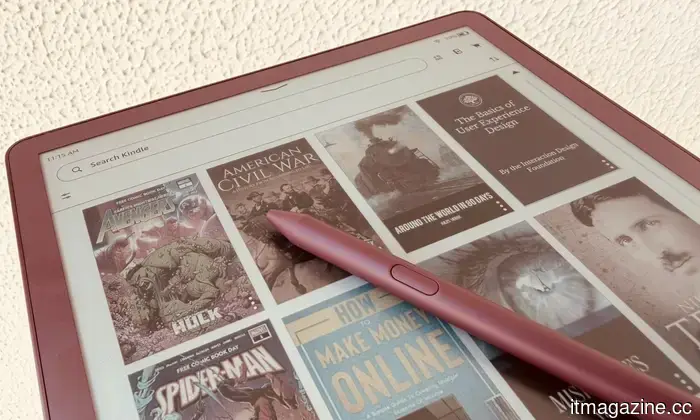
With an e-reader, you can hold hundreds of books in a compact form. Switching between titles takes mere moments. If you travel often, this alone makes a strong case for switching.
A thousand-page hardcover is wonderful for your bookshelf but cumbersome for your commute.
Heavy books are more of a workout than a reading experience
If you enjoy fantasy novels like I do, you know how unwieldy they can be. You’re constantly adjusting your grip, trying to keep it open, and attempting to stay comfortable. Slim books are manageable, but when a book reaches a certain thickness, it starts to work against you.
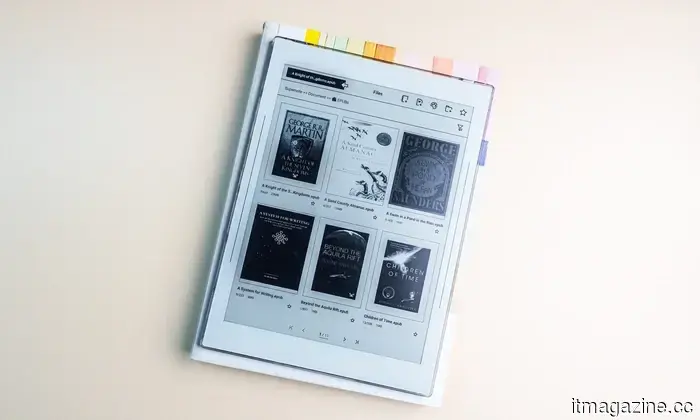
An e-reader has a consistent weight whether you’re reading a short novel or an expansive fantasy series. That’s the beauty of it. Whether I’m delving into The Count of Monte Cristo or another entry in Brandon Sanderson’s The Stormlight Archive series, my Supernote Nomad remains light.
Reading at night without disturbing anyone
I do much of my reading at night, which is where physical books fail me. Lamps and book lights never feel just right. The lighting is often off, and sharing a room complicates things further.
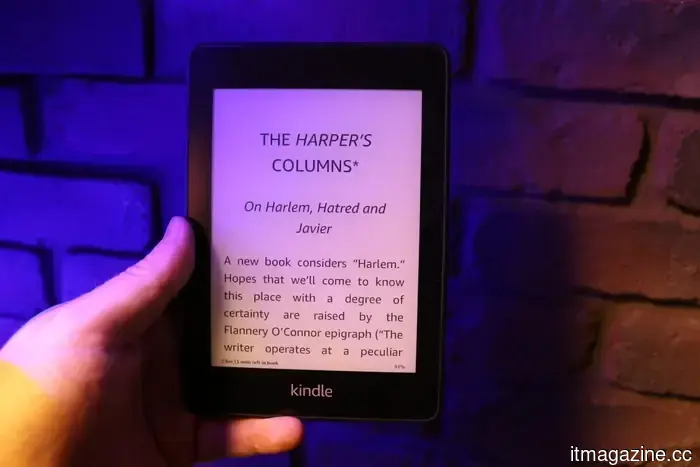
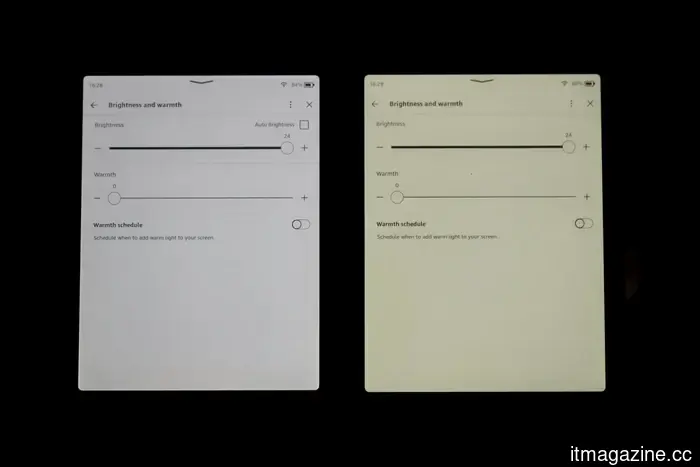
Most e-readers, including Kindles, come with a built-in backlight that can be adjusted to your preferred brightness. You can even switch to a warm light mode to ease eye strain.
I’ve read at 3 AM with the brightness set low, and it felt completely normal—no need for a lamp or squinting.
Look up any word without losing your place
English isn’t my first language, and even native speakers often come across unfamiliar words mid-chapter. With a physical book, you can either grab your phone to look it up—which usually leads to distractions—or skip it and miss out on understanding.
On a Kindle or most other e-readers, you simply tap the word, and the definition pops up immediately. You can translate it, add it to a vocabulary list, and return to your reading within seconds. I look up far more words now than I did with physical books, and my comprehension has genuinely improved.
Taking notes you’ll actually utilize later
I used to make annotations in physical books with a pen, and those notes would remain on the page, rarely revisited. Putting them somewhere useful required more effort than I was willing to invest.
With my Supernote Nomad, I can utilize its Digest feature to clip what I’m reading and easily add handwritten notes. I can then export those notes to Obsidian for further processing.
Highlighting a passage and adding a note on any e-reader takes just a few seconds. Additionally, most e-readers compile all your highlights and notes in one location, making it easy to sift through them without flipping pages.
With physical books, my notes faded into the pages. With an e-reader, they transform into something I actively use.
Books are more affordable and easier to obtain
Purchasing physical books is invariably pricier than acquiring their digital counterparts. Furthermore, as most publishers move away from mass-market paperbacks, we’re left with trade paperback and hardcover options, which may look more appealing but also carry a higher price tag.
E-books don’t face this issue. I’ve bought several titles for less than half the cost of the physical versions. Often, e-books are on sale, making them even more budget-friendly.
Moreover, if you find a book you want to read at midnight, you don’t have to wait for delivery or make a trip to the store. You can purchase it and dive in right away. The convenience is hard to overstate once you get accustomed to it.
Should you switch?
If you cherish the experience of physical books—the covers, the smell, the aesthetic of your shelf—that's entirely a valid reason to continue with them. There’s nothing wrong with that. I’m personally curating my own bookshelf, and there will always be a place for those cherished books.
However, for convenience, ease of discovery, and reading, I encourage you to consider investing in an e-reader. It’s currently an excellent time to buy, with good options available around $100.
As e-readers, they don’t require frequent upgrades like




Other articles
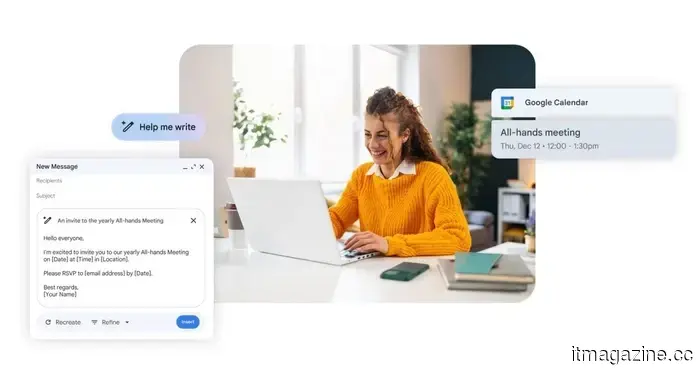 How Google Workspace assists small businesses in scaling with an AI co-founder.
Google Workspace with Gemini assists small teams in working more efficiently by serving as a digital co-founder, streamlining tasks and enhancing productivity throughout daily workflows.
How Google Workspace assists small businesses in scaling with an AI co-founder.
Google Workspace with Gemini assists small teams in working more efficiently by serving as a digital co-founder, streamlining tasks and enhancing productivity throughout daily workflows.
 The Pentagon has introduced war.gov/ufo, featuring 162 declassified UFO files as part of Trump's PURSUE initiative.
The Pentagon has made available 162 UFO documents on war.gov/ufo, which include mysterious Apollo 17 images and footage of military sightings. Among these files, 108 contain partial redactions.
The Pentagon has introduced war.gov/ufo, featuring 162 declassified UFO files as part of Trump's PURSUE initiative.
The Pentagon has made available 162 UFO documents on war.gov/ufo, which include mysterious Apollo 17 images and footage of military sightings. Among these files, 108 contain partial redactions.
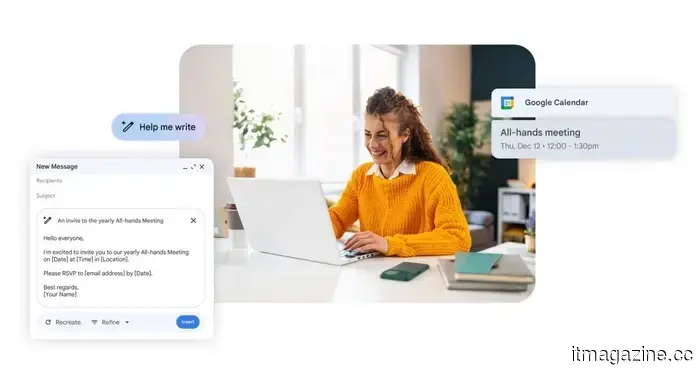 How Google Workspace aids small businesses in scaling with the assistance of an AI co-founder.
Google Workspace with Gemini supports small teams in working more efficiently by serving as a digital co-founder, automating tasks, and enhancing productivity in daily workflows.
How Google Workspace aids small businesses in scaling with the assistance of an AI co-founder.
Google Workspace with Gemini supports small teams in working more efficiently by serving as a digital co-founder, automating tasks, and enhancing productivity in daily workflows.
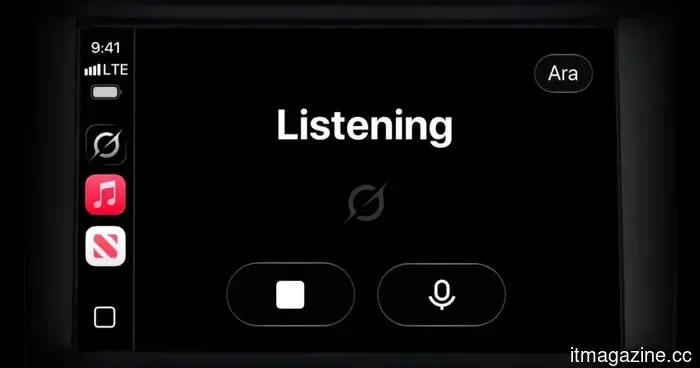 Grok Voice Mode has now launched on CarPlay, in case you like conversing with an outspoken AI while driving.
xAI has introduced Grok Voice Mode for Apple CarPlay, allowing millions of drivers to engage in hands-free AI conversations featuring Grok's distinctive sarcastic personality.
Grok Voice Mode has now launched on CarPlay, in case you like conversing with an outspoken AI while driving.
xAI has introduced Grok Voice Mode for Apple CarPlay, allowing millions of drivers to engage in hands-free AI conversations featuring Grok's distinctive sarcastic personality.
 The Tesla Model Y becomes the first vehicle to successfully complete NHTSA ADAS safety assessments, as the agency looks into 3.2 million Teslas due to crashes involving FSD.
The Trump administration revealed that the Tesla Model Y has successfully met the NHTSA's updated ADAS safety standards. Meanwhile, the same agency is examining 3.2 million Teslas in relation to crashes involving Full Self-Driving capabilities.
The Tesla Model Y becomes the first vehicle to successfully complete NHTSA ADAS safety assessments, as the agency looks into 3.2 million Teslas due to crashes involving FSD.
The Trump administration revealed that the Tesla Model Y has successfully met the NHTSA's updated ADAS safety standards. Meanwhile, the same agency is examining 3.2 million Teslas in relation to crashes involving Full Self-Driving capabilities.
 Rocket Lab's revenue for Q1 2026 increases by 64% to a record $200 million, while its backlog reaches $2.2 billion and its stock climbs by 30%.
Rocket Lab announced a record Q1 revenue of $200 million, a backlog amounting to $2.2 billion, and a $30 million hypersonics deal with Anduril. The stock rose by 30%, although the Neutron rocket has yet to fly.
Rocket Lab's revenue for Q1 2026 increases by 64% to a record $200 million, while its backlog reaches $2.2 billion and its stock climbs by 30%.
Rocket Lab announced a record Q1 revenue of $200 million, a backlog amounting to $2.2 billion, and a $30 million hypersonics deal with Anduril. The stock rose by 30%, although the Neutron rocket has yet to fly.
I stopped using physical books, and my reading experience has improved significantly.
Reading at night, integrated dictionaries, more affordable books, and notes you'll find useful later. This is the argument for abandoning physical books and never returning to them.