
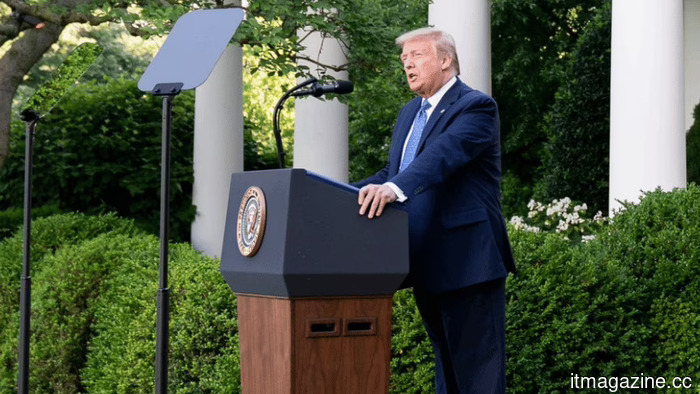
Trump's proposal for H-1B visas would raise the minimum salary for entry-level tech positions to approximately $162,000.
A starting software engineer in San Francisco would need a minimum annual salary of $162,000 to qualify for an H-1B visa under a proposal from the Trump administration released in March. In Dallas, that same position would rise to approximately $113,000, and in New York, to $132,000. These increases represent nearly a 30% hike from the current minimums in each city.
The specifics are technical, while the effects are straightforward. The proposed rule from the Department of Labor, issued on March 27 and open for public feedback until May 26, aims to change how prevailing wages are determined for the H-1B and PERM visa programs. Currently, the lowest wage level (Level I, the entry tier) is tied to the seventeenth percentile of earnings reported by the Bureau of Labor Statistics for specific occupations in particular metro areas.
The proposal suggests adjusting that base point to the thirty-fourth percentile, while Level IV, the senior tier, would be shifted from the sixty-seventh percentile to the eighty-eighth. This adjustment would affect all levels in between.
The overall increase across the system is around $14,000 annually per affected position, as estimated by the Department of Labor, with senior roles in high-cost cities seeing much larger impacts. A Level IV data scientist in Silicon Valley might experience a salary increase exceeding $45,000. Some legal analyses have identified occupation-and-metro combinations where the new salary threshold could reach or exceed $208,000.
The administration’s rationale is clear. The current salary bands, established in the 1990s, align significantly lower than the market rates American workers encounter, especially for early-career engineers and new STEM graduates. By elevating these bands within the percentile distribution, the proposal aims to eliminate the financial incentive to fill entry-level technical positions with foreign workers. However, it remains debated whether this will genuinely encourage employers to hire more local talent or if it will lead to a decrease in overall hiring.
This is not the only ongoing change to the H-1B process. In September 2025, a $100,000 fee was added for new H-1B applications, replacing the previous fee structure that charged employers between $2,000 and $5,000. A federal judge upheld this fee in December despite challenges from the US Chamber of Commerce and a coalition of nineteen state attorneys general.
Amazon, the largest H-1B sponsor, employs over 10,000 workers through this visa program, with Microsoft, Meta, Apple, and Google each sponsoring thousands more. The addition of the new wage rules alongside the application fee means that the cost for hiring an entry-level H-1B engineer in a top-tier city could increase by tens of thousands of dollars before the contract even begins.
Adding this wage rule to an industry that's already adjusting labor costs in response to AI developments is significant. Major technology companies like Meta and Microsoft are transforming payroll into AI-related capital expenditures, as demonstrated by Atlassian's recent restructuring of 1,600 jobs. Over 78,000 tech employees were laid off in the first four months of 2026, with around half of those layoffs linked to AI assuming roles previously held by humans. Hiring managers surveyed by Resume.org anticipate further cuts to come.
Amid this contraction, there remains steady demand for AI specialization, while entry-level and generalist software roles are declining. Analysts have begun labeling this as the AI-employment paradox. The H-1B wage rule raises the floor specifically for the entry-level segment, which is shrinking the quickest. The expected outcome is that there will be fewer applications for entry-level visas, with more work likely to be offshored or handled by AI instead of being brought back to American hires.
Conversely, some of the largest sponsors have stated they will absorb the increased costs. Following the announcement of the $100,000 fee, Nvidia’s Jensen Huang indicated that the company would continue sponsoring the necessary workers. Similar commitments have been made by Anthropic, OpenAI, Microsoft, and Google. For these companies, the raised wage floor mainly alters how H-1B hire expenses are reflected on financial statements, rather than impacting the decision to hire.
The pressure will be felt most by smaller employers and IT service firms that have traditionally relied on H-1B visas for filling mid-level outsourced engineering roles, as well as the tens of thousands of researchers, scientists, and engineers in the visa pipeline who are not positioned at the top of the skill spectrum.
Universities and research institutions will also be significantly impacted. The H-1B visa serves as the primary route for foreign-born postdoctoral researchers and graduate students transitioning to jobs in the U.S. Increasing the wage floor in relation to academic salary scales, which are already lagging behind both private sector wages and Bureau of Labor Statistics percentiles, creates a structural conflict that the Department of Labor's proposal does not yet address. Higher education groups have raised
Other articles
 Hugging Face and ClawHub faced compromises involving hundreds of harmful AI models and agent skills as supply chain attacks aimed at AI infrastructure.
Hugging Face has 352,000 issues related to unsafe models. ClawHub's registry includes 341 skills of malicious AI agents. Currently, the AI supply chain is the most appealing target in the realm of software security.
Hugging Face and ClawHub faced compromises involving hundreds of harmful AI models and agent skills as supply chain attacks aimed at AI infrastructure.
Hugging Face has 352,000 issues related to unsafe models. ClawHub's registry includes 341 skills of malicious AI agents. Currently, the AI supply chain is the most appealing target in the realm of software security.
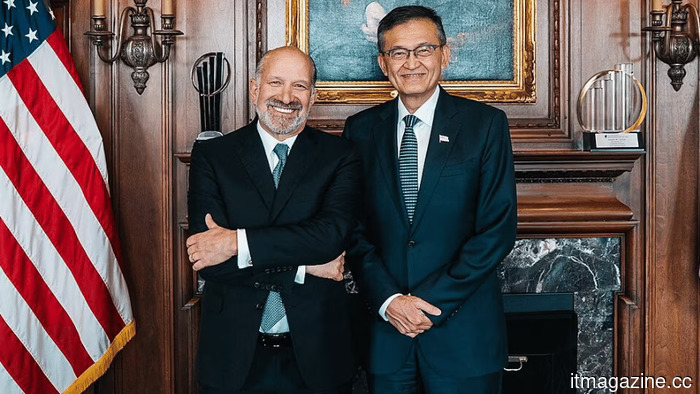 Intel's stock has tripled under Lip-Bu Tan, as relationships with Trump, Musk, and Apple surpass the company's current manufacturing execution needs.
Under CEO Lip-Bu Tan, Intel's stock has increased threefold, gaining the approval of Trump, collaborating with Musk on Terafab, and drawing in Apple. However, the factories continue to fall short compared to TSMC.
Intel's stock has tripled under Lip-Bu Tan, as relationships with Trump, Musk, and Apple surpass the company's current manufacturing execution needs.
Under CEO Lip-Bu Tan, Intel's stock has increased threefold, gaining the approval of Trump, collaborating with Musk on Terafab, and drawing in Apple. However, the factories continue to fall short compared to TSMC.
 This excessively designed smartwatch features two cameras and can transform into an action camera.
The Huawei Watch Kids X1 Pro features both front and rear cameras, a detachable body resembling an action camera, location tracking, video calling capabilities, and an 850mAh battery.
This excessively designed smartwatch features two cameras and can transform into an action camera.
The Huawei Watch Kids X1 Pro features both front and rear cameras, a detachable body resembling an action camera, location tracking, video calling capabilities, and an 850mAh battery.
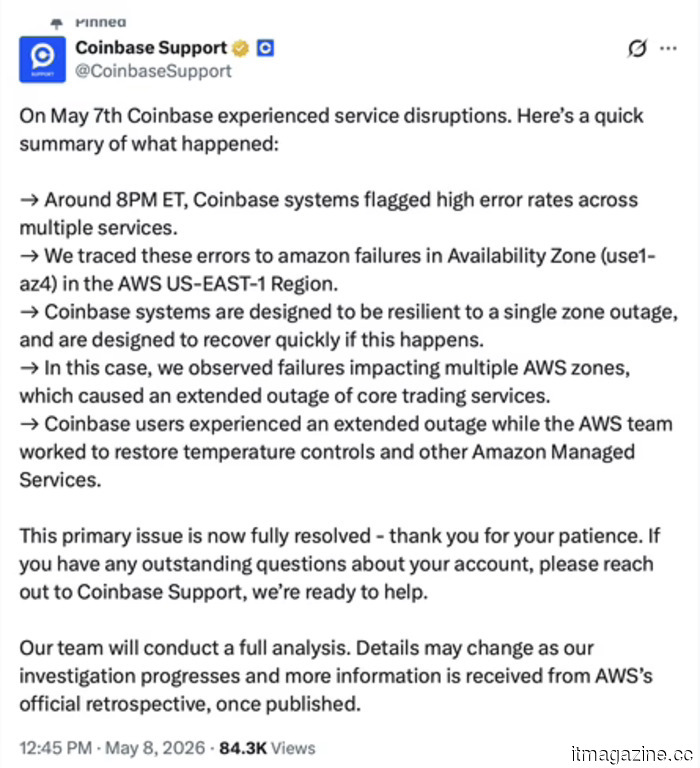 On Monday, Coinbase laid off 700 employees, reported a loss of $394 million on Thursday, and experienced an outage on Friday due to an overheated data center.
Coinbase experienced a seven-hour outage following an overheating incident at an AWS data center in Virginia. This disruption came at the end of a week marked by 700 job cuts and a quarterly loss of $394 million.
On Monday, Coinbase laid off 700 employees, reported a loss of $394 million on Thursday, and experienced an outage on Friday due to an overheated data center.
Coinbase experienced a seven-hour outage following an overheating incident at an AWS data center in Virginia. This disruption came at the end of a week marked by 700 job cuts and a quarterly loss of $394 million.
 Hugging Face and ClawHub were breached, leading to the infiltration of hundreds of harmful AI models and agent capabilities as supply chain attacks focus on AI infrastructure.
Hugging Face is home to 352,000 issues related to unsafe models. ClawHub's repository includes 341 skills associated with malicious AI agents. The AI supply chain has become the most appealing target in the realm of software security.
Hugging Face and ClawHub were breached, leading to the infiltration of hundreds of harmful AI models and agent capabilities as supply chain attacks focus on AI infrastructure.
Hugging Face is home to 352,000 issues related to unsafe models. ClawHub's repository includes 341 skills associated with malicious AI agents. The AI supply chain has become the most appealing target in the realm of software security.
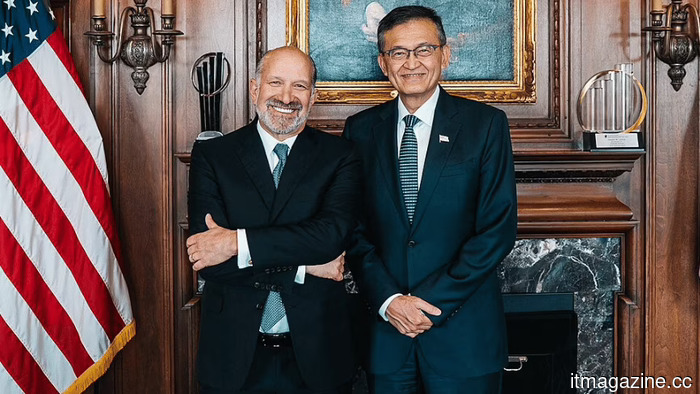 Intel's stock has tripled during Lip-Bu Tan's leadership, as relationships with Trump, Musk, and Apple surpass the company's manufacturing execution, which still requires improvement.
Under CEO Lip-Bu Tan, Intel's stock has increased threefold, gaining the approval of Trump, collaborating with Musk on Terafab, and drawing the interest of Apple. However, the factories still fall short compared to TSMC.
Intel's stock has tripled during Lip-Bu Tan's leadership, as relationships with Trump, Musk, and Apple surpass the company's manufacturing execution, which still requires improvement.
Under CEO Lip-Bu Tan, Intel's stock has increased threefold, gaining the approval of Trump, collaborating with Musk on Terafab, and drawing the interest of Apple. However, the factories still fall short compared to TSMC.
Trump's proposal for H-1B visas would raise the minimum salary for entry-level tech positions to approximately $162,000.
A rule from the Trump administration would increase H-1B prevailing wages by approximately 30% at the entry-level tier, setting the minimum salary for foreign tech workers in San Francisco at $162,000.