
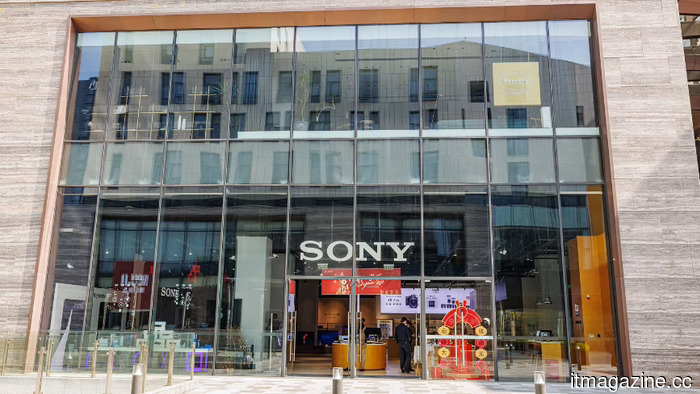
Sony expects an 11% increase in profits and a $3.2 billion stock repurchase.
The FY26 guidance indicates an operating profit of ¥1.6 trillion for Sony. This is driven by the PS5 install base, royalty revenues from streaming, and a smartphone-camera business that faces no apparent competitors, while the gaming hardware division copes with challenges related to memory costs.
On Friday, Sony Group outlined its FY26 guidance, which the market had already largely accounted for: an operating profit of ¥1.6 trillion for the fiscal year ending March 2027, representing an 11% increase from the previous year, along with a share buyback of up to ¥500 billion (approximately $3.2 billion). Shares reacted in accordance with these expectations during trading in Tokyo.
The calculations reflect what management has been signaling for the past two quarters. Revenue from music and image sensors is strong, gaming maintains its margins by capitalizing on its existing user base instead of relying solely on hardware sales, and the company's cash reserves are being returned to investors rather than invested in larger projects than the current capital expenditure budget.
CFO Lin Tao portrayed the buyback as a continuation of existing policy rather than a new initiative. Over the last decade, Sony has spent nearly ¥2 trillion on share repurchases, and the FY26 program aligns with the spending patterns of previous years.
In terms of profit sources, the fiscal year 2025, which concluded in March, set a record in operating profit, with the segment composition revealing a trend that Sony has been pursuing for some time. Music revenues saw double-digit growth in the December quarter, driven by Sony Music Publishing's royalty gains from streaming, live performances, and merchandise sales.
The recorded music label benefited significantly from successful chart performances of artists such as SZA, Doja Cat, and Tyla. On the hardware front, Sony’s Semiconductor Solutions division, which produces CMOS sensors for about half of the smartphones shipped worldwide, gained market share in the high-end sector that competes with Apple and leading Android brands. Average selling prices increased alongside production volumes.
Conversely, the Pictures segment did not perform as strongly. Theatrical revenues dropped by 12% in the December quarter; the studio is now focusing on Crunchyroll for animation revenue and anticipating a Spider-Man release later in the year to boost FY26.
Within Game and Network Services, Sony's largest revenue segment, the impact of memory costs is evident. Hardware sales for FY26 are projected to decline by around 6% year-over-year, and Sony has informed suppliers and investors that PS5 manufacturing volumes will be adjusted according to the available memory rather than demand.
Contract DRAM prices are predicted to increase by 90% to 95% quarter-over-quarter, driven by the AI-related DRAM shortage that has affected SK Hynix and forced consumer hardware companies to make unexpected trade-offs.
Sony's response involves two strategies. First, it has increased the PS5 price by $100 in the U.S., which helps narrow the cost gap for each unit. Second, the company is shifting its growth strategy to focus on the existing install base, aiming to monetize the more than 70 million PS5 users through software, network services, and additional content instead of relying solely on new hardware sales.
This shift is reflected in the FY26 forecast, which shows operating income for Game and Network Services remaining approximately flat year-over-year, with increased contributions from software and services offsetting the decline in hardware sales and rising R&D expenses for the next-generation platform.
Various reports suggest that development of the PS6 is intensifying; however, Sony has not provided any comments regarding a launch date, and analysts speculate that it may be pushed back to 2029 if memory availability continues to be an issue.
The ¥500 billion share buyback program constitutes about 4% of Sony's market capitalization. This indicates two key points: management does not foresee significant new investment opportunities for the cash, and they consider the current share price an attractive option for treasury allocation.
CEO Hiroki Totoki, who took over from Kenichiro Yoshida in 2025, has been clear that capital allocation should align with cash generation rather than aspirations.
This strategy stands in contrast to the broader entertainment industry, where companies like Disney, Netflix, and various Hollywood studios are aggressively investing in franchises and live events, while Microsoft, Take-Two, and EA are consolidating the gaming sector through mergers and acquisitions. In contrast, Sony seeks to bolster its earnings capacity within its current portfolios rather than pursuing new acquisitions.
The rationale behind this approach is supported by segment performance data. Music has shown sustained revenue and operating margin growth, benefiting from the ongoing shift towards creative AI in the recorded music sector, with Sony’s catalog and publishing division capturing both label and song royalties.
Sony’s internal AI music research focuses on developing features rather than chasing high-profile AI partnerships, a more cautious stance that aligns with the interests of a rights-holder rather than a platform operator.
Three factors will determine the validity of the FY26 forecast. First,
Other articles
 Top Global HR Software for International Businesses in 2026
We evaluated the top global HR software solutions for international businesses in 2026, featuring HiBob, Rippling, BambooHR, Personio, UKG, Sage HR, and ADP.
Top Global HR Software for International Businesses in 2026
We evaluated the top global HR software solutions for international businesses in 2026, featuring HiBob, Rippling, BambooHR, Personio, UKG, Sage HR, and ADP.
 Lime submits files for Nasdaq IPO using the LIME ticker.
Lime, the micromobility company supported by Uber, has submitted its application for a US IPO under the corporate name Neutron Holdings. Goldman Sachs and JPMorgan are at the forefront of the process.
Lime submits files for Nasdaq IPO using the LIME ticker.
Lime, the micromobility company supported by Uber, has submitted its application for a US IPO under the corporate name Neutron Holdings. Goldman Sachs and JPMorgan are at the forefront of the process.
 OpenAI introduces GPT-Realtime-2 along with two new voice API models.
OpenAI has released three new voice models: GPT-Realtime-2, GPT-Realtime-Translate, and GPT-Realtime-Whisper.
OpenAI introduces GPT-Realtime-2 along with two new voice API models.
OpenAI has released three new voice models: GPT-Realtime-2, GPT-Realtime-Translate, and GPT-Realtime-Whisper.
 Apple's upcoming AirPods might enable Siri to have visual recognition capabilities, and they are currently undergoing testing.
AirPods equipped with cameras may seem outrageous, but they could be just what Siri needs to avoid feeling outdated.
Apple's upcoming AirPods might enable Siri to have visual recognition capabilities, and they are currently undergoing testing.
AirPods equipped with cameras may seem outrageous, but they could be just what Siri needs to avoid feeling outdated.
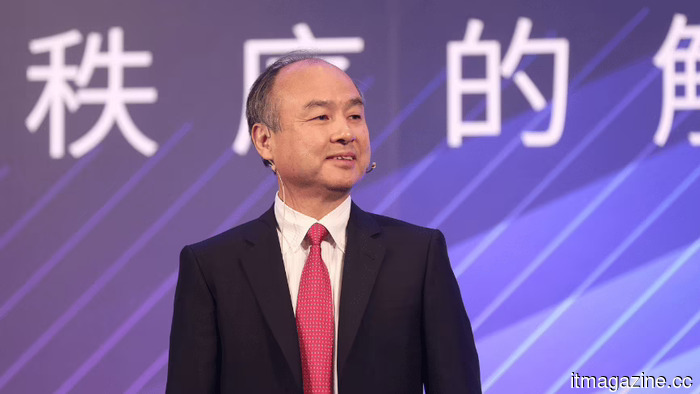 SoftBank reduces the target for its OpenAI-supported margin loan by 40% to $6 billion.
SoftBank has reduced its margin loan target supported by OpenAI from $10 billion to potentially as low as $6 billion due to lenders' worries regarding the valuation of OpenAI shares used as collateral.
SoftBank reduces the target for its OpenAI-supported margin loan by 40% to $6 billion.
SoftBank has reduced its margin loan target supported by OpenAI from $10 billion to potentially as low as $6 billion due to lenders' worries regarding the valuation of OpenAI shares used as collateral.
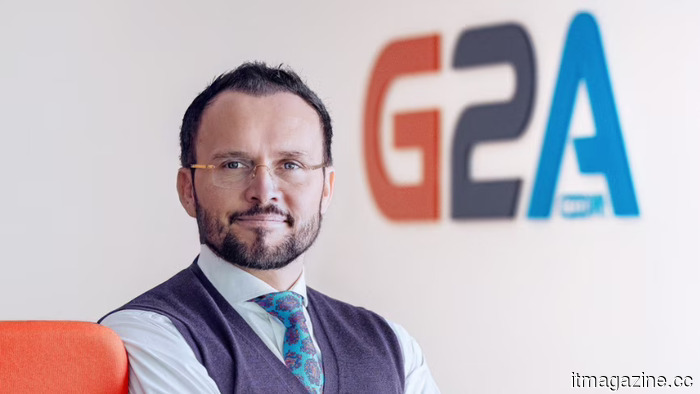 G2A appoints CVC veteran Krzysztof Krawczyk as the chair of its advisory board.
Krzysztof Krawczyk, who established CVC's Warsaw office, has purchased a stake in G2A and taken on the role of chair for its advisory board as the marketplace shifts its focus towards mergers and acquisitions and artificial intelligence.
G2A appoints CVC veteran Krzysztof Krawczyk as the chair of its advisory board.
Krzysztof Krawczyk, who established CVC's Warsaw office, has purchased a stake in G2A and taken on the role of chair for its advisory board as the marketplace shifts its focus towards mergers and acquisitions and artificial intelligence.
Sony expects an 11% increase in profits and a $3.2 billion stock repurchase.
Sony Group has established its operating profit forecast for FY26 at ¥1.6 trillion and revealed a ¥500 billion stock buyback plan.