
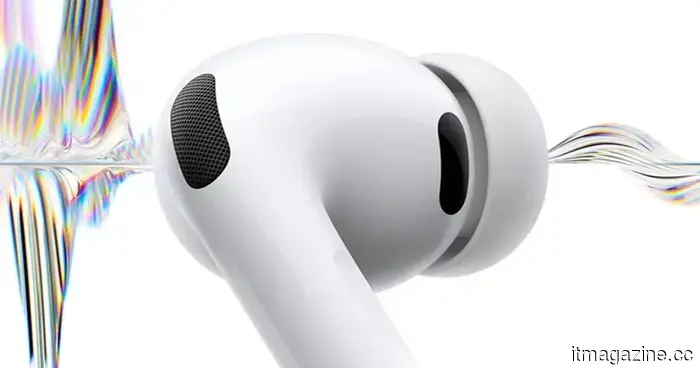
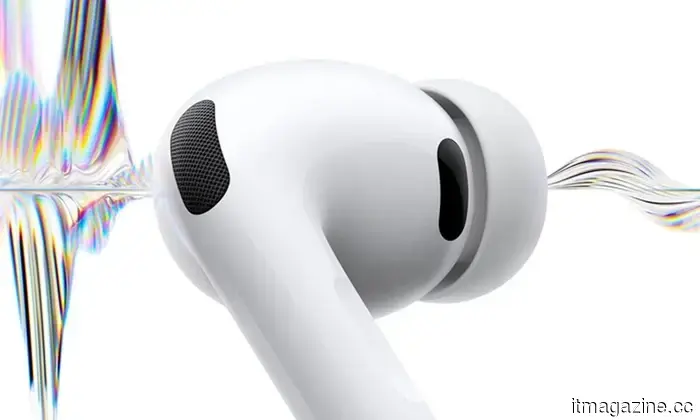
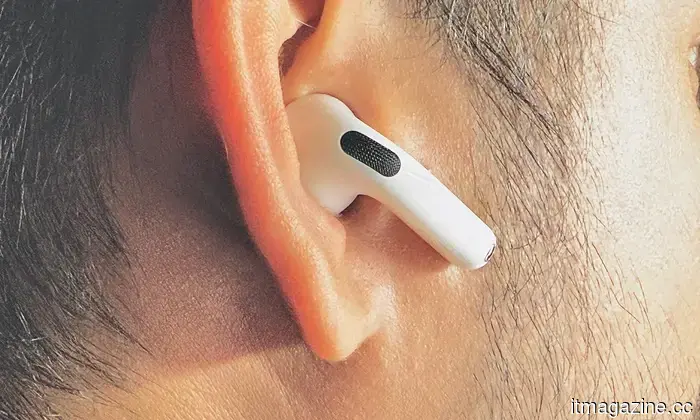
Apple's upcoming AirPods might enable Siri to have visual recognition capabilities, and they are currently undergoing testing.
Digital Trends may receive a commission if you make a purchase through links on our site. Why should you trust us?
Camera-enabled AirPods could provide Siri with a much-needed revival.
Apple's artificial intelligence is still something that many users have to interact with directly. You launch an app, enter a command, take a picture, or pose a question. However, the upcoming significant upgrade to the AirPods may alter this experience. Mark Gurman from Bloomberg reports that Apple is in the late stages of developing earbuds equipped with cameras, which could integrate visual AI into a device widely used by many every day.
How soon can we expect these AI AirPods to be released?
According to Bloomberg, the earbuds are currently undergoing design validation testing, which is one of the final steps in the hardware development process before starting early mass-production tests. This suggests that the hardware is nearing completion, but the launch appears to be connected to delays in Apple's Siri redesign.
Gurman mentions that Apple initially aimed to launch the earbuds in the first half of this year, but the release was postponed due to delays with the revamped Siri. This update is expected to be on schedule for September after Apple enhanced its foundational models with Alphabet’s Gemini technology.
What purposes would cameras in AirPods serve?
The cameras are not intended for capturing standard photos or videos. Instead, they are designed to provide low-resolution visual inputs to Siri, assisting it in responding to questions about what the user is observing.
This could render visual AI more actionable. For instance, you could examine ingredients and inquire about possible recipes, obtain walking directions referencing landmarks, or receive reminders linked to items seen by the earbuds.
Privacy will be a significant issue. Bloomberg indicates that Apple has integrated a small LED light in the earbuds that alerts users when visual data is transmitted to the cloud. Apple must ensure this notification is clear, as the effectiveness of camera-enabled earbuds will hinge on users' trust regarding their operation and usage.
The impact on battery life is still uncertain. Ultimately, these are earbuds, and incorporating cameras will likely demand additional power. The AirPods Pro 3 currently provide up to 8 hours of listening time with Active Noise Cancellation enabled and up to 24 hours with the charging case. Apple will have to determine whether it can accept reduced battery life for the sake of visual AI or if it can find a better approach to maintain reasonable battery performance.
I have about four years of experience mainly focused on gaming, PC hardware, and smartphones. In my leisure time, I enjoy...
This highly intricate smartwatch features two cameras and transforms into an action cam.
Huawei's new kids' watch essentially serves as a small action camera in disguise. The Huawei Watch Kids X1 Pro is a device designed for children, featuring a detachable design, dual cameras, location tracking, video calling, parental controls, and a variety of camera functions that make it resemble a mini action cam on a wrist.
How this smartwatch aims to function as a camera.
Wearables pose more than just privacy concerns. Research highlights their hacking as a potential “ransomware for the body” threat.
You can forget about stolen passwords. Researchers warn that your wearables could be weaponized against you.
Your smartwatch tracks your heart rate, sleep patterns, and various health metrics. But what are the consequences if someone else gains access to that information? A study by researchers at CISPA has raised some troubling concerns.
Daniel Gerhardt, a doctoral researcher, recently released a paper investigating the privacy and security threats related to on-body interaction techniques, encompassing wearables, smart glasses, and smart clothing. His findings are rather alarming.
Google’s Fitbit Air is a subscription-free, screenless competitor to Whoop priced at $99.
Fitbit Air's clear competitive advantage lies in Google's decision to separate the hardware costs from the subscription fee, offering users a choice that Whoop does not.
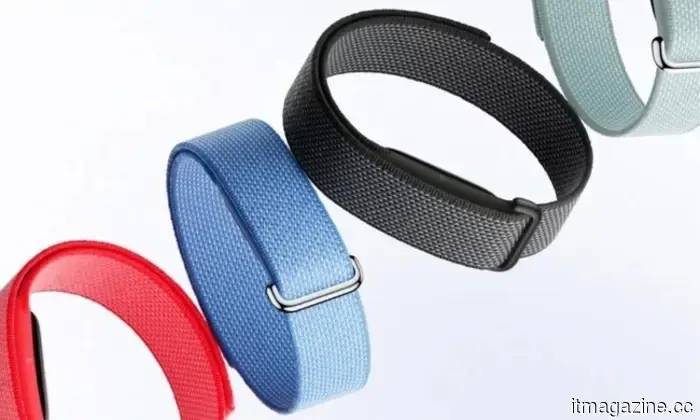
Google has taken a significant step into the fitness tracker market with the introduction of the Fitbit Air, a health band without a screen priced at $99.99. Unlike Whoop, which confines all fitness-related data behind a subscription barrier, Fitbit Air’s basic health-tracking features will remain free.
The device is currently available for pre-order and will commence shipping to 21 countries starting May 26, 2026. You can choose from four Pixel-inspired colors: Obsidian, Lavender, Fog, and Berry, with options for three different strap designs: Performance Loop, Active Band, and Elevated Modern Band.




Other articles
 Perplexity’s Personal Computer can operate independently on your Mac, and it's now accessible to everyone.
Perplexity's latest Mac application introduces Personal Computer to your desktop, allowing AI agents to navigate through your local files, native applications, and the internet, so you can avoid the hassle.
Perplexity’s Personal Computer can operate independently on your Mac, and it's now accessible to everyone.
Perplexity's latest Mac application introduces Personal Computer to your desktop, allowing AI agents to navigate through your local files, native applications, and the internet, so you can avoid the hassle.
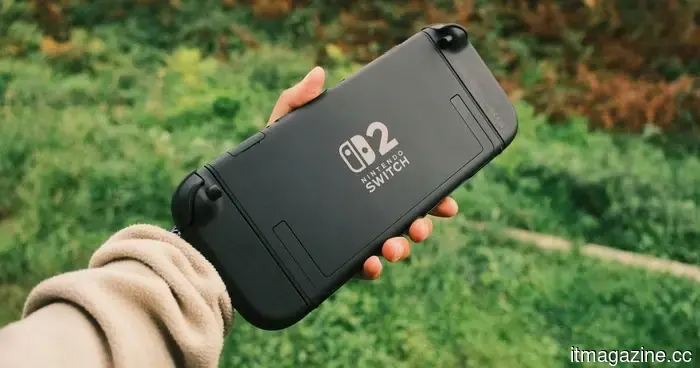 Nintendo is increasing the price of the Switch 2 in the US, but there's still an opportunity to purchase one at a lower price.
Starting September 1, Nintendo's Switch 2 will see a $50 price increase in the US, following Europe, Canada, and Japan in a widespread price adjustment due to rising RAM costs influenced by AI.
Nintendo is increasing the price of the Switch 2 in the US, but there's still an opportunity to purchase one at a lower price.
Starting September 1, Nintendo's Switch 2 will see a $50 price increase in the US, following Europe, Canada, and Japan in a widespread price adjustment due to rising RAM costs influenced by AI.
 OpenAI introduces GPT-Realtime-2 along with two new voice API models.
OpenAI has released three new voice models: GPT-Realtime-2, GPT-Realtime-Translate, and GPT-Realtime-Whisper.
OpenAI introduces GPT-Realtime-2 along with two new voice API models.
OpenAI has released three new voice models: GPT-Realtime-2, GPT-Realtime-Translate, and GPT-Realtime-Whisper.
 OpenAI introduces GPT-Realtime-2 along with two new voice API models.
OpenAI has released three new voice models: GPT-Realtime-2, GPT-Realtime-Translate, and GPT-Realtime-Whisper.
OpenAI introduces GPT-Realtime-2 along with two new voice API models.
OpenAI has released three new voice models: GPT-Realtime-2, GPT-Realtime-Translate, and GPT-Realtime-Whisper.
 Top Global HR Software for Multinational Corporations in 2026
In 2026, we evaluated the top global HR software platforms for international businesses, which featured HiBob, Rippling, BambooHR, Personio, UKG, Sage HR, and ADP.
Top Global HR Software for Multinational Corporations in 2026
In 2026, we evaluated the top global HR software platforms for international businesses, which featured HiBob, Rippling, BambooHR, Personio, UKG, Sage HR, and ADP.
 This latest voice update from OpenAI makes Siri and Alexa seem like they have a lot to learn.
OpenAI has introduced three new audio models capable of reasoning, translating over 70 languages, and transcribing speech in real time, enabling voice to become a truly valuable interface for developers.
This latest voice update from OpenAI makes Siri and Alexa seem like they have a lot to learn.
OpenAI has introduced three new audio models capable of reasoning, translating over 70 languages, and transcribing speech in real time, enabling voice to become a truly valuable interface for developers.
Apple's upcoming AirPods might enable Siri to have visual recognition capabilities, and they are currently undergoing testing.
AirPods equipped with cameras may seem outrageous, but they could be just what Siri needs to avoid feeling outdated.