

Lime has submitted its paperwork for an IPO on Nasdaq under the ticker symbol LIME.
The San Francisco-based scooter and e-bike operator is going public under the name Neutron Holdings, with Goldman Sachs and JPMorgan acting as joint book-runners. The company anticipates $686 million in revenue for 2024 and has reported two consecutive years of free cash flow, establishing a financial profile that surpasses others in the sector.
Lime, which is backed by Uber, submitted its filing for a US IPO on Friday as Neutron Holdings and plans to trade on Nasdaq with the ticker LIME. Goldman Sachs and JPMorgan are at the forefront of this syndicate, though details regarding pricing, share count, and target valuation have yet to be revealed in the initial filing.
The filing occurs after a period of relative quiet. The IPO market reopened in March following a downturn caused by Middle Eastern tensions and volatility in the equity markets, during which several companies focusing on AI infrastructure, defense, and biotech moved forward with filings.
Lime is the first notable name in urban mobility to explore public market interest since 2018, when competitors Bird and Uber's Jump division recorded substantial micromobility valuations.
However, the landscape Lime is entering has seen adversity. Bird declared Chapter 11 bankruptcy in December 2023 due to errors in ridership revenue reporting and rapid depletion of SPAC funds. Tier reduced its workforce by 22% in 2024 before merging with Dott, and Spin shut down. Voi achieved EBITDA positivity in 2022 but has not yet gone public. The narrative surrounding shared scooters in 2018 highlighted hyper-growth and low margins, with regulatory challenges. By 2024, two of these three issues have seemingly been priced out of the business model.
Lime's filing presents a different scenario. The company recorded $686 million in 2024 revenue, an increase of 32% from the previous year, and has generated positive free cash flow for the second consecutive year. Lime claims to operate in 280 cities across approximately 30 countries and served over 24 million riders in 2024. The company asserts that its profit growth outpaced revenue growth. While no single data point proves the case for public markets, collectively, they present a financial profile that public investors can back without needing to fabricate a total addressable market story.
Wayne Ting has served as CEO since May 2020, succeeding Brad Bao after Lime's restructuring during the pandemic. The current business model focuses on contracts with cities, in-house fleet maintenance, and integration with the Uber app, which now lists Lime in over 55 cities globally. These elements are crucial for the equity story, ensuring regulatory stability and a partner-driven distribution channel.
Uber’s investment in Lime dates back to 2020 when it invested at a $510 million post-money valuation as part of a $170 million funding round and transferred its Jump bike-and-scooter business to Lime in the same transaction. The IPO provides Uber with its first chance to establish a public valuation for its stake. Lime executives aim for a valuation significantly above the 2020 level, with bankers speculating a target between $4-5 billion, although this has not been officially stated in the S-1.
The relationship between Lime and Uber is complex, as Uber is both an investor and a competitor. At times, Uber's ride-hailing services have offered promotional pricing that competes with low-end mobility options, while Uber’s app remains one of Lime's largest sources of new customers. The risk factors in the S-1 will be particularly interesting in this context.
Lime is entering a market that has shown more openness to physical asset and infrastructure stories rather than consumer mobility ventures. Successful listings like Fervo Energy’s $1.33 billion climate-tech offering and X-Energy’s record $1.02 billion nuclear IPO have attracted strong interest; similarly, SpaceX is launching a promotional campaign at a valuation of $1.75 trillion. The common trait of these successful entities is their balance-sheet-heavy nature with long-term revenue visibility.
Lime, however, fits this profile less cleanly: its assets depreciate rapidly, city contracts involve retendering risks, and the lingering presence of Bird, Tier, and others serves as a reminder that the model for this category is still evolving.
Recent examples in adjacent consumer fintech and platform markets have not always fared well. The notable decline of Klarna’s share price post-IPO by 76% illustrates that even well-known, profitable consumer brands can struggle in public markets if their multiples are overly generous during private financing rounds.
Ensuring a sensible pricing strategy will be more critical than the deal's scale. Three factors will influence the book-building process: first, the price discussion; targeting a figure higher than the 2020 benchmark is expected, while the challenge will be whether bankers can present the unit economics convincingly to justify a multi-billion-dollar valuation against industry comparisons. Second, the mix of primary and secondary
Other articles
 Top Global HR Software for International Businesses in 2026
We evaluated the top global HR software solutions for international businesses in 2026, featuring HiBob, Rippling, BambooHR, Personio, UKG, Sage HR, and ADP.
Top Global HR Software for International Businesses in 2026
We evaluated the top global HR software solutions for international businesses in 2026, featuring HiBob, Rippling, BambooHR, Personio, UKG, Sage HR, and ADP.
 ChatGPT now allows you to designate someone to reach out to if circumstances become difficult.
ChatGPT now has the ability to notify a trusted person if a situation becomes serious. Although it’s a straightforward feature, it could be one of the most human-like aspects that OpenAI has integrated into its chatbot.
ChatGPT now allows you to designate someone to reach out to if circumstances become difficult.
ChatGPT now has the ability to notify a trusted person if a situation becomes serious. Although it’s a straightforward feature, it could be one of the most human-like aspects that OpenAI has integrated into its chatbot.
 OpenAI introduces GPT-Realtime-2 along with two new voice API models.
OpenAI has released three new voice models: GPT-Realtime-2, GPT-Realtime-Translate, and GPT-Realtime-Whisper.
OpenAI introduces GPT-Realtime-2 along with two new voice API models.
OpenAI has released three new voice models: GPT-Realtime-2, GPT-Realtime-Translate, and GPT-Realtime-Whisper.
 Perplexity's Personal Computer can function independently on your Mac, and it is now accessible to everyone.
Perplexity's newly launched Mac application introduces Personal Computer to your desktop, allowing AI agents to navigate your local files, native applications, and the internet on your behalf.
Perplexity's Personal Computer can function independently on your Mac, and it is now accessible to everyone.
Perplexity's newly launched Mac application introduces Personal Computer to your desktop, allowing AI agents to navigate your local files, native applications, and the internet on your behalf.
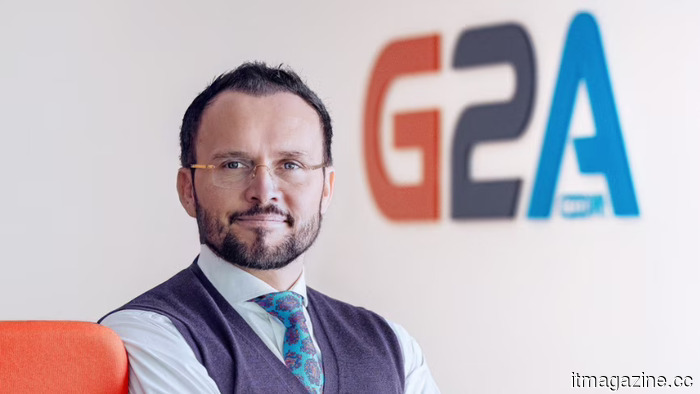 G2A appoints CVC veteran Krzysztof Krawczyk as the chair of its advisory board.
Krzysztof Krawczyk, who established CVC's Warsaw office, has purchased a stake in G2A and taken on the role of chair for its advisory board as the marketplace shifts its focus towards mergers and acquisitions and artificial intelligence.
G2A appoints CVC veteran Krzysztof Krawczyk as the chair of its advisory board.
Krzysztof Krawczyk, who established CVC's Warsaw office, has purchased a stake in G2A and taken on the role of chair for its advisory board as the marketplace shifts its focus towards mergers and acquisitions and artificial intelligence.
 Sony expects an 11% increase in profits and a $3.2 billion stock repurchase.
Sony Group has established its operating profit forecast for FY26 at ¥1.6 trillion and revealed a ¥500 billion stock buyback plan.
Sony expects an 11% increase in profits and a $3.2 billion stock repurchase.
Sony Group has established its operating profit forecast for FY26 at ¥1.6 trillion and revealed a ¥500 billion stock buyback plan.
Lime has submitted its paperwork for an IPO on Nasdaq under the ticker symbol LIME.
Lime, the micromobility company supported by Uber, has submitted a filing for a US IPO using the corporate name Neutron Holdings. Goldman Sachs and JPMorgan are at the forefront of the offering.