
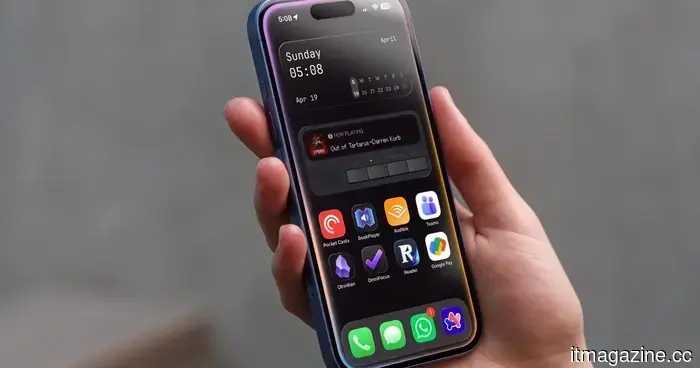
iOS 27 might handle AI models similarly to default apps, which could finally encourage me to use Apple Intelligence.
Many individuals who utilize AI regularly, myself included, have established their preferences. I subscribe to a paid Claude plan for my editorial tasks (like brainstorming headlines and refining tone), while I rely on Gemini as my primary model for generating images and conducting in-depth research on topics.
You might prefer using Perplexity for searches or ChatGPT for coding, which is perfectly valid, as it enhances productivity and provides information more quickly. The issue lies in the fact that the operating system on your phone or laptop is not aware of your preferences and has imposed its own choice of AI until now.
In the business realm, we refer to this as partnerships. Several Android manufacturers, such as Samsung and OnePlus, have collaborated with Google to incorporate Gemini into their devices. In contrast, Windows mandates Copilot, regardless of user preference.
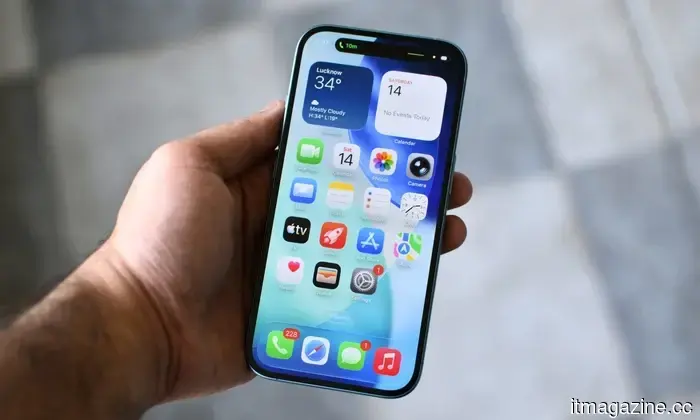
According to reports, Apple is on the verge of implementing something that neither Android nor Windows has addressed: asking users which AI they actually wish to use and where.
The era of your phone selecting an AI for you is nearing its end.
When you compare the actions of Android and Windows, the differences are quite stark.
As reported by Bloomberg’s Mark Gurman, iOS 27 is set to unveil a new feature referred to internally as “Extensions.” This will allow users to choose their preferred AI model for a specific Apple Intelligence tool, rather than resigning to whatever AI model Apple decides to provide.
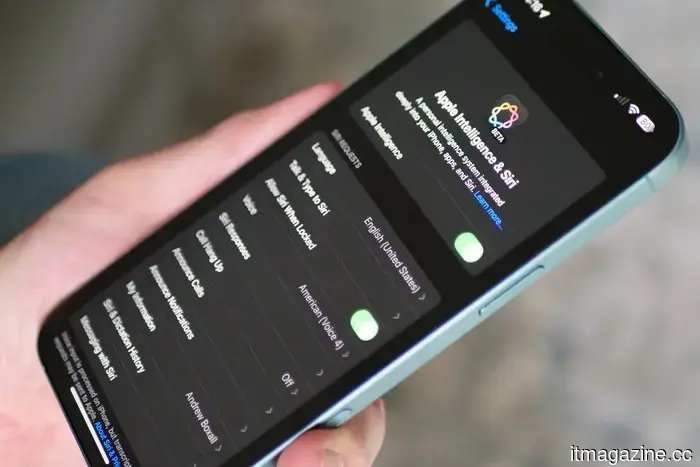
Once iOS 27 launches, you’ll be able to go into Settings, designate your favorite third-party AI model for an Apple Intelligence feature (such as Writing Tools, Image Playground, etc.), and iOS 27 will handle the rest. Siri will also receive similar functionality, allowing you to choose the AI model that processes your requests in the background.
When iOS 27 becomes available on my iPhone 17, I intend to select Claude as my preferred AI for Writing Tools and Gemini for Image Playground.
This is more than just a regular choice; it's a seamless system-level decision. You set it up once, and each time you utilize an Apple Intelligence tool, your selected AI model will appear. There’s no need to switch apps or copy and paste prompts and outputs across different windows.
That exemplifies true model portability in action, and frankly, it's a more coherent solution than anything Android or Windows has ever offered.
On Android and Windows, my preferred AI always requires an extra step.
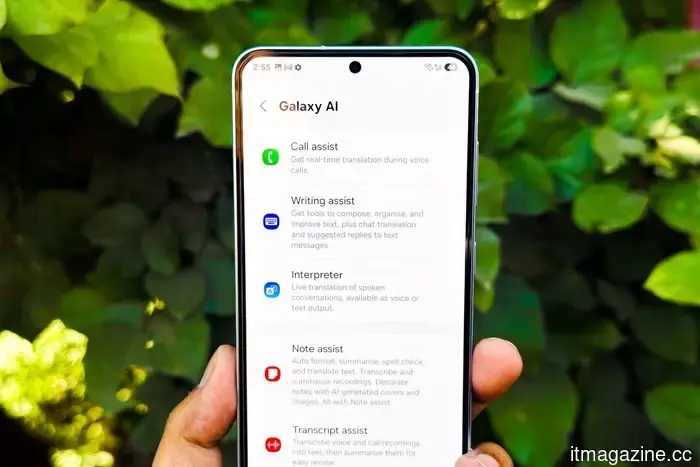
For example, if you’re using the AI-driven text processing tools on a Samsung Galaxy smartphone, Galaxy AI provides several options like Writing Assist, Note Assist, and Call Assist, but they all function under Google’s Gemini.
What if I want to use Claude in Samsung Messages to draft a message? I’d have to leave the app, launch Claude’s app or web version, paste the text, input a prompt, copy the output, return to Messages, paste it, and then send it. Need a different model to summarize your meeting notes in Samsung Notes? I’d have to follow the same roundabout process.
It’s exhausting even to read that, so imagine millions of users doing this daily to access their preferred AI model. On Windows, Copilot is integrated into Notepad and Paint, leaving everyday users with no alternative.
Motorola deserves some recognition for surpassing many Android OEMs by enabling access to Gemini, Copilot, Perplexity, and Meta’s Llama AI through Moto AI. However, the company has predetermined and linked each AI model to specific tasks. For example, Llama powers Catch Me Up, Copilot responds to quick queries, and Gemini analyzes photos. Interesting, right? But I didn’t select any of those.
The platforms offer an AI ecosystem designed to alleviate digital struggles, but they’ve ultimately created a walled garden.
Apple isn’t necessarily leading in the AI competition; it’s constructing the infrastructure.
Apple’s strategy regards your AI preference similarly to how iOS currently manages default browsers or email applications: as a user-configurable option. This embodies true democratization, allowing the choice of the AI that is genuinely useful to me rather than the one that scores highest on benchmarks.
To grasp how Extensions could come to fruition, any AI company could opt to integrate and provide support via an App Store application, making it available as an engine within Apple Intelligence. After installing the app, it would become an option in Settings.
From there, you can assign an Apple Intelligence tool to the model you trust most for that specific function. While Apple’s internal models would remain intact, the ability to route a query to third-party models would be an additional layer. Furthermore, we could see a dedicated App Store section highlighting compatible AI applications.
This is where things get intriguing for Apple as a business. Until now, the company has faced criticism for falling behind in the AI race. However, by opening its platform—over 2.5 billion active devices, including iPhones, iPads, and MacBooks—to Claude, Gemini, and any qualifying AI,

Other articles
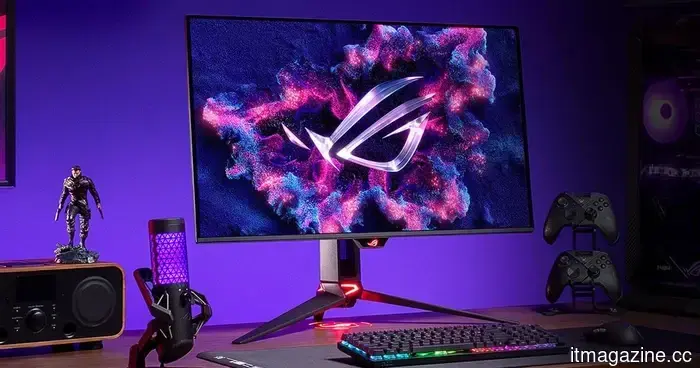 The Desktop Paradox: I've come to realize why gamers are reluctant to switch to OLED.
OLED displays appear flawless, so why isn't it on your desk? Investigating concerns about burn-in, the compromises of MiniLED, and the divided opinions among gamers.
The Desktop Paradox: I've come to realize why gamers are reluctant to switch to OLED.
OLED displays appear flawless, so why isn't it on your desk? Investigating concerns about burn-in, the compromises of MiniLED, and the divided opinions among gamers.
 Intel's leaked future CPU plans indicate that the company is adopting an aggressive strategy.
Intel's future CPU roadmap, which includes Nova Lake, Razor Lake, Titan Lake, and Moon Lake, is said to be on schedule as the company intensifies its competition with AMD.
Intel's leaked future CPU plans indicate that the company is adopting an aggressive strategy.
Intel's future CPU roadmap, which includes Nova Lake, Razor Lake, Titan Lake, and Moon Lake, is said to be on schedule as the company intensifies its competition with AMD.
 Lawrence Wong remains firm: AI will not lead to jobless growth in Singapore.
Singapore's parliament has reconfirmed Prime Minister Lawrence Wong's commitment made in February, stating that the nation will not undergo jobless growth.
Lawrence Wong remains firm: AI will not lead to jobless growth in Singapore.
Singapore's parliament has reconfirmed Prime Minister Lawrence Wong's commitment made in February, stating that the nation will not undergo jobless growth.
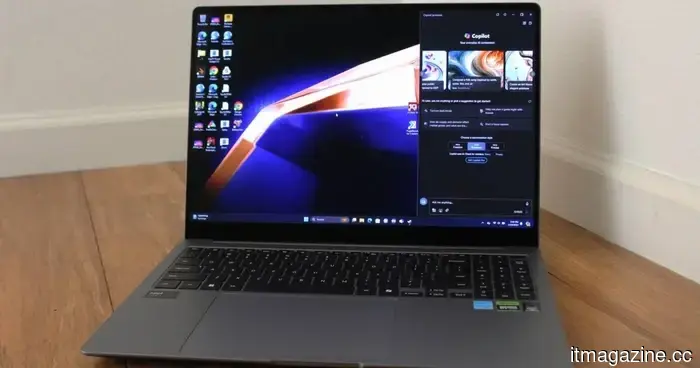 A Samsung patent reveals a laptop featuring an innovative touch-sensitive palm rest designed for shortcuts.
Samsung's concept might allow a single key to perform two functions, based on whether your hand is placed on the laptop or is hovering over it.
A Samsung patent reveals a laptop featuring an innovative touch-sensitive palm rest designed for shortcuts.
Samsung's concept might allow a single key to perform two functions, based on whether your hand is placed on the laptop or is hovering over it.
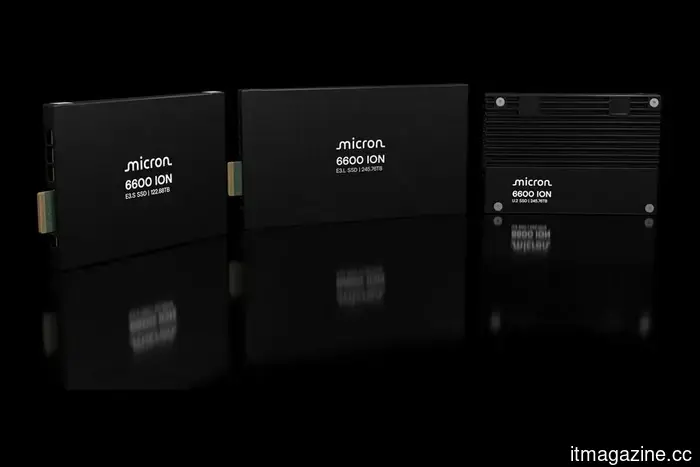 Micron has released a 245-terabyte SSD for data centers.
American Micron has begun shipping the 6600 ION solid-state drive with a capacity of 245 terabytes. The company calls it the most spacious serial SSD for data centers on the market. The device was designed for artificial intelligence tasks, cloud platforms, and enterprise storage.
Micron has released a 245-terabyte SSD for data centers.
American Micron has begun shipping the 6600 ION solid-state drive with a capacity of 245 terabytes. The company calls it the most spacious serial SSD for data centers on the market. The device was designed for artificial intelligence tasks, cloud platforms, and enterprise storage.
 Scale AI secures a $500 million contract with the Pentagon, five times larger than its previous agreement.
Scale AI has secured a $500 million contract from the Chief Digital and Artificial Intelligence Office of the Pentagon, marking a fivefold increase in the company's current contract.
Scale AI secures a $500 million contract with the Pentagon, five times larger than its previous agreement.
Scale AI has secured a $500 million contract from the Chief Digital and Artificial Intelligence Office of the Pentagon, marking a fivefold increase in the company's current contract.
iOS 27 might handle AI models similarly to default apps, which could finally encourage me to use Apple Intelligence.
The majority of phones select your AI automatically. However, Apple's iOS 27 is said to be on the verge of changing this, potentially discovering its most profitable business strategy to date.