

Google has ended Project Mariner, the AI agent designed to browse the web in a human-like manner.
The autonomous browser agent that Google unveiled at I/O 2025 has evolved further. Its technology is now being integrated into the Gemini API and Gemini Agent.
Google has officially terminated Project Mariner, the autonomous web browsing agent it first introduced at I/O the previous year. This tool, which was capable of navigating Chrome, completing forms, searching listings, and booking travel by taking screenshots and recognizing visual elements on pages, is no longer accessible. Its landing page now displays a notice indicating the shutdown date as May 4, 2026.
Project Mariner aimed to create an AI agent that interacted with websites similarly to a human user. Instead of reading the data from the pages directly, it processed screenshots in real-time to identify buttons, text fields, and links, allowing it to click and type for the user. This method enabled it to handle complex tasks across multiple sites without needing specific integration from those sites.
New reports indicate that Google quietly shut down Project Mariner recently, as highlighted during their presentation at Google I/O last year. Prior to this, two months ago, I reported for WIRED that Google had started reallocating staff from the Project Mariner team in reaction to agents similar to OpenClaw.
Despite the shutdown, the technology from Mariner is not disappearing. Google claims that Mariner's technology has transitioned to other Google products, with its core features being absorbed into the Gemini API and the new Gemini Agent instead of being completely discontinued.
This shutdown aligns with an industry-wide trend toward developing agentic AI that operates at the file and code level rather than at a visual browser level. These newer tools are generally faster, cheaper to operate, and better equipped to tackle intricate, multi-step tasks. Mariner's screenshot-based methodology, while innovative at its inception, has struggled against an evolving architecture that has surpassed it.
Pranob is an experienced tech journalist with over eight years in the field, focusing on consumer technology. His work has involved...
I created a Mac application to monitor my poor posture using AirPods, without writing a single line of code. In a single attempt, I had a successful interaction with Claude that felt almost magical. A few weeks prior, I wrote about an application that uses the Mac’s webcam to detect slouching posture and sends a notification upon detection. It also records instances and displays a daily posture score. Despite being open-source, after the creator shared it on Reddit, many users began inquiring about its data processing and storage. These questions were entirely valid, considering users grant the app access to the camera, which can analyze both the user and their surroundings in real-time. Are there potential backdoors for malicious access? What additional data might the app be recording in the background, and how much of the audio-visual stream is being transmitted or stored on an external server? Fortunately, the app operates completely online, with all processing conducted locally on my Mac, but the unease lingered.
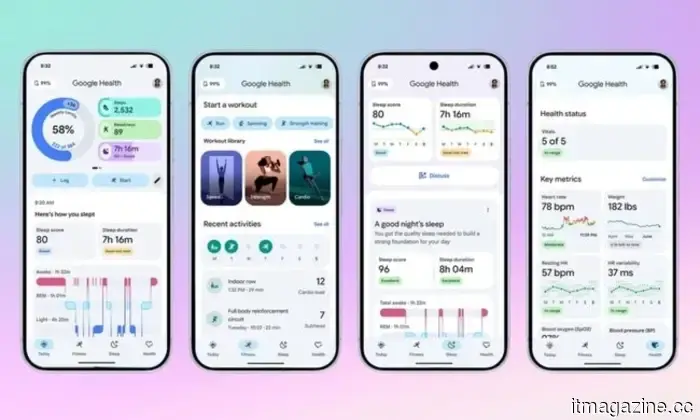
Google is officially discontinuing the Fitbit app and replacing it with the new Google Health app on May 19, 2026. This shift is somewhat ironic, as the company recently announced a new Fitbit Air screenless fitness tracker; however, users will experience the change through an OTA update. This decision comes after Fitbit's fifteen-year history of collecting millions of fitness-oriented users and providing various health trackers and insights through its software.
The rise of AI coding tools has made web app development incredibly easy, enabling setups in just minutes. This simplicity has lowered the barriers to app creation, which is leading to new challenges. What occurs when these AI-generated applications go live without adequate security checks? Confidential information starts leaking across the internet. A WIRED report underscores a significant security risk associated with "vibe-coded" apps developed with AI platforms like Lovable, Replit, Base44, and Netlify.




Other articles
 A questionable leak regarding the iPhone 18 Pro reveals a smaller Face ID cutout on the display.
Fresh CAD renders of the iPhone 18 Pro suggest that the Dynamic Island will be 25–35% smaller than that of the current version, accomplished by relocating the Face ID flood illuminator beneath the display glass.
A questionable leak regarding the iPhone 18 Pro reveals a smaller Face ID cutout on the display.
Fresh CAD renders of the iPhone 18 Pro suggest that the Dynamic Island will be 25–35% smaller than that of the current version, accomplished by relocating the Face ID flood illuminator beneath the display glass.
 Meta is suing Ofcom regarding the fee calculation method under the Online Safety Act.
Meta has initiated a judicial review challenging Ofcom's assessment of fees and penalties in accordance with the UK's Online Safety Act.
Meta is suing Ofcom regarding the fee calculation method under the Online Safety Act.
Meta has initiated a judicial review challenging Ofcom's assessment of fees and penalties in accordance with the UK's Online Safety Act.
 Google introduces the $100 screenless Fitbit Air, featuring a Gemini AI health coach for a monthly fee of $10, aiming to compete with Whoop's $10 billion wearable market.
Google's $100 Fitbit Air lacks a display and competes with the design of Whoop. The actual offering is a $10/month Gemini AI health coach available in the new Google Health app.
Google introduces the $100 screenless Fitbit Air, featuring a Gemini AI health coach for a monthly fee of $10, aiming to compete with Whoop's $10 billion wearable market.
Google's $100 Fitbit Air lacks a display and competes with the design of Whoop. The actual offering is a $10/month Gemini AI health coach available in the new Google Health app.
 Meta is suing Ofcom regarding the fee calculation method for the Online Safety Act.
Meta has initiated a judicial review challenging Ofcom's assessment of fees and penalties as stipulated by the UK's Online Safety Act.
Meta is suing Ofcom regarding the fee calculation method for the Online Safety Act.
Meta has initiated a judicial review challenging Ofcom's assessment of fees and penalties as stipulated by the UK's Online Safety Act.
 Mortal Kombat still has more spine-ripping action ahead.
Ed Boon stated that NetherRealm is working on a new Mortal Kombat game following Mortal Kombat 1, but the studio has yet to disclose the title, release timeframe, platforms, or roster information.
Mortal Kombat still has more spine-ripping action ahead.
Ed Boon stated that NetherRealm is working on a new Mortal Kombat game following Mortal Kombat 1, but the studio has yet to disclose the title, release timeframe, platforms, or roster information.
 A fire at the NorthC data center in Almere has caused Utrecht University to go offline and disrupted the public transport emergency system throughout the Utrecht province.
A blaze at NorthC's Almere data centre caused an NL-Alert to be issued, took Utrecht University offline, and disrupted emergency communications for public transportation throughout Utrecht province.
A fire at the NorthC data center in Almere has caused Utrecht University to go offline and disrupted the public transport emergency system throughout the Utrecht province.
A blaze at NorthC's Almere data centre caused an NL-Alert to be issued, took Utrecht University offline, and disrupted emergency communications for public transportation throughout Utrecht province.
Google has ended Project Mariner, the AI agent designed to browse the web in a human-like manner.
Google has discontinued Project Mariner, the AI browser agent that navigated web pages by analyzing screenshots in real time. Its main functionalities are being integrated into the Gemini API and Gemini Agent.