
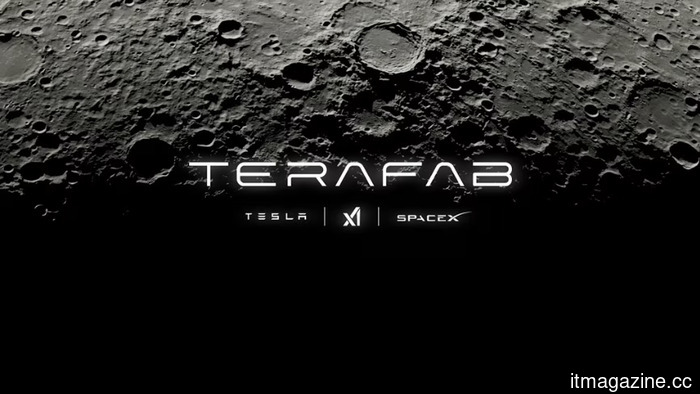
SpaceX submits a filing for a $55 billion semiconductor manufacturing facility in Texas.
The Terafab project will be situated next to the current packaging operation in Bastrop. Together, these two facilities could form a $119 billion chipmaking presence in Texas. SpaceX has not yet revealed the process technology that Terafab will utilize or the timeline for construction.
SpaceX has submitted applications for a semiconductor fabrication facility in rural Texas, with an estimated investment of around $55 billion. Reuters reported this filing on Wednesday. Internally referred to as Terafab, the project will be located alongside SpaceX's existing chip-packaging operations in Bastrop, potentially establishing a comprehensive Texas chipmaking footprint with a combined investment of up to $119 billion.
The differentiation between Terafab and Bastrop is significant. The Bastrop facility, which started installing equipment in April 2026, focuses on packaging operations. It receives silicon dies produced elsewhere, packages them, and distributes them as finished radio-frequency chips for Starlink user terminals. In contrast, Terafab is a true fabrication facility intended for producing silicon at process nodes rather than merely packaging it.
This advancement positions SpaceX in a new operational category. Packaging entails a smaller, quicker, and less capital-intensive business model than fabrication. A fabrication facility demands cleanroom environments, lithography machinery that costs hundreds of millions per unit, extensive semiconductor process expertise, and construction timelines that typically last five to seven years. The $55 billion investment for Terafab aligns with this scale of undertaking.
Once completed, the combined facility will encompass silicon fabrication, advanced packaging including panel-level packaging, printed circuit board manufacturing, and a semiconductor failure-analysis lab. Together, the Bastrop and Terafab facilities will become the largest PCB and panel-level packaging hub in North America.
The strategic purpose aligns with SpaceX’s broader objectives. Starlink's hardware is produced in quantities that make the cost of silicon a significant factor in the company's economics. By owning the fabrication, packaging, and PCB manufacturing within a single integrated facility in the U.S., SpaceX eliminates the profit margins of third-party suppliers at each stage of production, ensuring direct control over the supply schedule for components that cannot be easily replaced late in the build cycle.
Texas Governor Greg Abbott's office has been actively backing the Bastrop expansion. In March 2026, an announcement confirmed a Texas Semiconductor Innovation Fund grant for SpaceX. Based on existing reports, Terafab would qualify for additional state-level incentives as well as potential federal support under the CHIPS Act, subject to review by the current administration.
The key figures break down as follows: Terafab itself is projected to cost around $55 billion. The Bastrop expansion, which includes a million-square-foot increase over three years, the planned PCB operations, and the panel-level packaging and failure analysis components, totals approximately $64 billion more. Combined, the total amounts to $119 billion.
Two questions remain unanswered in the public domain. The first concerns the specific process technology that Terafab will use. SpaceX has not revealed this information, and pursuing the most advanced leading-edge nodes may necessitate licensing or collaboration with an existing process intellectual property holder.
The initial focus is likely to be on advanced packaging and fabrication at mature nodes for Starlink-specific RF and ASIC components, rather than directly competing with TSMC on leading-edge technology. The second question pertains to the timeline. SpaceX has not officially committed to a start date for Terafab's construction or its operational launch, only confirming the filing.
Geographically, this aligns with a broader trend in the U.S. Apple's recent discussions about diversifying its foundry partnerships with Intel and Samsung represent the demand side, while Intel's recruitment of a senior Qualcomm executive to lead its new Client Computing and Physical AI Group serves as a design-side counterpart. Texas has been particularly successful in attracting large-scale AI infrastructure commitments, such as Hut 8's $9.8 billion Beacon Point lease in Nueces County—another data center commitment in the state.
What is now certain is SpaceX's intention. The filing on Wednesday demonstrates a commitment to manufacturing its own silicon at a Tier-1 fab scale. Whether the proposed timeline is maintained, whether the question of process technology is resolved through partnerships or in-house development, and whether the combined $119 billion capital program can endure the upcoming quarters of competing priorities for SpaceX's resources are still open questions. The filing itself marks a significant development.
Other articles
 Nvidia-Corning agreement: $500 million in warrants, the establishment of three new plants in the US, and the creation of 3,000 jobs.
NVIDIA has secured warrants for $500 million in Corning stock as part of a long-term collaboration, which will involve Corning constructing three new optical connectivity facilities in the United States.
Nvidia-Corning agreement: $500 million in warrants, the establishment of three new plants in the US, and the creation of 3,000 jobs.
NVIDIA has secured warrants for $500 million in Corning stock as part of a long-term collaboration, which will involve Corning constructing three new optical connectivity facilities in the United States.
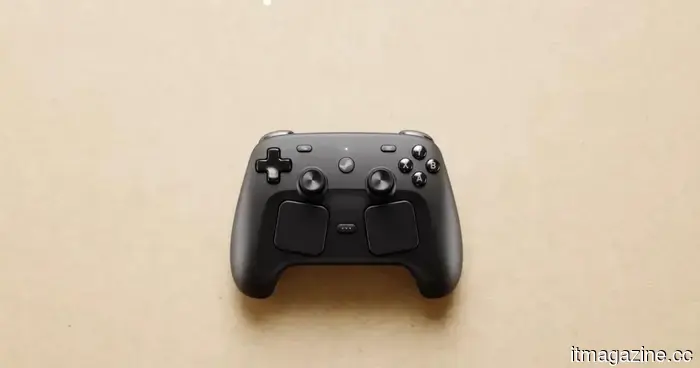 Valve’s sold-out Steam Controller has turned into a paradise for modders.
Valve has made the Steam Controller CAD files available under a Creative Commons license, allowing modders to design custom shells and accessories as supplies are running low.
Valve’s sold-out Steam Controller has turned into a paradise for modders.
Valve has made the Steam Controller CAD files available under a Creative Commons license, allowing modders to design custom shells and accessories as supplies are running low.
 Google Chrome is installing a 4 GB AI model on your device. Here’s how to disable it.
Google Chrome is discreetly downloading a 4 GB Gemini Nano model to your device without your permission. Here's what it is, its location on your computer, and the steps you can take in response.
Google Chrome is installing a 4 GB AI model on your device. Here’s how to disable it.
Google Chrome is discreetly downloading a 4 GB Gemini Nano model to your device without your permission. Here's what it is, its location on your computer, and the steps you can take in response.
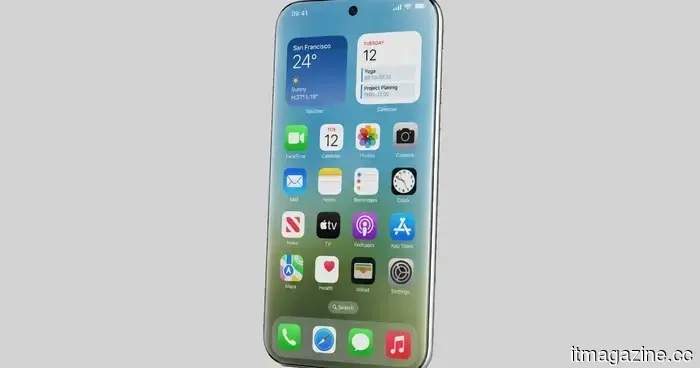 Apple's iPhone 20 might finally abandon the design we've been familiar with for years.
The iPhone marking its 20th anniversary may feature a sleek, buttonless design, potentially known as “Glasswing,” which includes curved edges, Liquid Glass software, and the long-awaited integration of solid-state buttons.
Apple's iPhone 20 might finally abandon the design we've been familiar with for years.
The iPhone marking its 20th anniversary may feature a sleek, buttonless design, potentially known as “Glasswing,” which includes curved edges, Liquid Glass software, and the long-awaited integration of solid-state buttons.
 Google Chrome is in the process of downloading a 4 GB AI model to your device. Here’s how you can disable it.
Google Chrome is discreetly downloading a 4 GB Gemini Nano model to your device without your permission. Here's an explanation of what it is, its location on your computer, and the steps you can take regarding it.
Google Chrome is in the process of downloading a 4 GB AI model to your device. Here’s how you can disable it.
Google Chrome is discreetly downloading a 4 GB Gemini Nano model to your device without your permission. Here's an explanation of what it is, its location on your computer, and the steps you can take regarding it.
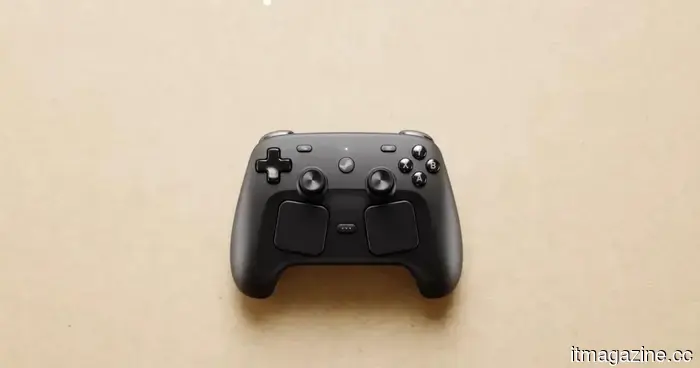 The sold-out Steam Controller from Valve has now turned into a playground for modders.
Valve has made Steam Controller CAD files available under a Creative Commons license, allowing modders to design custom shells and accessories as stock levels are low.
The sold-out Steam Controller from Valve has now turned into a playground for modders.
Valve has made Steam Controller CAD files available under a Creative Commons license, allowing modders to design custom shells and accessories as stock levels are low.
SpaceX submits a filing for a $55 billion semiconductor manufacturing facility in Texas.
SpaceX has submitted documentation for a $55 billion semiconductor fabrication plant in rural Texas, referred to internally as Terafab, adjacent to its existing packaging facility in Bastrop.