
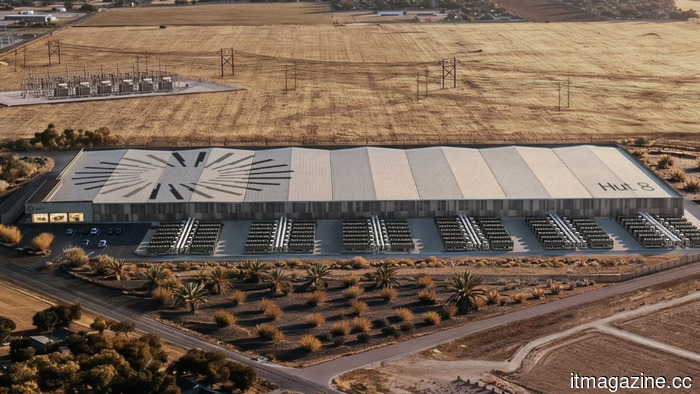
Hut 8 has entered into a 15-year lease worth $9.8 billion for the initial phase of its AI data center in Texas.
The Beacon Point lease, supported by a yet-to-be-named investment-grade tenant, increases Hut 8's contracted AI capacity to 597 MW and adds $16.8 billion in base-term value. The transition from Bitcoin miner to AI landlord is nearly complete.
Typically, such a corporate transformation would span years, but Hut 8 has achieved this in approximately 18 months. On Tuesday, the company revealed it has commercialized the initial phase of its Beacon Point campus in Nueces County, Texas, through a 15-year lease for 352 megawatts of IT capacity with a base-term contract value of $9.8 billion. Including three five-year renewal options in the agreement, the total value could reach around $25.1 billion if those options are taken.
The tenant is identified as a confidential company of high investment-grade status. The lease is structured as triple-net, meaning the tenant is responsible for operating expenses, taxes, and insurance in addition to the base rent. The workloads involved pertain to AI training and inference, with the first data hall expected to be delivered in the third quarter of 2027.
This deal stands out as one of the largest single data-center leases announced this year. The broader context reveals Hut 8's transformation over the past two quarters.
Hut 8's shift has been evident for some time. In December 2025, the company entered into a 15-year lease for 245 MW at its River Bend campus, valued at $7 billion for the base term. The announcement of the Beacon Point lease adds an additional 352 MW, bringing the total contracted AI data center capacity to 597 MW and the total base-term value to approximately $16.8 billion. Before any renewals are considered, the company's compounded contracted revenue now surpasses the overall market capitalization of many of its Bitcoin-mining competitors.
What is particularly impressive is how quickly Hut 8 has repurposed its Bitcoin-mining infrastructure for AI training. The distinction lies in the customer base: Bitcoin operates on volatile cryptocurrency payments, while hyperscalers rely on long-term 15-year leases backed by robust financials.
Regarding how the deal is structured, the Beacon Point lease pertains to the first phase of a projected 1 GW campus, with about 650 MW remaining available for future commercialization. The 15-year base term, triple-net structure, and confidential investment-grade tenant are standard for major data center transactions supported by hyperscalers. The triple-net arrangement ensures that the tenant covers operational costs, thereby allowing Hut 8 to retain the cash flow without taking on the risks associated with operational cost fluctuations.
The options for renewal create the potential $25.1 billion ceiling figure. Three five-year extensions, each at pre-negotiated terms, would prolong the lease to 30 years and increase the total contract value to roughly $25.1 billion. Whether these options will be exercised will be a question for 2042 and beyond, but it's important that the renewal pricing remains based on terms that Hut 8 views as favorable.
The announcement of Beacon Point coincided with Hut 8's Q1 2026 financial results, which illustrated that the company’s transformation has begun to show in its financial statements. Revenue from AI data center leases is becoming the primary income source, with Bitcoin mining contributing a diminishing portion of future earnings.
The choice of Texas aligns with a broader trend, as the state has established itself as one of the most hospitable locations for AI infrastructure in the U.S. The grid interconnection processes are faster than in many coastal areas, and zoning regulations are more lenient compared to Northern Virginia. A similar trend is evident in demand; Meta recently announced a $13 billion financing plan for a data center in El Paso, which adds capacity in Texas, while Blackstone's BXDC data center REIT IPO identified Texas as a leading market alongside Northern Virginia, Ohio, Maryland, Phoenix, and Austin.
The larger context for AI infrastructure supports this logic. Thailand's $29 billion data center approval cycle led by TikTok illustrates the scaling of Southeast Asian capacity with commitments similar to hyperscalers. On the same Wednesday Hut 8 made its announcement, Samsung Electronics reported exceeding $1 trillion in AI memory demand, signaling that the expansion of AI compute is still accelerating. The Beacon Point lease reflects this trend, as tenants demand capacity immediately, are prepared to commit for 15 years, and are willing to pay premiums to those who can deliver the megawatts they need within their timelines.
However, there are risks associated with the deal. The aggressive timeline for the initial data hall delivery in Q3 2027 takes into account the construction, permitting, and grid interconnection processes that typically govern such large projects, and delays are a possible concern.
Another risk involves tenant concentration. A confidential investment-grade tenant locked into a 15-year lease is a structural advantage as long as the tenant remains both creditworthy and committed; however, the lease could turn
Other articles
 Thailand has approved $29 billion worth of projects, including the expansion of TikTok's data center.
Thailand's BOI approved $29 billion in foreign investment, featuring a $25 billion expansion of TikTok's data center, positioning Thailand as the leading country in Southeast Asia.
Thailand has approved $29 billion worth of projects, including the expansion of TikTok's data center.
Thailand's BOI approved $29 billion in foreign investment, featuring a $25 billion expansion of TikTok's data center, positioning Thailand as the leading country in Southeast Asia.
 Thailand greenlights $29 billion worth of projects, including the expansion of TikTok's data center.
Thailand's BOI approved $29 billion in foreign investments, which includes a $25 billion expansion of TikTok's data center, positioning Thailand as the leader in Southeast Asia.
Thailand greenlights $29 billion worth of projects, including the expansion of TikTok's data center.
Thailand's BOI approved $29 billion in foreign investments, which includes a $25 billion expansion of TikTok's data center, positioning Thailand as the leader in Southeast Asia.
 LiveEO secures €28 million for its satellite technology focused on civil infrastructure.
LiveEO has secured a first close of €28 million in its upcoming funding round, as the company broadens its operations into defence ISR while continuing its civil-infrastructure business.
LiveEO secures €28 million for its satellite technology focused on civil infrastructure.
LiveEO has secured a first close of €28 million in its upcoming funding round, as the company broadens its operations into defence ISR while continuing its civil-infrastructure business.
 Razr Fold versus Galaxy Z Fold 7: I’m tentatively impressed by what Motorola’s inaugural foldable brings to the table while saving $300.
Motorola focused on creating the most robust hardware in its first generation. Meanwhile, Samsung dedicated seven generations to developing the most reliable daily-use device.
Razr Fold versus Galaxy Z Fold 7: I’m tentatively impressed by what Motorola’s inaugural foldable brings to the table while saving $300.
Motorola focused on creating the most robust hardware in its first generation. Meanwhile, Samsung dedicated seven generations to developing the most reliable daily-use device.
 Google is implementing a new framework to prevent problematic Android apps from causing issues.
Google is enhancing Binary Transparency for Android by utilizing a public ledger to assist in verifying official Google applications and identifying unauthorized builds more efficiently.
Google is implementing a new framework to prevent problematic Android apps from causing issues.
Google is enhancing Binary Transparency for Android by utilizing a public ledger to assist in verifying official Google applications and identifying unauthorized builds more efficiently.
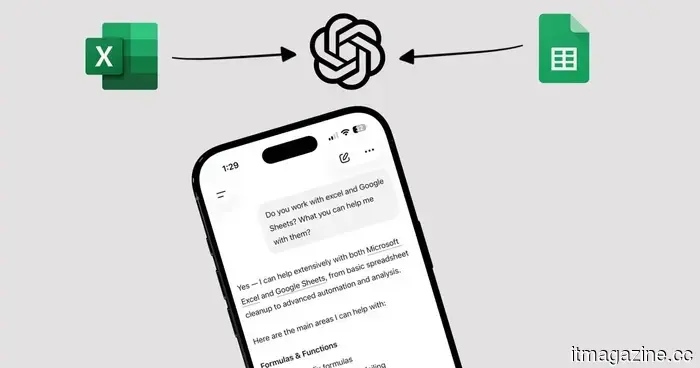 ChatGPT for Excel and Google Sheets has officially launched beyond its beta phase, and it's quite significant.
ChatGPT for Excel and Google Sheets has been officially released worldwide after its beta phase. You can create, modify, and inquire about your spreadsheets using everyday language.
ChatGPT for Excel and Google Sheets has officially launched beyond its beta phase, and it's quite significant.
ChatGPT for Excel and Google Sheets has been officially released worldwide after its beta phase. You can create, modify, and inquire about your spreadsheets using everyday language.
Hut 8 has entered into a 15-year lease worth $9.8 billion for the initial phase of its AI data center in Texas.
Hut 8 has entered into a 15-year lease for 352 MW at its Beacon Point Texas AI data center campus with a confidential investment-grade tenant, valued at $9.8 billion.