
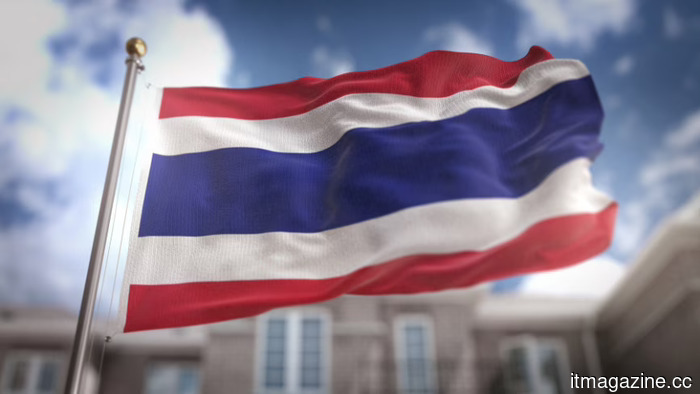
Thailand has greenlit $29 billion in projects, which includes the expansion of TikTok's data center.
On Wednesday, Bangkok’s Board of Investment approved six significant investments, three of which are data centres. The prominent focus is on TikTok's project, but the broader narrative involves Thailand's emerging role in the regional AI infrastructure market.
Typically, Thailand’s Board of Investment is seen as an institutional entity whose press releases don’t capture much international interest. However, Bloomberg reported that on Wednesday, the BOI greenlit a single batch of investment approvals totaling approximately $29 billion, or about ₿958 billion at current exchange rates. The standout approval was for TikTok's data-centre expansion valued at ₿842 billion, approximately $25 billion. Out of the six approved projects, three are related to data centres or data hosting. These data-centre investments sum up to about $27 billion, making up 93 percent of the entire approval. Evidence from Wednesday suggests that Thailand has chosen data-centre construction as its primary avenue to attract foreign investment, and global hyperscaler and platform operators have recognized Thailand as a viable destination for such investments.
Detailing TikTok's project, the approval represents a major extension of the company’s existing infrastructure in Thailand. ByteDance had previously pledged around $8.8 billion toward data centres in Thailand over five years, up from an earlier commitment of $3.8 billion that Thailand’s BOI initially approved in January 2025. The recent approval of ₿842 billion, equivalent to roughly $25 billion, significantly exceeds the cumulative previous commitments.
This new initiative encompasses the installation of servers, expansion of data storage, and scaling up processing capacity across Bangkok, Samut Prakan, and Chachoengsao provinces. The investment will be made by TikTok System (Thailand) Co., Ltd., but the larger corporate structure is linked to TikTok Pte. Ltd., the Singapore-based branch of ByteDance that manages its Asian operations. The investment qualifies for a five-year corporate income tax exemption under Thailand’s BCG (Bio-Circular-Green) industrial promotion strategy.
In addition to the infrastructure investment, the Bangkok Post reported that TikTok has committed to developing digital literacy and e-commerce curriculum programs to help Thai entrepreneurs and bolster the country's digital workforce. Such commitments are typical for BOI-approved foreign-investment projects of this magnitude, but they also indicate that TikTok aims to be viewed as a strategic partner by the Thai government rather than just a foreign capital provider.
While the TikTok project garners much of the attention, the remaining approved projects are also noteworthy. Skyline Data Center and Cloud Services Co., part of the UAE-based DAMAC Group, received approval for a ₿46 billion (~$1.4 billion) investment in a data center that will support a 200-megawatt IT load in Chachoengsao Province. A ₿3.25 billion investment from the Thai company Siam AI Corporation will specifically target artificial intelligence applications. Together, these three data-centre investments make up roughly $27 billion of the total $29 billion approved on Wednesday.
Geographically, Chachoengsao Province has emerged as Thailand's main data-centre hub, with TikTok, Skyline, and several previously approved hyperscaler projects all converging in that area. Thailand has secured significant data-centre commitments from AWS, Google, NextDC, CtrlS Datacenters, and Singapore’s GDS IDC Services, in addition to investments from ByteDance and the new Skyline project aligned with the UAE. This cluster resembles regional developments seen a decade ago in Singapore and more recently in Malaysia.
The reasons behind Thailand's recent approvals extend beyond its tax incentives. Singapore’s ongoing data-centre moratorium, which was relaxed in 2022 but not fully reinstated, has led to years of pent-up regional demand. While Malaysia has rapidly expanded, it faces challenges with power-grid capacity and water availability for cooling. Earlier this year, we noted the Bain Capital sale of its Bridge Data Centres stake at a $5 billion valuation, with ByteDance as the anchor tenant; this platform includes six data centres in Malaysia and two in Thailand, and the overflow of TikTok’s demand into Thailand’s primary expansion illustrates the regional capacity constraint at play.
Thailand’s advantages are evident in the approvals as well. The BCG industrial-promotion framework offers more attractive tax incentives compared to other competing regions.
Additionally, the geopolitical context plays a significant role. ByteDance has strategically leveraged Southeast Asian data-centre capacity to access Nvidia GPUs restricted by US export controls in mainland China. Thailand's neutral diplomatic stance, proximity to ByteDance’s primary user base, and the absence of significant US-aligned export-control constraints make it particularly favorable for this arbitrage opportunity. Thus, the $25 billion announcement represents both a success for Thailand's industrial policy and an extension of ByteDance’s regional strategy for optimizing compute resources.
TikTok’s expansion in Thailand is part of a larger pattern of infrastructure development, as evidenced by multiple regional initiatives. This includes TikTok’s
Other articles
 Your ChatGPT history serves as a personality assessment you weren't aware you were undergoing.
Researchers at ETH Zurich gathered 62,090 authentic ChatGPT conversations from 668 users and developed an AI to anticipate personality traits based on these interactions. The findings serve as a significant alert concerning privacy issues.
Your ChatGPT history serves as a personality assessment you weren't aware you were undergoing.
Researchers at ETH Zurich gathered 62,090 authentic ChatGPT conversations from 668 users and developed an AI to anticipate personality traits based on these interactions. The findings serve as a significant alert concerning privacy issues.
 Razr Fold versus Galaxy Z Fold 7: I’m tentatively impressed by what Motorola’s first foldable device brings to the table, all while saving $300.
Motorola focused its first release on creating the most robust hardware case possible. In contrast, Samsung dedicated seven generations to designing the most reliable daily-use case.
Razr Fold versus Galaxy Z Fold 7: I’m tentatively impressed by what Motorola’s first foldable device brings to the table, all while saving $300.
Motorola focused its first release on creating the most robust hardware case possible. In contrast, Samsung dedicated seven generations to designing the most reliable daily-use case.
 Razr Fold versus Galaxy Z Fold 7: I’m tentatively impressed by what Motorola’s inaugural foldable brings to the table while saving $300.
Motorola focused on creating the most robust hardware in its first generation. Meanwhile, Samsung dedicated seven generations to developing the most reliable daily-use device.
Razr Fold versus Galaxy Z Fold 7: I’m tentatively impressed by what Motorola’s inaugural foldable brings to the table while saving $300.
Motorola focused on creating the most robust hardware in its first generation. Meanwhile, Samsung dedicated seven generations to developing the most reliable daily-use device.
 Apple's iPhone 20 might finally abandon the design we've been familiar with for years.
The iPhone marking its 20th anniversary may feature a sleek, buttonless design, potentially known as “Glasswing,” which includes curved edges, Liquid Glass software, and the long-awaited integration of solid-state buttons.
Apple's iPhone 20 might finally abandon the design we've been familiar with for years.
The iPhone marking its 20th anniversary may feature a sleek, buttonless design, potentially known as “Glasswing,” which includes curved edges, Liquid Glass software, and the long-awaited integration of solid-state buttons.
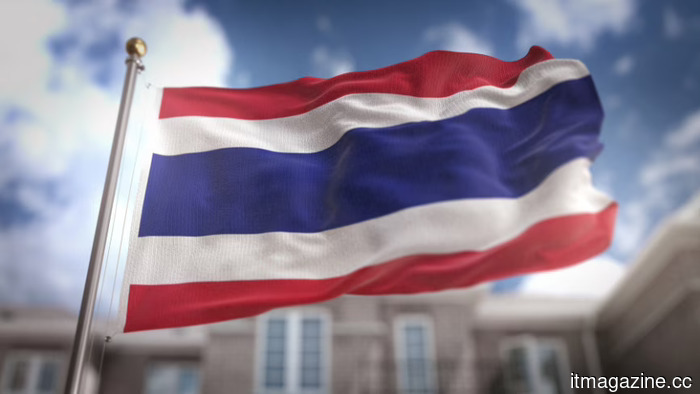 Thailand has authorized $29 billion in projects, which includes the expansion of TikTok's data center.
Thailand's BOI approved $29 billion in foreign investments, which features a $25 billion expansion of a TikTok data center, positioning Thailand as the leader in Southeast Asia.
Thailand has authorized $29 billion in projects, which includes the expansion of TikTok's data center.
Thailand's BOI approved $29 billion in foreign investments, which features a $25 billion expansion of a TikTok data center, positioning Thailand as the leader in Southeast Asia.
 Samsung's upcoming smart ring is delayed, but you'll find the anticipated enhancements worthwhile.
Samsung's Galaxy Ring 2 might miss its 2026 release as the company focuses on enhancing battery life, creating more compact hardware, and improving health tracking accuracy.
Samsung's upcoming smart ring is delayed, but you'll find the anticipated enhancements worthwhile.
Samsung's Galaxy Ring 2 might miss its 2026 release as the company focuses on enhancing battery life, creating more compact hardware, and improving health tracking accuracy.
Thailand has greenlit $29 billion in projects, which includes the expansion of TikTok's data center.
Thailand's BOI approved $29 billion in foreign investments, which includes a $25 billion expansion of TikTok's data center, positioning Thailand as a leader in Southeast Asia.