
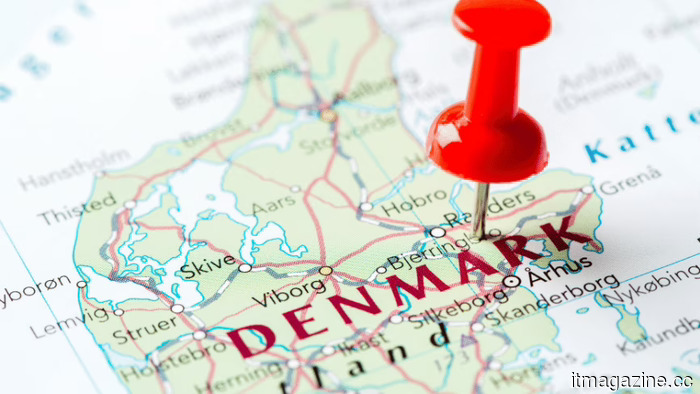
Denmark halts new grid connections as AI data centers strain the cleanest power grid in Europe.
TL;DR: Denmark's grid operator Energinet has halted all new grid connection agreements due to a staggering 60-gigawatt backlog, which is nearly nine times the nation's peak demand. The primary driver of this surge in demand is AI data centres, which were drawn to Denmark for its clean energy and favorable climate but are now exceeding the grid's capacity. Denmark is the first Nordic country to grapple with the challenge of balancing a clean energy grid with the needs of the energy-intensive AI industry.
Denmark generates over 80% of its electricity from renewable sources and has become a global leader in clean energy transition, particularly through its onshore and offshore wind farms. Energinet, which has invested decades into developing the infrastructure for a decarbonised power system, announced a pause on new grid connection agreements in March. This decision wasn't due to a lack of renewable energy but was spurred by an unexpected surge in demand from AI data centres that the system wasn't designed to handle. Denmark is now confronted with the urgent issue of what occurs when the energy demands of the AI sector surpass the grid capacity originally intended for a different purpose.
The pause entails a temporary hold on all new large-scale grid connections, with data centres being the primary factor in this decision. Approximately 60 gigawatts of projects await grid connections in Denmark, while the country’s peak demand is about 7 gigawatts, meaning the backlog is nearly nine times the peak load, much of which consists of data centre capacity. By early 2026, Denmark had around 398 megawatts of installed data centre capacity, with an additional 208 megawatts underway, projected to reach 1.2 gigawatts by 2030. Hyperscale data centre companies like Microsoft, Google, and Apple currently occupy 60% of the country’s data centre capacity. Microsoft has committed $3 billion to data centre construction in Denmark between 2023 and 2027, while Apple and Google have also expanded their operations there. They were attracted to Denmark for its stable governance, reliable infrastructure, cool climate, and ample wind energy. Ironically, the success of Denmark’s green energy initiative has led to demand that the grid cannot support.
The demand for electricity driven by AI has exceeded expectations. The International Energy Agency noted that electricity consumption by data centres jumped 17% in 2025, with AI-focused facilities growing even more rapidly. By 2030, global data centre electricity use is expected to double, and AI-specific centres could see their consumption triple. While there are ongoing efforts to enhance energy efficiency through hardware and cooling innovations, the rapid increase in capacity is outpacing those improvements.
A single AI inference task may use up to 1,000 times more electricity compared to a conventional web search, and training advanced models requires sustained power of several hundred megawatts over weeks. It is anticipated that hyperscalers' capital expenditure will surpass $690 billion in 2026, marking a 36% rise from 2025, with most of this directed at data centre construction and related power infrastructure. Although there are promising architectural innovations aimed at reducing AI's energy consumption, widespread deployment is years away. In the interim, companies are expanding as quickly as grid operators permit, which in Denmark has reached a limit.
While Denmark is the first Nordic country to halt new connections, it is not the only one experiencing similar pressures. Sweden, Finland, and Norway have all seen considerable investment in data centres for similar reasons—renewable energy, favorable climates, and stable governance—but none have yet issued a grid connection moratorium. The three-month Danish pause will allow Energinet to evaluate how to manage the backlog and establish new criteria for prioritizing large energy users' grid connection requests.
Energinet’s Chief Operating Officer described this pause as an “opportunity” to reconsider regulations. Data centre operators globally are fast-tracking their investments, as seen in Australia where NEXTDC has announced a A$2.2 billion plan for a new campus in Western Sydney. In Denmark, there are concerns that a brief pause could result in a prolonged regulatory framework that may disadvantage their projects in favor of other industrial demands or residential growth.
The core issue lies in the conflicting objectives of Denmark’s policies: creating the world’s cleanest electricity grid while simultaneously attracting the largest technology firms. Both goals have been met—the grid is one of the cleanest in Europe, and major tech companies are present. However, the grid was originally designed for a decarbonised industrial economy, not for an AI industry that consumes energy on a massive scale. Data centres are emerging as a financial asset class, with entities like Blackstone preparing the first AI data centre real estate investment trust (REIT). The financialization of data centre capacity indicates that investment will flow towards regions with faster grid connection speeds and lenient regulations, pulling away from areas that enforce pauses.
Denmark’s dilemma is that while a temporary
Other articles
 Pinterest surpasses $1 billion in quarterly revenue as its AI-driven visual search boosts advertising growth beyond what social platforms can achieve.
Pinterest achieved $1.008 billion in revenue in Q1, alongside 631 million monthly active users. Performance+ AI advertisements generated 24% more conversions. The driving force behind growth is 80 billion visual searches each month, rather than social feeds.
Pinterest surpasses $1 billion in quarterly revenue as its AI-driven visual search boosts advertising growth beyond what social platforms can achieve.
Pinterest achieved $1.008 billion in revenue in Q1, alongside 631 million monthly active users. Performance+ AI advertisements generated 24% more conversions. The driving force behind growth is 80 billion visual searches each month, rather than social feeds.
 iOS 27 allows users to generate personalized Wallet passes from any QR code as Apple stops waiting for developers.
Apple's iOS 27 introduces a "Create a Pass" feature that includes three templates. After a 14-year wait for the adoption of PassKit, Apple is now allowing users to create their own passes.
iOS 27 allows users to generate personalized Wallet passes from any QR code as Apple stops waiting for developers.
Apple's iOS 27 introduces a "Create a Pass" feature that includes three templates. After a 14-year wait for the adoption of PassKit, Apple is now allowing users to create their own passes.
 This PC is spacious enough to reside in and features its own air conditioning system to cool its large components.
A Chinese creator constructed a room-sized RGB PC that includes a desk, oversized fake components, and a 12kW air conditioner, transforming desktop cooling into an immersive experience focused on heat and airflow.
This PC is spacious enough to reside in and features its own air conditioning system to cool its large components.
A Chinese creator constructed a room-sized RGB PC that includes a desk, oversized fake components, and a 12kW air conditioner, transforming desktop cooling into an immersive experience focused on heat and airflow.
 Do you believe music is the most affected by sloppiness? AI has also greatly tainted podcasts.
A surge of AI-produced podcasts is rapidly spreading across audio platforms, with a Bloomberg report indicating that around 39% of new podcast feeds established in approximately nine days might have been created by machines.
Do you believe music is the most affected by sloppiness? AI has also greatly tainted podcasts.
A surge of AI-produced podcasts is rapidly spreading across audio platforms, with a Bloomberg report indicating that around 39% of new podcast feeds established in approximately nine days might have been created by machines.
 Haun Ventures secures $1 billion for funds focused on cryptocurrency and AI agents following successful stablecoin exits that benefit limited partners.
Katie Haun is branching out from cryptocurrency into AI agents tailored for financial services. The initial fund has successfully achieved exits with Bridge/Stripe and BVNK/Mastercard. Erebor represents the new investment thesis.
Haun Ventures secures $1 billion for funds focused on cryptocurrency and AI agents following successful stablecoin exits that benefit limited partners.
Katie Haun is branching out from cryptocurrency into AI agents tailored for financial services. The initial fund has successfully achieved exits with Bridge/Stripe and BVNK/Mastercard. Erebor represents the new investment thesis.
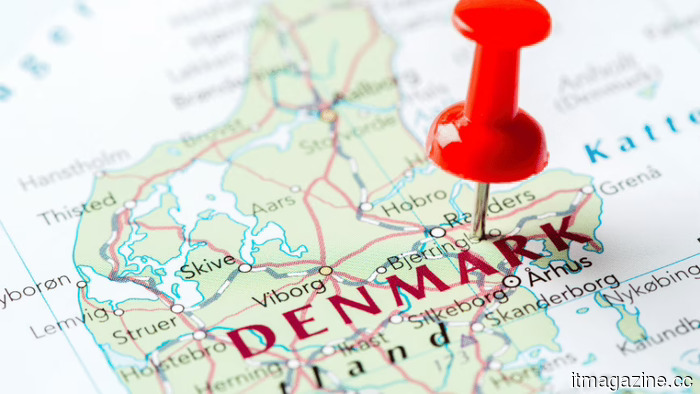 Denmark halts new grid connections as AI data centers strain the cleanest power network in Europe.
Energinet has paused new grid agreements after receiving 60 GW of requests for a grid that only supports 7 GW. The growth of data centers in Denmark has been propelled by Microsoft, Google, and Apple. However, the grid is unable to accommodate this demand.
Denmark halts new grid connections as AI data centers strain the cleanest power network in Europe.
Energinet has paused new grid agreements after receiving 60 GW of requests for a grid that only supports 7 GW. The growth of data centers in Denmark has been propelled by Microsoft, Google, and Apple. However, the grid is unable to accommodate this demand.
Denmark halts new grid connections as AI data centers strain the cleanest power grid in Europe.
Energinet has suspended new grid agreements after receiving 60 GW of requests for a grid that can only support 7 GW. The expansion of data centers in Denmark has been propelled by Microsoft, Google, and Apple. As a result, the grid is unable to accommodate the demand.