
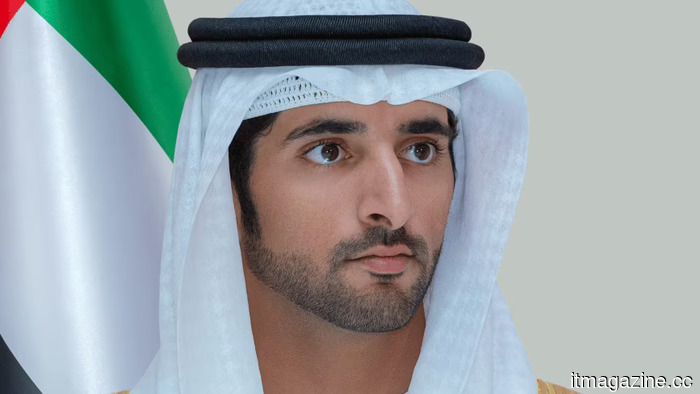
Dubai requires private sector companies to adopt agentic AI within two years, supported by incubators, training programs, and specialized funding.
**TL;DR**: Dubai's Crown Prince Sheikh Hamdan has initiated a two-year plan to transition the emirate's private sector towards agentic AI, which includes training programs for all business councils, government-supported incubators, and dedicated investment funds managed by the Dubai Chamber of Commerce. This follows the UAE cabinet's directive in April for 50% of federal services to be delivered by autonomous AI agents by 2028, marking Dubai as the first city to impose a specific deadline for private-sector AI adoption.
Every major government now has an AI strategy, typically involving pilot programs, task forces, and multi-year plans that promise transformation but lack firm deadlines. In contrast, Dubai has adopted a proactive stance. On Sunday, Crown Prince Sheikh Hamdan bin Mohammed bin Rashid Al Maktoum announced an initiative to transition the entire private sector towards agentic AI within two years. This initiative includes specialized training programs for all business councils under the Dubai Chamber of Commerce, government-funded incubators for agentic AI startups, dedicated investment funds, and aims to make Dubai’s economy “the best in the world” for adopting agentic AI technologies. This is the most aggressive private-sector AI mandate issued by any government, and it follows the UAE cabinet's declaration that 50% of federal services will be provided through autonomous AI agents within the next two years.
**The Mandate**: This private sector initiative stems from a federal directive made by Sheikh Mohammed bin Rashid Al Maktoum on April 23, which outlines a framework for deploying agentic AI systems—capable of analyzing data, making decisions, and taking actions with minimal human oversight—across half of all government operations by 2028. Oversight of this task force is led by Mohammed Al Gergawi, the Minister of Cabinet Affairs, with Sheikh Mansour bin Zayed Al Nahyan, the Vice President and Deputy Prime Minister, responsible for implementation.
The private-sector program extends the federal government’s ambition to the commercial sector. The Dubai Chamber of Commerce is tasked with administering training programs that will provide businesses with the knowledge needed to implement AI agents in areas such as customer service, procurement, logistics, compliance, and decision support. These incubators will be part of the Chamber's existing framework and funded through investment vehicles established by the Crown Prince. While specific details on fund size and eligibility have not been disclosed, the directive makes clear that the Chamber is now focused on fostering a generation of agentic AI firms rather than just supporting them.
**The Context**: The UAE has been preparing for this for many years. Abu Dhabi has announced its “Abu Dhabi Government Digital Strategy 2025 to 2027” with AED 13 billion ($3.5 billion) aimed at becoming the first fully AI-native government by 2027. The Mohammed bin Zayed University of Artificial Intelligence, the world's first graduate-level AI research institution, has been operational in Abu Dhabi since 2019. Omar Sultan Al Olama has served as the world’s first Minister of State for Artificial Intelligence since 2017. Dubai AI Week has also become a significant event in the global AI calendar. While the infrastructure for a government-led AI transition is established, the new initiative extends this transition to the private sector with an explicit timeline.
The focus on agentic AI is intentional. It signifies a shift from research to the practical application of AI in sectors like engineering and manufacturing. Companies such as Synera are deploying teams of AI agents that autonomously execute tasks across current enterprise tools at organizations like NASA, BMW, Airbus, and Hyundai. The differentiation between conventional AI, which aids human decisions, and agentic AI, which executes them, forms the basis of Dubai’s program. The training will not cover simple chatbot usage; instead, it will prepare businesses to implement autonomous systems capable of managing procurement workflows, regulatory submissions, customer interactions, and supply chain adjustments without continuous human involvement.
**The Gap**: The project's ambition is clearer than its execution path. The current security and governance framework for implementing agentic AI is still underdeveloped. A survey by Deloitte noted that while 74% of companies wish to adopt agentic AI in the next two years, only 21% have a mature governance model for autonomous agents. This discrepancy between intentions and readiness presents a primary challenge for any government trying to enforce widespread agentic AI adoption. Dubai's private sector includes international financial entities governed by DIFC regulations, logistics firms managing Jebel Ali port operations, and construction companies engaged in significant infrastructure projects, along with numerous small- and medium-sized enterprises with varying technology adoption levels. A two-year mandate treats them all as a uniform group.
Although the training tracks address the knowledge gap, they do not resolve the infrastructure gap. The successful implementation of agentic AI necessitates not just an understanding of agents' capabilities but also requires the appropriate data architecture, API integrations, security measures, and monitoring systems to ensure agents can function safely within existing business frameworks. Many global enterprises
Other articles
 iOS 27 enables users to generate personalized Wallet passes from any QR code, as Apple decides to stop waiting for developers.
Apple's iOS 27 introduces a "Create a Pass" feature that includes three templates. Following 14 years of anticipation for PassKit's adoption, Apple is now allowing users to create their own passes.
iOS 27 enables users to generate personalized Wallet passes from any QR code, as Apple decides to stop waiting for developers.
Apple's iOS 27 introduces a "Create a Pass" feature that includes three templates. Following 14 years of anticipation for PassKit's adoption, Apple is now allowing users to create their own passes.
 Do you believe music is the most affected by sloppiness? AI has also significantly tarnished podcasts.
A surge of AI-generated podcasts is rapidly spreading across audio platforms, with a Bloomberg report indicating that about 39% of new podcast feeds established in approximately nine days might be created by machines.
Do you believe music is the most affected by sloppiness? AI has also significantly tarnished podcasts.
A surge of AI-generated podcasts is rapidly spreading across audio platforms, with a Bloomberg report indicating that about 39% of new podcast feeds established in approximately nine days might be created by machines.
 Do you believe music is the most affected by sloppiness? AI has also greatly tainted podcasts.
A surge of AI-produced podcasts is rapidly spreading across audio platforms, with a Bloomberg report indicating that around 39% of new podcast feeds established in approximately nine days might have been created by machines.
Do you believe music is the most affected by sloppiness? AI has also greatly tainted podcasts.
A surge of AI-produced podcasts is rapidly spreading across audio platforms, with a Bloomberg report indicating that around 39% of new podcast feeds established in approximately nine days might have been created by machines.
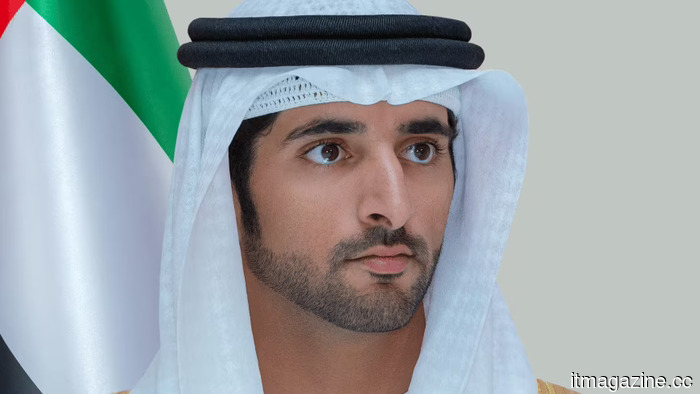 Dubai requires the private sector to adopt generative AI within two years, supported by incubators, training programs, and allocated funds.
Sheikh Hamdan initiates a two-year initiative aimed at encouraging the private sector in Dubai to embrace agentic AI. This will include training for all business councils, incubators, and funds facilitated by the Chamber.
Dubai requires the private sector to adopt generative AI within two years, supported by incubators, training programs, and allocated funds.
Sheikh Hamdan initiates a two-year initiative aimed at encouraging the private sector in Dubai to embrace agentic AI. This will include training for all business councils, incubators, and funds facilitated by the Chamber.
 Microsoft has announced that it is working on a solution for the Outlook issue that caused documents to appear blank.
Microsoft is deploying a server-side solution for a longstanding Outlook issue that caused shared Word, Excel, and PowerPoint files to open as blank. In the meantime, browser-based alternatives are available until the fix is implemented for all users.
Microsoft has announced that it is working on a solution for the Outlook issue that caused documents to appear blank.
Microsoft is deploying a server-side solution for a longstanding Outlook issue that caused shared Word, Excel, and PowerPoint files to open as blank. In the meantime, browser-based alternatives are available until the fix is implemented for all users.
 Walmart leak reveals an expanding Onn collection that includes a Gemini-compatible smart speaker.
A certification has revealed that Walmart's Onn lineup is set to expand with a Gemini-powered smart speaker that offers Matter support, Google Cast, and a 10W speaker.
Walmart leak reveals an expanding Onn collection that includes a Gemini-compatible smart speaker.
A certification has revealed that Walmart's Onn lineup is set to expand with a Gemini-powered smart speaker that offers Matter support, Google Cast, and a 10W speaker.
Dubai requires private sector companies to adopt agentic AI within two years, supported by incubators, training programs, and specialized funding.
Sheikh Hamdan initiates a two-year initiative aimed at encouraging Dubai's private sector to embrace agentic AI. Training will be provided to all business councils, incubators, and funds via the Chamber.