

The Academy has officially stated that AI is not eligible to win an Oscar for acting or writing.
The Academy of Motion Picture Arts and Sciences has officially clarified the role of artificial intelligence (AI) regarding Oscar eligibility, emphasizing that AI is not eligible for awards in acting or writing categories. The revised rules, included in the 99th Academy Awards rulebook, highlight that human contribution is essential for recognition in major creative fields.
Priority on Human Performance and Authorship
According to the updated guidelines, only human performances will be eligible for acting awards. The regulations specify that credited roles in a film must be “demonstrably performed by humans with their consent” and officially acknowledged in the film’s billing. Consequently, AI-generated or synthetic performances, regardless of their inclusion in a film, are not qualified for recognition.
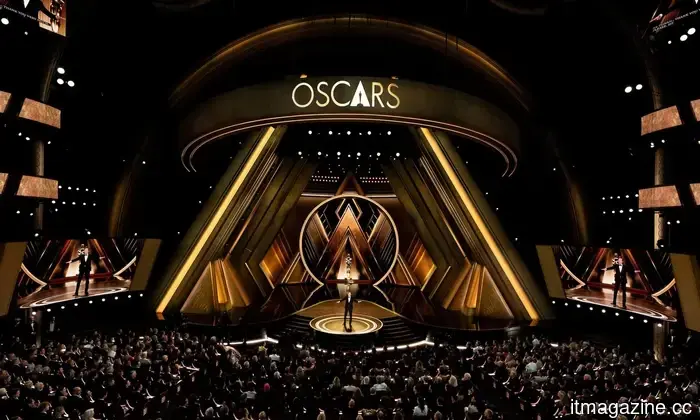
Conan O’Brien will host the live ABC telecast of the 97th Oscars® at the Dolby® Theatre in Ovation Hollywood on Sunday, March 2, 2025. Richard Harbaugh / The Academy
The Academy has also clearly defined its stance on writing categories. For awards such as Best Original Screenplay or Best Adapted Screenplay, a film must credit a human writer explicitly. The rulebook dictates that screenplays must be “human-authored,” effectively ruling out scripts created entirely by AI systems.
AI Tools Permissible, But Not Recognized
Although AI cannot be acknowledged as a performer or writer, the Academy permits its use in filmmaking. The regulations recognize that generative AI and other digital tools can be employed during production; however, their involvement does not affect a film’s nomination or winning potential.
Instead, the Academy will assess the extent of human involvement in the creative process. If AI tools are utilized, voters will evaluate the degree of human authorship when reviewing a film. The Academy also retains the right to request more details from filmmakers if any questions arise regarding the use of AI in their projects.
Significance of This Decision
This clarification arrives as AI becomes increasingly prevalent in the creative sectors, including film. From de-aging actors to crafting scripts and visual effects, AI tools are gaining traction. The Academy’s decision establishes a clear boundary, ensuring that awards continue to honor human creativity rather than outputs generated by machines.
AMPAS/ABC
This move also addresses ongoing discussions in Hollywood about authorship, originality, and technology’s role in storytelling. By implementing these rules now, the Academy aims to uphold the integrity of its awards while still allowing for innovation in filmmaking.
Implications for the Future
For filmmakers, the message is clear: AI can serve as a tool, but it cannot be a credited creator. Productions that rely significantly on AI for writing or performances may encounter difficulties qualifying for specific categories unless human input remains central.
Looking ahead, these rules may influence how studios integrate AI into future projects. As technology continues to advance, the Academy might revisit or fine-tune its guidelines. For the time being, however, the Oscars are steadfast in celebrating human accomplishments in cinema, even as the industry evolves alongside new technological advancements.
Other articles
 I assigned Gemini to handle my Gmail, and it was truly enlightening.
I didn't cease to be concerned about privacy; I simply refused to allow it to hinder my progress. In fact, my inbox has never felt as light as it does now.
I assigned Gemini to handle my Gmail, and it was truly enlightening.
I didn't cease to be concerned about privacy; I simply refused to allow it to hinder my progress. In fact, my inbox has never felt as light as it does now.
 Is AI becoming elitist? Research indicates that access is tilted in favor of the wealthy, potentially creating a new social divide.
A recent study reveals that awareness and utilization of AI are more prevalent among affluent groups, highlighting worries about an expanding digital divide and unequal access to opportunities.
Is AI becoming elitist? Research indicates that access is tilted in favor of the wealthy, potentially creating a new social divide.
A recent study reveals that awareness and utilization of AI are more prevalent among affluent groups, highlighting worries about an expanding digital divide and unequal access to opportunities.
.jpg) This indie film boasting a 99% rating on Rotten Tomatoes is among the three underrated Hulu movies to check out this weekend (May 2-3).
These three films available on Hulu this weekend delve into what occurs when striving for something leads you to a point of no return.
This indie film boasting a 99% rating on Rotten Tomatoes is among the three underrated Hulu movies to check out this weekend (May 2-3).
These three films available on Hulu this weekend delve into what occurs when striving for something leads you to a point of no return.
 I assigned Gemini to manage my Gmail, and it was quite enlightening.
I didn’t stop being concerned about privacy; I just stopped allowing it to hinder me. Honestly, my inbox has never felt so free.
I assigned Gemini to manage my Gmail, and it was quite enlightening.
I didn’t stop being concerned about privacy; I just stopped allowing it to hinder me. Honestly, my inbox has never felt so free.
 AI has become elitist? Studies reveal that access is disproportionately favoring the wealthy, potentially creating a new social divide.
A recent study indicates that awareness and utilization of AI are more prevalent among wealthier demographics, highlighting worries about an expanding digital divide and disparities in access to opportunities.
AI has become elitist? Studies reveal that access is disproportionately favoring the wealthy, potentially creating a new social divide.
A recent study indicates that awareness and utilization of AI are more prevalent among wealthier demographics, highlighting worries about an expanding digital divide and disparities in access to opportunities.
 AI has become exclusive? A study reveals that access is biased towards the wealthy, potentially creating a new social divide.
A recent study indicates that awareness and use of AI are more prevalent among wealthier populations, highlighting concerns about an increasing digital divide and unequal access to opportunities.
AI has become exclusive? A study reveals that access is biased towards the wealthy, potentially creating a new social divide.
A recent study indicates that awareness and use of AI are more prevalent among wealthier populations, highlighting concerns about an increasing digital divide and unequal access to opportunities.
The Academy has officially stated that AI is not eligible to win an Oscar for acting or writing.
The Academy has affirmed that AI will not be eligible for Oscars in acting or writing, emphasizing that human performances and creativity are still crucial, even with the increasing incorporation of AI in the film industry.