
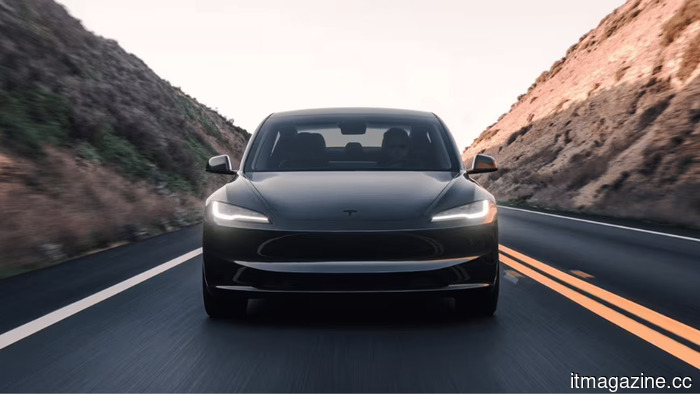
Tesla offers the Shanghai-manufactured Model 3 in Canada for C$39,490 following a Carney-Beijing agreement that reduces the Chinese electric vehicle tariff to 6.1%.
**Summary**: Tesla is offering Shanghai-manufactured Model 3 sedans in Canada for C$39,490, which is nearly half the C$79,990 price of the Fremont model, following Prime Minister Carney’s January 2026 trade agreement with Beijing that reduced Chinese EV tariffs from 100% to 6.1%, with a quota of 49,000 vehicles. Tesla is the first to take advantage of this deal, which also allows BYD and other Chinese EV manufacturers into the Canadian market.
Tesla is now selling the lowest-priced Model 3 sedans in Canada, specifically the Model 3 Premium RWD made in Giga Shanghai, starting at C$39,490 (approximately US$29,000). Previously, the least expensive Model 3 offered in Canada was the Long Range AWD from the Fremont factory priced at C$79,990. The price has dropped significantly, and the vehicle is now sourced from a different continent. This change isn’t due to product redesigns or manufacturing advancements but is the result of a tariff agreement Prime Minister Mark Carney made with Beijing in January 2026. Tesla is the first company to benefit from this arrangement, initiated by the individual closest to the US president who started the trade conflict necessitating this deal.
**The Agreement**: In October 2024, Canada imposed a 100% surcharge on electric vehicles made in China, mirroring the tariffs the US had enacted earlier that year. The ongoing US-China tech rivalry led to tariff barriers across various sectors, with the EV tariff being a strategy to protect North American automakers from the cost advantages held by Chinese manufacturers that arose from integrated battery supply chains and lower labor expenses established over the last decade. Tesla had been sending Shanghai-produced Model 3s to Canada but redirected supply to Fremont.
This trade landscape shifted when Canada introduced a 25% counter-tariff on US-made cars in early 2025, responding to American tariffs on Canadian products. The Fremont-made Model 3 Long Range AWD, already pricey due to Canadian currency rates, became unfeasible at C$79,990. Tesla found itself caught between the 100% tariff on its Chinese models and the 25% tariff on its American vehicles, making both supply channels economically unviable for Canadian consumers.
In January 2026, Carney traveled to Beijing and signed what he described as a "preliminary but landmark" trade agreement that reduced tariffs on Chinese-made electric vehicles from 100% to 6.1%, with a quota of 49,000 vehicles for the first half of 2026, followed by an additional 24,500 vehicles from September to February 2027, and expanding to 70,000 vehicles annually by 2030. In return, China reduced tariffs on Canadian canola seed and eliminated tariffs on Canadian lobster, crab, and peas, creating a trade deal characterized by the exchange of agricultural products for manufactured goods.
**The Opportunity**: Tesla acted quickly. The Model 3 Premium RWD from Shanghai, with a range of 463 kilometers and a 4.2-second acceleration to 100 km/h, was introduced to the Canadian market on May 1 at C$39,490, now with a 6.1% import duty. The Model 3 Performance, also produced in Shanghai, saw a price drop to C$74,990. The initial deliveries are expected in May or June. However, these Shanghai-built vehicles do not qualify for the C$5,000 Electric Vehicle Affordability Program rebate, which is restricted to products manufactured in a free-trade partner country, a status China does not hold. Nevertheless, the price point is low enough that the lack of a rebate is unlikely to dissuade purchasers.
Giga Shanghai delivered 851,000 EVs in 2025, constituting over half of Tesla's total global production, and has manufactured more than four million vehicles since its opening. The factory's cost advantage over Fremont stems from lower labor expenses, a streamlined supply chain, and proximity to key battery material and component suppliers. As the tariff differential between vehicles from China and those from the US decreases, as seen in Canada, sourcing from Shanghai becomes the clear choice. Tesla's decision is not driven by ideology; it simply reflects the economic reality of making the car at a lower cost.
**The Market Dynamics**: The 49,000 vehicle quota isn't exclusive to Tesla. Other Chinese EV manufacturers like BYD, Geely, and SAIC can apply for the same import permits. BYD's models, such as the Atto 3, Dolphin, and Seal, which directly rival the Model 3 in pricing and specifications, could enter Canada at lower prices compared to existing grey-market imports. Although the quota is relatively small, representing about 3% of Canada’s automotive market, it opens a new opportunity that did not exist just six months prior.
Tesla's advantage lies
Other articles
 The Secure Boot certificates for Windows will expire in June — here’s what actions you should take.
The Secure Boot certificates that support one of Windows' key security features will expire in June 2026, and not all PCs will receive the update automatically.
The Secure Boot certificates for Windows will expire in June — here’s what actions you should take.
The Secure Boot certificates that support one of Windows' key security features will expire in June 2026, and not all PCs will receive the update automatically.
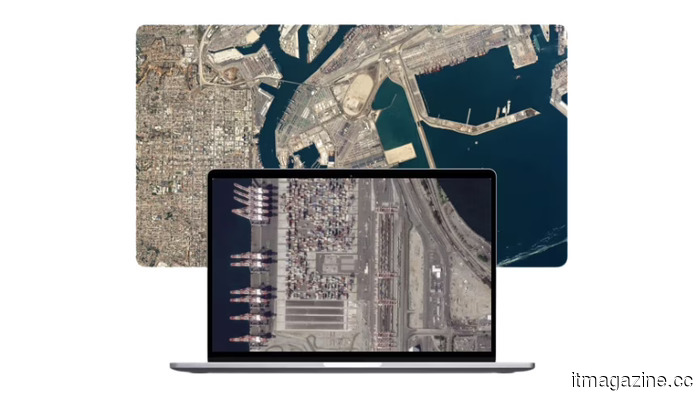 Planet Labs introduces three additional Pelican satellites, buoyed by a $900 million backlog and defense contracts that contribute to its first year of profitability.
Planet Labs initiated the launch of Pelicans 7-9 equipped with Nvidia AI, progressing towards a 32-satellite constellation. The company has achieved profitability, boasting a backlog of $900 million along with significant contracts with NATO and the NRO.
Planet Labs introduces three additional Pelican satellites, buoyed by a $900 million backlog and defense contracts that contribute to its first year of profitability.
Planet Labs initiated the launch of Pelicans 7-9 equipped with Nvidia AI, progressing towards a 32-satellite constellation. The company has achieved profitability, boasting a backlog of $900 million along with significant contracts with NATO and the NRO.
 Grok is set to arrive on CarPlay as iOS 26.4 transforms the car dashboard into the next battleground for AI platforms.
Grok has joined ChatGPT, Perplexity, Claude, and Gemini on CarPlay following the opening of the platform to AI chatbots with iOS 26.4. The car dashboard has now become the most competitive display in the tech industry.
Grok is set to arrive on CarPlay as iOS 26.4 transforms the car dashboard into the next battleground for AI platforms.
Grok has joined ChatGPT, Perplexity, Claude, and Gemini on CarPlay following the opening of the platform to AI chatbots with iOS 26.4. The car dashboard has now become the most competitive display in the tech industry.
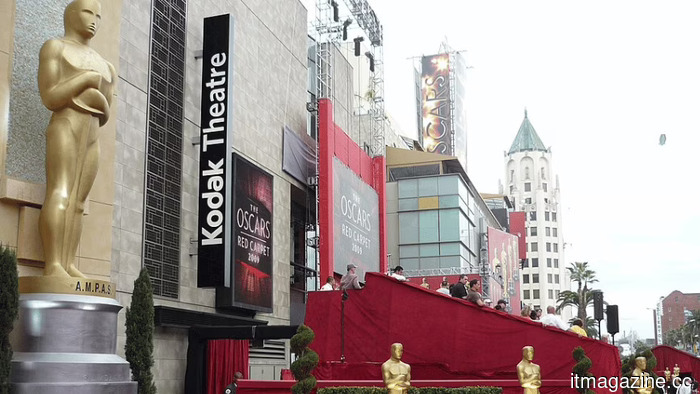 The Oscars have prohibited AI actors and AI-generated scripts by establishing new human authorship guidelines and an Affidavit of Human Origin for the 99th ceremony.
The Academy mandates that acting roles must be "clearly performed by humans" and screenplays must be "written by humans" for the 99th Oscars. However, AI tools remain permissible in the VFX and technical categories.
The Oscars have prohibited AI actors and AI-generated scripts by establishing new human authorship guidelines and an Affidavit of Human Origin for the 99th ceremony.
The Academy mandates that acting roles must be "clearly performed by humans" and screenplays must be "written by humans" for the 99th Oscars. However, AI tools remain permissible in the VFX and technical categories.
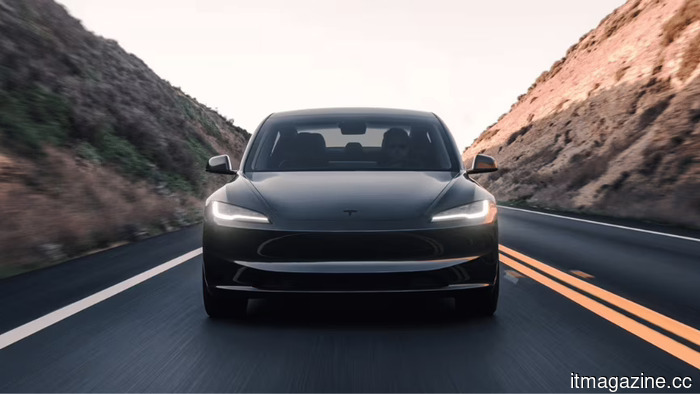 Tesla offers the Shanghai-manufactured Model 3 in Canada for C$39,490 following the Carney-Beijing agreement that reduces the Chinese EV tariff to 6.1%.
The Model 3 produced in Shanghai by Tesla is priced at C$39,490 in Canada, thanks to Carney's trade agreement with Beijing. The quota of 49,000 vehicles allows for the import of Chinese electric vehicles to Canada with a tariff of 6.1%.
Tesla offers the Shanghai-manufactured Model 3 in Canada for C$39,490 following the Carney-Beijing agreement that reduces the Chinese EV tariff to 6.1%.
The Model 3 produced in Shanghai by Tesla is priced at C$39,490 in Canada, thanks to Carney's trade agreement with Beijing. The quota of 49,000 vehicles allows for the import of Chinese electric vehicles to Canada with a tariff of 6.1%.
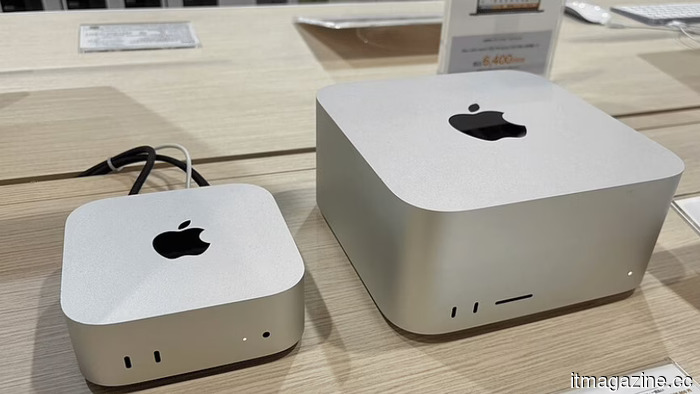 Apple discontinues the $599 Mac Mini as the demand for DRAM in AI data centers leads to an unprecedented 90% increase in memory prices and a worldwide shortage.
Apple has stopped producing the 256GB Mac Mini due to a 90% increase in DRAM prices in the first quarter of 2026. AI servers currently account for 23% of worldwide memory wafer production, resulting in a 10-20% rise in PC prices.
Apple discontinues the $599 Mac Mini as the demand for DRAM in AI data centers leads to an unprecedented 90% increase in memory prices and a worldwide shortage.
Apple has stopped producing the 256GB Mac Mini due to a 90% increase in DRAM prices in the first quarter of 2026. AI servers currently account for 23% of worldwide memory wafer production, resulting in a 10-20% rise in PC prices.
Tesla offers the Shanghai-manufactured Model 3 in Canada for C$39,490 following a Carney-Beijing agreement that reduces the Chinese electric vehicle tariff to 6.1%.
The Model 3 produced in Shanghai by Tesla arrives in Canada priced at C$39,490, thanks to Carney's trade agreement with Beijing. The 49,000-vehicle quota allows Chinese electric vehicles to enter Canada with a tariff of 6.1%.