
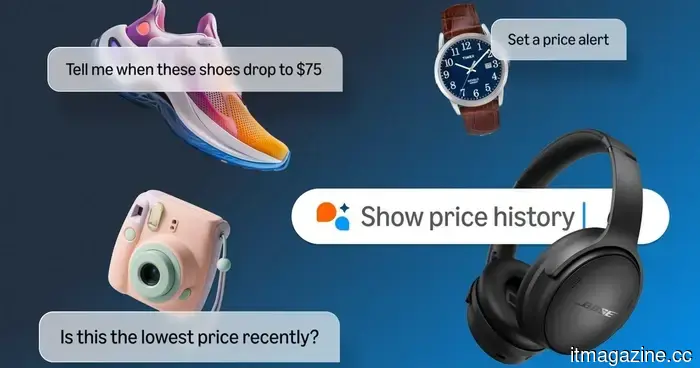
You can now view a product's price history for an entire year on Amazon.
The 365-day window being implemented across the US, UK, and India provides a comprehensive context for every purchase decision, extending beyond the last 90 days.
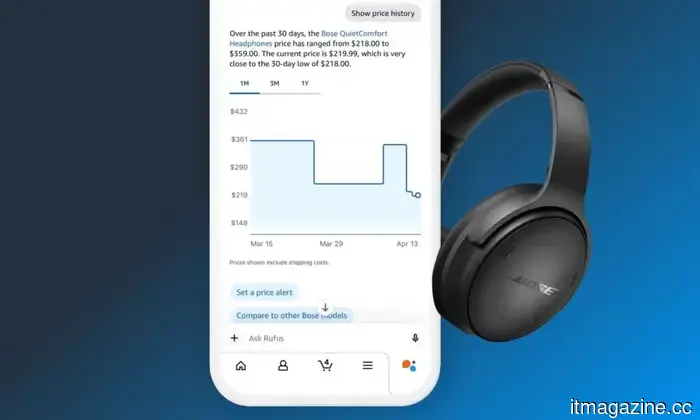
Amazon’s AI shopping assistant, Rufus, can now display a complete year of price history for a product. This means you can access 12 months of pricing information, indicating when the product was available at higher or lower prices, as well as when the most recent price change occurred, prior to making a purchase.
Previously, users could only view up to 90 days of price history, which was sufficient for tracking recent sales, but inadequate for determining if a limited-time offer is genuinely the best price available in the past year.
**Amazon**
**How can you access price history?**
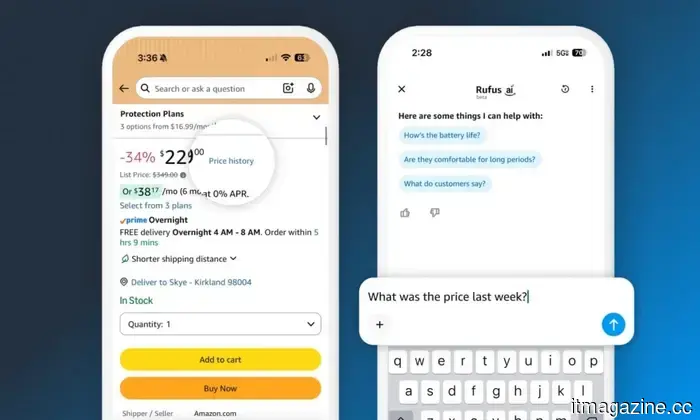
There are two methods to view price history on Amazon. The first and easiest method is to click on the price history link located next to the product price on any product detail page. The second method involves using Rufus, accessible through an icon at the bottom-right corner of the Amazon app or the top navigation bar on the desktop site.
Once there, you can inquire about prices with the AI shopping assistant by asking questions such as, “Has the price dropped recently?” or “What’s the lowest price this product has had in the past year?” The AI assistant will provide the requested information from a 30, 90, or 365-day perspective.
Amazon states that over 50 million customers have utilized the price history feature since its introduction in 2024, though it’s likely that even more individuals have relied on third-party websites or tools that also send notifications for price drops.
**Amazon**
**Who can access the complete year of pricing data?**
The 365-day pricing window will be available to Amazon users in the United States, the United Kingdom, and India. Notably, this feature is not restricted by a paywall (it is not linked to an Amazon Prime membership). All existing users of the platform can access the one-year pricing history feature.
This introduction is particularly timely, as the Amazon Prime Day sale is set to return in June 2026 (and July 2026 in India). With access to a year’s worth of pricing history, consumers will be able to better ascertain whether a Prime Day discount is truly advantageous, or merely regular pricing cloaked in a significant discount label.
For more than five years, Shikhar has continuously broken down developments in consumer technology and presented them succinctly.
**Space data centers may seem unrealistic. What if we placed them on lamp posts?**
Nigeria has just introduced Africa's first distributed AI data center, integrated into 50,000 lamp posts.
SpaceX is also pursuing ambitious plans for AI data centers in outer space, while Microsoft has explored an underwater solution. However, establishing AI data centers tends to be costly and energy-demanding. This is why a UK company aspires to construct one using street lamp posts in Nigeria and has already secured a deal to proceed. The Conflow Power Group, based in Warwickshire, has reached an agreement with the Katsina State Government to install 50,000 solar-powered smart lamp posts known as iLamps across the state (as reported by BBC). Each unit operates using a cylindrical solar panel and battery, fueling a low-energy Nvidia chip that consumes merely 15 watts.
**Read more**
**Do you believe vibe-coding will make you a wealthy entrepreneur? You might want to consider this risk brief.**
A recent report from the ACM warns that vibe coding overlooks the engineering fundamentals necessary for ensuring software security and maintainability.
If you’ve fantasized about creating your app without writing any code, vibe coding likely seems like your dream come true. You describe your vision, and AI constructs it for you. However, a new report from the Association for Computing Machinery's Technology Policy Council reveals a more complex reality.
The ACM TechBrief, co-written by Simson Garfinkel, Chief Scientist at BasisTech, acknowledges the allure of vibe coding. Platforms like Loveable and Google’s Firebase Studio democratize software development for those without programming experience. Additionally, they liberate seasoned developers from monotonous, uncreative tasks, allowing them to concentrate on design and problem-solving instead.
**We developed AI to free us from email, and it somehow made email even more tedious.**
The most disappointing AI future may reside in your inbox.
Crafting an email is already one of the more draining aspects of contemporary work, so naturally, the tech industry opted to automate it. AI was intended to lessen workloads by addressing repetitive tasks, reducing inbox clutter, and reclaiming people’s time. This certainly seemed like a promising approach. However, in practice, we have yet to eliminate the frustration associated with email.
The type of email you’re already tired of receiving.




Other articles
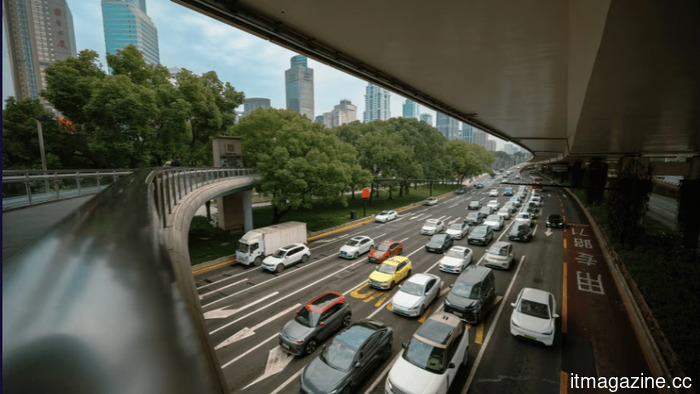 VW, Toyota, and Hyundai are partnering with Chinese tech firms as local brands dominate 70% of the market.
The early 2026 market share increases for foreign automakers in China indicate a lingering effect of subsidies rather than a resurgence. The technology gap has inverted.
VW, Toyota, and Hyundai are partnering with Chinese tech firms as local brands dominate 70% of the market.
The early 2026 market share increases for foreign automakers in China indicate a lingering effect of subsidies rather than a resurgence. The technology gap has inverted.
 These solar fence lights come with 11 modes and 9 colors, priced at $2.50 each, and their IP65 rating ensures they can be left outside throughout the year.
This post is shared as part of a paid collaboration with ESUNYD. Their outdoor lighting, which doesn’t need any wiring, operates solely on solar energy and is priced at $2.50 per light, making it an easy enhancement for any deck, fence, or patio. The 16-pack of ESUNYD solar fence lights illustrates this well at a price of $39.99, offering a $10 discount off the […]
These solar fence lights come with 11 modes and 9 colors, priced at $2.50 each, and their IP65 rating ensures they can be left outside throughout the year.
This post is shared as part of a paid collaboration with ESUNYD. Their outdoor lighting, which doesn’t need any wiring, operates solely on solar energy and is priced at $2.50 per light, making it an easy enhancement for any deck, fence, or patio. The 16-pack of ESUNYD solar fence lights illustrates this well at a price of $39.99, offering a $10 discount off the […]
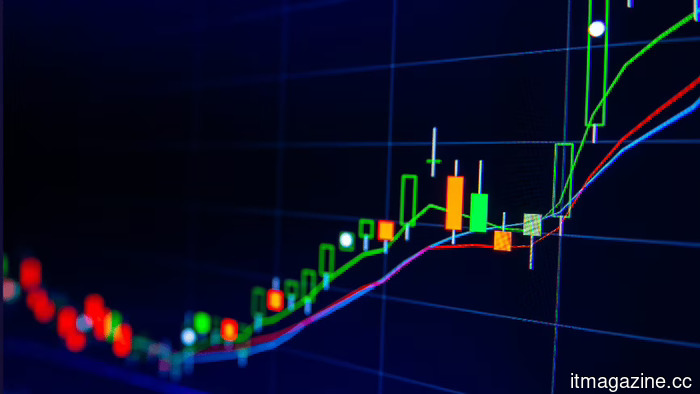 Alphabet approaches Nvidia in the race to become the world's most valuable company following strong Q1 earnings in cloud, search, and AI.
Alphabet's market capitalization reached $4.6 trillion following a 22% increase in Q1 earnings. Google Cloud experienced a 63% growth. Meanwhile, Nvidia saw a decline of 6%. The difference is $200 billion and is decreasing.
Alphabet approaches Nvidia in the race to become the world's most valuable company following strong Q1 earnings in cloud, search, and AI.
Alphabet's market capitalization reached $4.6 trillion following a 22% increase in Q1 earnings. Google Cloud experienced a 63% growth. Meanwhile, Nvidia saw a decline of 6%. The difference is $200 billion and is decreasing.
 Apple has increased the cost of the Mac mini without changing its listed price.
Buying the Mac mini on a budget has become more difficult now that Apple has discontinued its $599 model amid a worsening shortage of memory and storage.
Apple has increased the cost of the Mac mini without changing its listed price.
Buying the Mac mini on a budget has become more difficult now that Apple has discontinued its $599 model amid a worsening shortage of memory and storage.
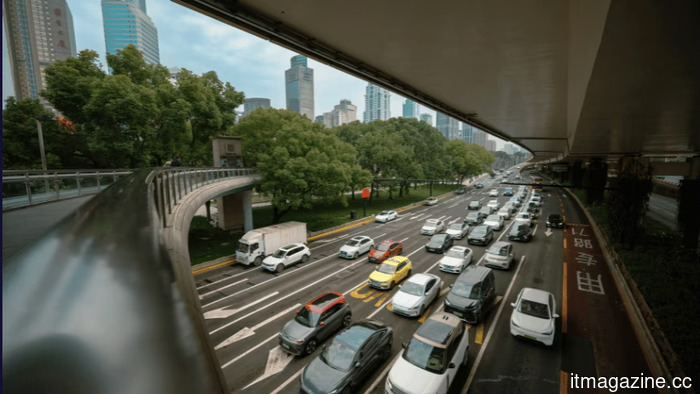 VW, Toyota, and Hyundai are placing their bets on Chinese technology partners as local brands dominate 70% of the market.
The early 2026 market share increases of foreign automakers in China are indicative of a lingering effect from subsidies, rather than a resurgence. The technology gap has shifted.
VW, Toyota, and Hyundai are placing their bets on Chinese technology partners as local brands dominate 70% of the market.
The early 2026 market share increases of foreign automakers in China are indicative of a lingering effect from subsidies, rather than a resurgence. The technology gap has shifted.
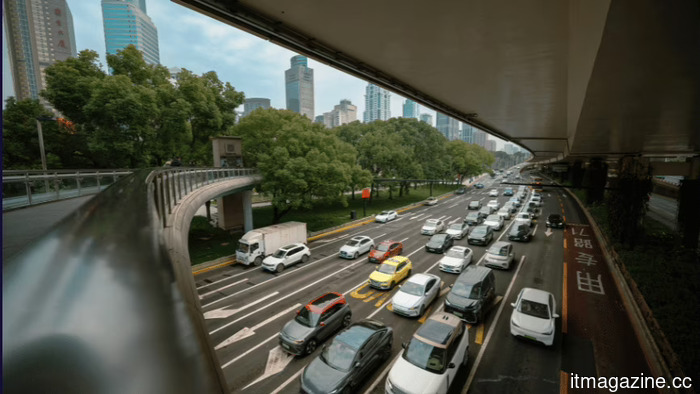 VW, Toyota, and Hyundai are investing in Chinese tech partners as local brands dominate 70% of the market.
The early 2026 market share increases for foreign automakers in China are a result of lingering effects from subsidies rather than a resurgence. The disparity in technology has shifted.
VW, Toyota, and Hyundai are investing in Chinese tech partners as local brands dominate 70% of the market.
The early 2026 market share increases for foreign automakers in China are a result of lingering effects from subsidies rather than a resurgence. The disparity in technology has shifted.
You can now view a product's price history for an entire year on Amazon.
Amazon's Rufus now displays a complete year of price history for any product, available to all customers without requiring a Prime membership, allowing you to determine whether a "limited time" offer is truly valid.