
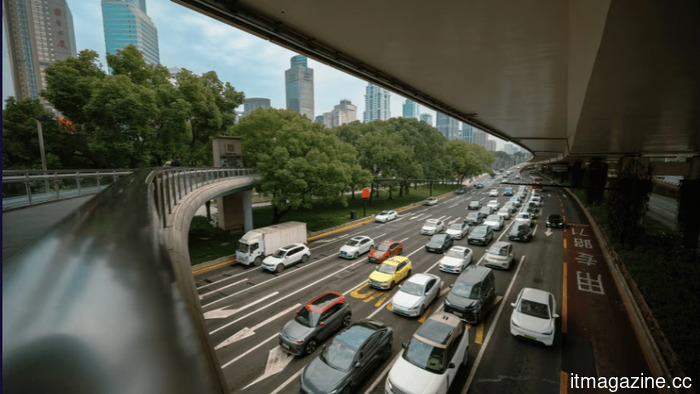
VW, Toyota, and Hyundai are partnering with Chinese tech firms as local brands dominate 70% of the market.
**TL;DR:** In early 2026, foreign car manufacturers momentarily regained market share in China after EV subsidies ended and local sales fell, but the overall landscape remains unchanged: Chinese brands now dominate nearly 70% of the passenger vehicle market, NEV penetration is expected to surpass 54%, and foreign companies like Volkswagen and Hyundai are collaborating with Chinese AI and autonomous driving firms, unable to develop competitive software independently.
By January and February 2026, Volkswagen reclaimed the lead in China's passenger vehicle market with a 13.9% share, just ahead of Geely at 13.8%. Toyota's joint ventures accounted for 7.8%, while BYD, which was the largest global EV manufacturer in 2024 and much of 2025, dropped to fourth place with a 7.1% market share after experiencing six straight months of declining sales, the steepest decline since the pandemic. Although the figures might suggest a foreign resurgence, they are merely a result of a subsidy hangover.
China ended its tax exemptions and trade-in incentives for new energy vehicles at the end of 2025, impacting domestic EV and plug-in hybrid makers the most, as their sales had been artificially boosted by these subsidies. BYD's sales in January plummeted over 30% year-on-year, with February seeing a 41% decline. Conversely, Volkswagen and Toyota, which rely more on traditional petrol and hybrid vehicles, were somewhat shielded from these effects. The foreign brands didn't improve; the market just became temporarily less skewed.
**The Scale of the Loss:** Foreign automakers have lost about a third of the Chinese market over the past five years. Domestic brands have increased their share to nearly 70% of passenger vehicle sales, up from less than 40% in 2020. New energy vehicles, including battery electrics, plug-in hybrids, and extended-range models, are forecasted to represent over 54% of all car sales in China by 2026. In the NEV sector, Chinese brands capture more than 85% of the market, while foreign brands like Volkswagen, Toyota, Honda, BMW, and Mercedes are now competing for an ever-shrinking market share.
The impact of these changes is significant. Skoda announced in March its withdrawal from China by mid-2026 after its sales plummeted 95% from a peak of 341,000 vehicles in 2018 to just 15,000 in 2025. Honda has seen a continuous sales decline for five years, with a 24% drop in 2025 to 650,000 units, and its January 2026 figures fell by another 16.5%. Volkswagen has been reducing global EV production as demand in its core markets waned, and in China, its two joint ventures delivered 2.69 million vehicles in 2025, marking an 8% year-on-year decrease.
**The Beijing Strategy:** At the 2026 Beijing Auto Show, held in late April with over 1,000 exhibitors across 380,000 square meters, foreign brands showcased how they plan to adapt. The common strategy appears to be increasing collaboration with Chinese entities.
Volkswagen introduced the ID.UNYX 09, an electric sedan developed alongside XPeng at VW's new R&D center in Hefei, with plans to launch more than 20 EVs in China this year and expand to 50 by 2030 across its various brands. Hyundai debuted its all-electric IONIQ brand in China with the IONIQ V, which employs an autonomous driving system co-developed with Chinese AI firm Momenta and runs on a Qualcomm Snapdragon 8295 chipset. Beijing Hyundai aims to release 20 new models in China over the next five years to achieve 500,000 annual sales. Nissan incorporated DeepSeek AI into its N7 electric sedan, announcing five new energy vehicles in the next year.
The trend is clear: foreign automakers are forming partnerships with Chinese tech companies because they cannot develop competitive software quickly enough on their own. Chinese domestic brands are able to update their in-car software, AI features, and autonomous driving capabilities in mere months. Even Tesla, which regained the global EV sales lead from BYD in Q1 2026, cannot utilize its latest Full Self-Driving software in China. BYD's God’s Eye system has already been implemented in 2.3 million vehicles, and XPeng’s VLA 2.0 has received Level 4 pilot operation permits in Guangzhou. The technological advantage that once benefitted Western automakers has shifted.
**The Exceptions:** Toyota is the sole Japanese automaker to see growth in China in 2025, selling 1.78 million vehicles, a slight increase year-on-year. This success stemmed from launching a $15,000 electric vehicle tailored for the Chinese market and a hybrid lineup that is more affordable to produce than full EVs and does not rely on
Other articles
 Apple has increased the cost of the Mac mini without changing its listed price.
Buying the Mac mini on a budget has become more difficult now that Apple has discontinued its $599 model amid a worsening shortage of memory and storage.
Apple has increased the cost of the Mac mini without changing its listed price.
Buying the Mac mini on a budget has become more difficult now that Apple has discontinued its $599 model amid a worsening shortage of memory and storage.
 Alphabet approaches Nvidia in the race to become the world's most valuable company following strong Q1 earnings in cloud services, search, and AI.
Alphabet's market capitalization reached $4.6 trillion following a 22% increase in Q1 earnings. Google Cloud experienced a growth of 63%. Nvidia saw a decline of 6%. The gap has narrowed to $200 billion.
Alphabet approaches Nvidia in the race to become the world's most valuable company following strong Q1 earnings in cloud services, search, and AI.
Alphabet's market capitalization reached $4.6 trillion following a 22% increase in Q1 earnings. Google Cloud experienced a growth of 63%. Nvidia saw a decline of 6%. The gap has narrowed to $200 billion.
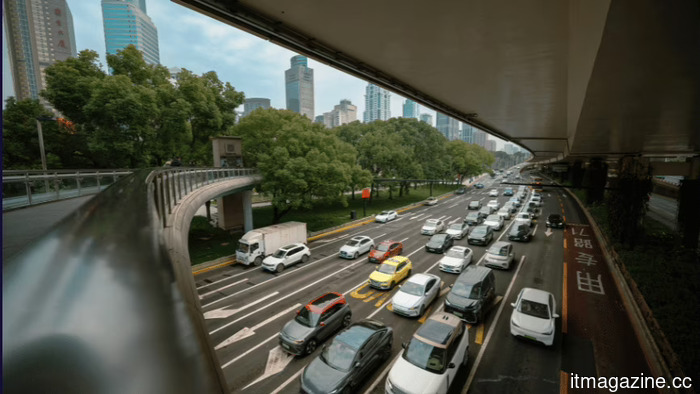 VW, Toyota, and Hyundai are investing in Chinese tech partners as local brands dominate 70% of the market.
The early 2026 market share increases for foreign automakers in China are a result of lingering effects from subsidies rather than a resurgence. The disparity in technology has shifted.
VW, Toyota, and Hyundai are investing in Chinese tech partners as local brands dominate 70% of the market.
The early 2026 market share increases for foreign automakers in China are a result of lingering effects from subsidies rather than a resurgence. The disparity in technology has shifted.
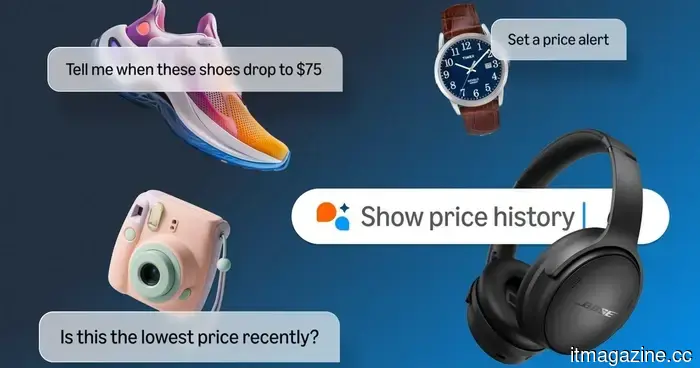 You can now view a product's price history for an entire year on Amazon.
Amazon's Rufus now displays a complete year of price history for any product, available to all customers without requiring a Prime membership, allowing you to determine whether a "limited time" offer is truly valid.
You can now view a product's price history for an entire year on Amazon.
Amazon's Rufus now displays a complete year of price history for any product, available to all customers without requiring a Prime membership, allowing you to determine whether a "limited time" offer is truly valid.
-interface-dramatically-differ-from-QuickBooks-Online?.jpg) Is there a significant difference between the Intuit Enterprise Suite (IES) interface and that of QuickBooks Online?
This announcement is made possible through a paid collaboration with QuickBooks. The Intuit Enterprise Suite (IES) interface is quite similar to QuickBooks Online. The primary navigation, workflows, and accounting tasks are recognizable. The key distinction lies in the enhanced features for overseeing multiple entities, user permissions, and consolidated reporting. Therefore, most users can transition easily while benefiting from […]
Is there a significant difference between the Intuit Enterprise Suite (IES) interface and that of QuickBooks Online?
This announcement is made possible through a paid collaboration with QuickBooks. The Intuit Enterprise Suite (IES) interface is quite similar to QuickBooks Online. The primary navigation, workflows, and accounting tasks are recognizable. The key distinction lies in the enhanced features for overseeing multiple entities, user permissions, and consolidated reporting. Therefore, most users can transition easily while benefiting from […]
 Microsoft has developed an AI assistant for lawyers within Word. Let's hope it doesn't act unpredictably.
A new AI legal assistant is set to be integrated into Word, as attorneys and the judiciary become increasingly aware of the high costs associated with inaccurate citations from chatbots.
Microsoft has developed an AI assistant for lawyers within Word. Let's hope it doesn't act unpredictably.
A new AI legal assistant is set to be integrated into Word, as attorneys and the judiciary become increasingly aware of the high costs associated with inaccurate citations from chatbots.
VW, Toyota, and Hyundai are partnering with Chinese tech firms as local brands dominate 70% of the market.
The early 2026 market share increases for foreign automakers in China indicate a lingering effect of subsidies rather than a resurgence. The technology gap has inverted.