
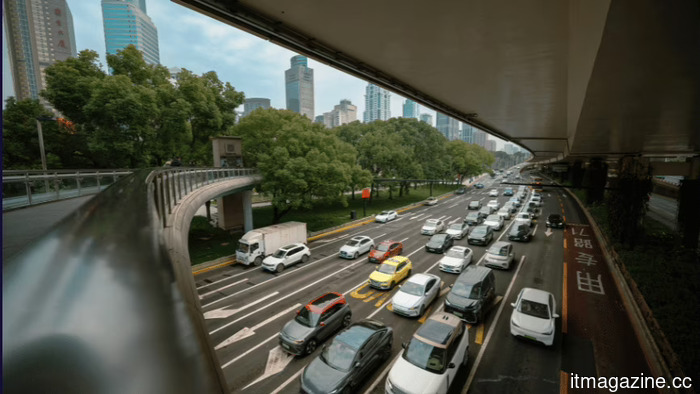
VW, Toyota, and Hyundai are investing in Chinese tech partners as local brands dominate 70% of the market.
TL;DR: In early 2026, foreign automakers briefly gained market share in China after EV subsidies ended and domestic sales fell, but the overall market situation remains unchanged: Chinese brands hold nearly 70% of the passenger vehicle market, NEV penetration is surpassing 54%, and foreign companies like Volkswagen and Hyundai are now partnering with Chinese AI and autonomous driving firms, unable to quickly develop competitive software independently.
In January and February 2026, Volkswagen reclaimed the lead in China’s passenger vehicle market with a 13.9% share, just ahead of Geely at 13.8%. Toyota’s joint ventures accounted for 7.8%. BYD, which had been the largest EV manufacturer in 2024 and much of 2025, dropped to fourth place with a 7.1% share after experiencing six months of declining sales—the steepest decline since the pandemic. Although the numbers suggest a foreign resurgence, they are merely a reflection of subsidy withdrawal.
China removed tax exemptions and trade-in incentives for new energy vehicles at the end of 2025, impacting domestic EV and plug-in hybrid manufacturers significantly since their sales had previously been boosted by subsidies that artificially enhanced the competitiveness of their lower-priced models. BYD’s sales fell over 30% year-on-year in January and 41% in February. Meanwhile, Volkswagen and Toyota, which rely more on conventional petrol and hybrid models, were somewhat shielded from this impact. The foreign brands did not improve; the balance of the market only shifted temporarily.
The extent of the loss is significant: Foreign automakers have lost about a third of the Chinese market in five years. Domestic brands now command nearly 70% of passenger vehicle sales, up from less than 40% in 2020. New energy vehicles are expected to constitute over 54% of car sales in China in 2026, with Chinese brands capturing over 85% of the NEV segment. Previously aspirational foreign brands like Volkswagen, Toyota, Honda, BMW, and Mercedes are now competing for the dwindling market portions left to them.
The numbers are stark. Skoda announced in March that it would exit China by mid-2026 after experiencing a 95% drop in sales from a peak of 341,000 vehicles in 2018 to just 15,000 in 2025. Honda reported its sales had declined for five consecutive years, dropping 24% in 2025 to 650,000 units, with January 2026 sales down another 16.5%. Volkswagen reduced global EV production as demand waned, delivering 2.69 million vehicles in China in 2025—an 8% year-on-year decline.
At the 2026 Beijing Auto Show, held in late April across 380,000 square meters with over 1,000 exhibitors, foreign brands outlined their strategies for recovery. Almost uniformly, they intend to become more integrated with Chinese markets.
Volkswagen introduced the ID.UNYX 09, an electric sedan co-developed with XPeng at its new R&D center in Hefei. The company plans to release over 20 new EVs in China this year and expand that number to 50 by 2030 across its various brands. Hyundai launched its IONIQ brand in China, debuting the IONIQ V, which features an autonomous driving system developed with Chinese company Momenta and operates on a Qualcomm Snapdragon 8295 processor. Beijing Hyundai aims to introduce 20 new models over the next five years, targeting annual sales of 500,000. Nissan has incorporated DeepSeek AI into its N7 electric sedan and plans to launch five new energy vehicles within a year.
The trend is clear: Foreign automakers are partnering with Chinese tech companies because they cannot develop competitive software quickly on their own. In contrast, domestic brands rapidly cycle updates for in-car software, autonomous driving features, and AI assistants. Even Tesla, which regained the top spot in global EV sales from BYD in Q1 2026, can't deploy its latest Full Self-Driving software in China, while BYD’s God’s Eye system operates across 2.3 million vehicles and XPeng’s VLA 2.0 secured Level 4 pilot operation permits in Guangzhou. The technological advantage that previously favored Western automakers has now shifted.
Toyota is the lone Japanese automaker to report growth in China in 2025, selling 1.78 million vehicles—a slight increase year-on-year. This resurgence is attributed to two key strategies: a $15,000 electric vehicle designed for the Chinese market, and a hybrid lineup that gains from the subsidy cessation as hybrids are cheaper to manufacture compared to full EVs and don’t rely on purchase incentives to compete on price.
GM reported nearly 1.9 million deliveries in China in 2025, representing a 2.3% increase—with new energy vehicle sales up 22.6% and Buick's sales up 54
Other articles
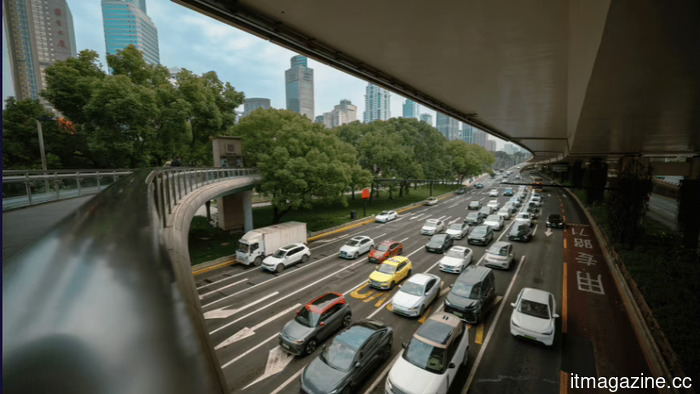 VW, Toyota, and Hyundai are relying on Chinese tech partners as local brands dominate 70% of the market.
The early 2026 market share increases for foreign automakers in China indicate a lingering effect of subsidies rather than a resurgence. The technology disparity has shifted.
VW, Toyota, and Hyundai are relying on Chinese tech partners as local brands dominate 70% of the market.
The early 2026 market share increases for foreign automakers in China indicate a lingering effect of subsidies rather than a resurgence. The technology disparity has shifted.
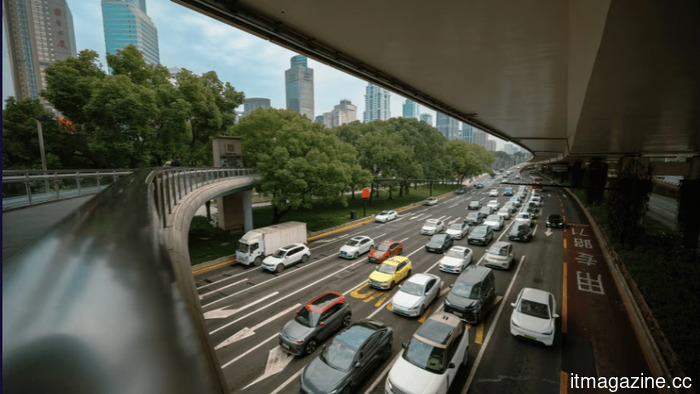 VW, Toyota, and Hyundai are partnering with Chinese tech firms as local brands dominate 70% of the market.
The early 2026 market share increases for foreign automakers in China indicate a lingering effect of subsidies rather than a resurgence. The technology gap has inverted.
VW, Toyota, and Hyundai are partnering with Chinese tech firms as local brands dominate 70% of the market.
The early 2026 market share increases for foreign automakers in China indicate a lingering effect of subsidies rather than a resurgence. The technology gap has inverted.
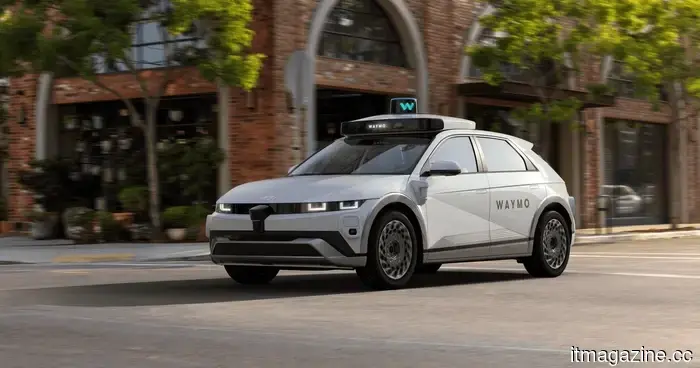 Self-driving cars in California will no longer escape penalties as new regulations take effect.
An incident in September 2025, in which San Bruno police were unable to issue a ticket to a Waymo for making an illegal U-turn, contributed to the establishment of California's comprehensive new regulations for autonomous vehicles.
Self-driving cars in California will no longer escape penalties as new regulations take effect.
An incident in September 2025, in which San Bruno police were unable to issue a ticket to a Waymo for making an illegal U-turn, contributed to the establishment of California's comprehensive new regulations for autonomous vehicles.
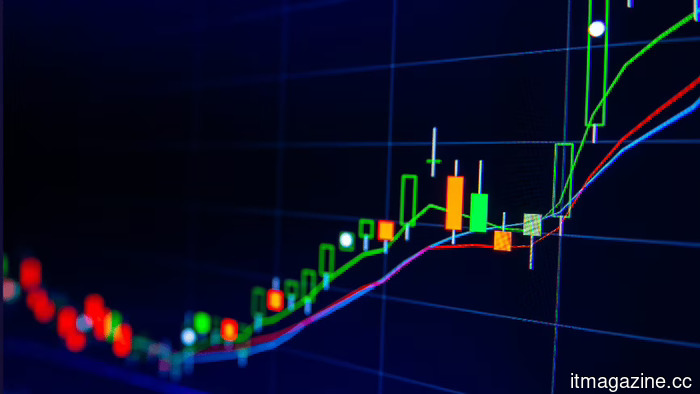 Alphabet approaches Nvidia in the race to become the world's most valuable company following strong Q1 earnings in cloud, search, and AI.
Alphabet's market capitalization reached $4.6 trillion following a 22% increase in Q1 earnings. Google Cloud experienced a 63% growth. Meanwhile, Nvidia saw a decline of 6%. The difference is $200 billion and is decreasing.
Alphabet approaches Nvidia in the race to become the world's most valuable company following strong Q1 earnings in cloud, search, and AI.
Alphabet's market capitalization reached $4.6 trillion following a 22% increase in Q1 earnings. Google Cloud experienced a 63% growth. Meanwhile, Nvidia saw a decline of 6%. The difference is $200 billion and is decreasing.
 Microsoft has developed an AI assistant for lawyers within Word. Let's hope it doesn't act unpredictably.
A new AI legal assistant is set to be integrated into Word, as attorneys and the judiciary become increasingly aware of the high costs associated with inaccurate citations from chatbots.
Microsoft has developed an AI assistant for lawyers within Word. Let's hope it doesn't act unpredictably.
A new AI legal assistant is set to be integrated into Word, as attorneys and the judiciary become increasingly aware of the high costs associated with inaccurate citations from chatbots.
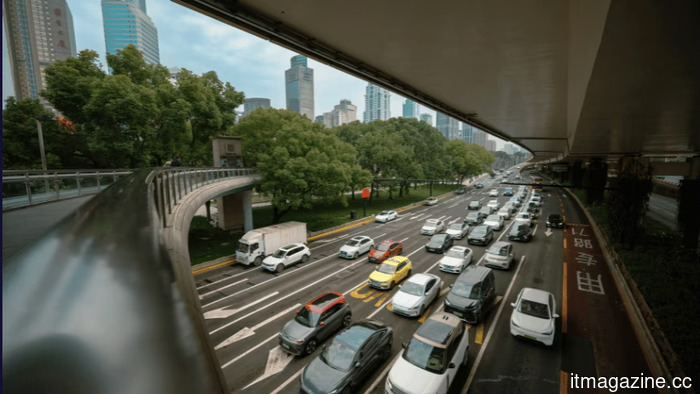 VW, Toyota, and Hyundai are placing their bets on Chinese technology partners as local brands dominate 70% of the market.
The early 2026 market share increases of foreign automakers in China are indicative of a lingering effect from subsidies, rather than a resurgence. The technology gap has shifted.
VW, Toyota, and Hyundai are placing their bets on Chinese technology partners as local brands dominate 70% of the market.
The early 2026 market share increases of foreign automakers in China are indicative of a lingering effect from subsidies, rather than a resurgence. The technology gap has shifted.
VW, Toyota, and Hyundai are investing in Chinese tech partners as local brands dominate 70% of the market.
The early 2026 market share increases for foreign automakers in China are a result of lingering effects from subsidies rather than a resurgence. The disparity in technology has shifted.