
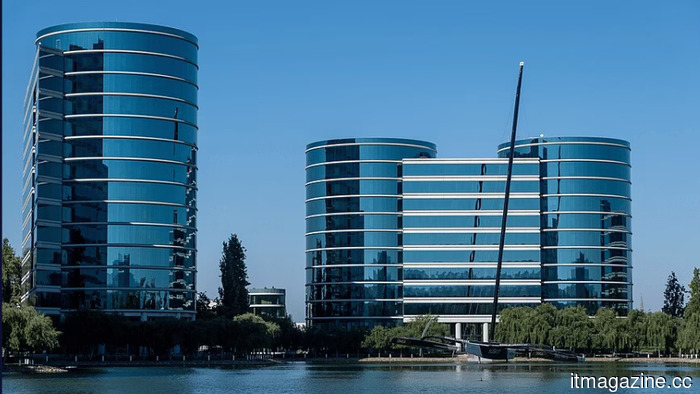
Oracle's stock drops by 50% despite a buy consensus from Wall Street, as concerns about concentration rise due to a $300B deal with OpenAI.
TL;DR: Oracle’s stock has decreased by 50% since its peak in September, despite 41 out of 51 Wall Street analysts rating it as a buy, with an implied upside of 43%. The disconnect arises from Oracle's $300 billion Stargate partnership with OpenAI, as investors perceive risks in the financing structure—OpenAI acts both as a customer and an investor to those funding it—while analysts maintain that demand for AI infrastructure is robust and Oracle remains undervalued.
Oracle's shares have nearly halved since reaching a record high in September, plummeting 14% over the last six sessions, marking its worst performance in months. Bloomberg reports that out of 51 analysts monitoring the company, 41 have buy ratings and only one suggests selling. The average price target indicates a 43% increase within the next year, among the highest expected growth in its large-cap cohort. One portfolio manager called the stock an "incredibly attractive entry point," envisioning a price target twice that of the current level. Another dismissed concerns about Oracle’s debt as "ridiculous." Analysts remain optimistic, while investors are offloading stocks. The discrepancy is not due to Oracle’s quarterly performance, which highlighted a 95% increase in net income and $523 billion in remaining performance obligations—a 433% year-over-year rise—but rather stems from concerns about a single customer.
The deal involves a significant $300 billion, five-year collaboration with OpenAI to provide cloud computing resources for Stargate, the AI infrastructure partnership initiated alongside SoftBank and Oracle in January 2025. SoftBank has pooled a record $40 billion loan to fund part of this venture. Oracle is tasked with constructing and managing data centers to deliver the computational power necessary for OpenAI’s model training and operations. While the $300 billion announcement initially boosted Oracle's stock, it is now seen as a liability. Investors question not Oracle’s ability to create the needed infrastructure but rather whether OpenAI can sustain its payments for the service.
OpenAI has obligations for cloud infrastructure amounting to hundreds of billions, relying on anticipated revenue growth from around $25 billion today to $280 billion by 2030. The company expects a $25 billion cash burn in 2026 against a revenue forecast of $30 billion. Recently, reports indicated that OpenAI fell short of its internal revenue and user growth targets, prompting its finance chief to caution colleagues that if revenue growth does not pick up, funding future computing contracts could become challenging. Oracle's shares took a 4.1% hit on the day this report surfaced.
Investors have recognized a fundamental issue with Oracle’s relationship with OpenAI that analysts have overlooked. OpenAI operates as a customer of the very companies financing it, having secured investment from Microsoft, which provides Azure infrastructure, and contracted with Oracle itself, while also committing $100 billion to AWS over eight years. The firms involved in building OpenAI's infrastructure frequently overlap with those supporting its funding. A slowdown in OpenAI’s revenue growth could impair its ability to uphold these contracts, simultaneously affecting the revenues of the companies reliant on OpenAI, including Oracle. The concern is twofold; not only does Oracle depend on OpenAI for revenue, but the entire financing structure appears circular, raising the stakes for any downturn at OpenAI as it would adversely impact Oracle’s revenues, investments, and the value of the infrastructure dedicated to this partnership.
OpenAI has already paused its UK Stargate data center project, citing high energy costs and an unfavorable regulatory landscape concerning AI copyright. The planned Abu Dhabi Stargate data center also faces geopolitical risks due to the conflict in Iran. After Oracle and OpenAI abandoned plans for a data center in Abilene, Texas, Meta quickly considered leasing the site, with Nvidia assisting in the discussions. Oracle advocates argue this indicates that AI infrastructure demand is adaptable; if one client cannot utilize a data center, another will. However, skeptics point out that Meta already partners with CoreWeave and Nebius, not Oracle, and merely exploring a lease does not equate to signing a $300 billion contract.
The bullish narrative from Wall Street is clear: there is genuine and growing demand for AI infrastructure. Oracle has shed up to 30,000 jobs to redirect $8 billion to $10 billion in annual cash flow towards data center development, a shift that TD Cowen analysts suggest accelerates the company’s pivot to AI. Oracle's infrastructure, featuring data centers equipped with Nvidia GPUs and high-bandwidth networking, is essential for all firms engaged in AI model training—not just for OpenAI. According to a portfolio manager, Larry Ellison, who has led Oracle for 40 years, has “a vision and executes it.” The company's cloud division is expanding, its remaining performance obligations are at record levels, and the AI infrastructure rollout is just beginning.
On the opposite side, the bearish argument is equally straightforward. Oracle's stock trades at 21 times forward earnings, exceeding its
Other articles
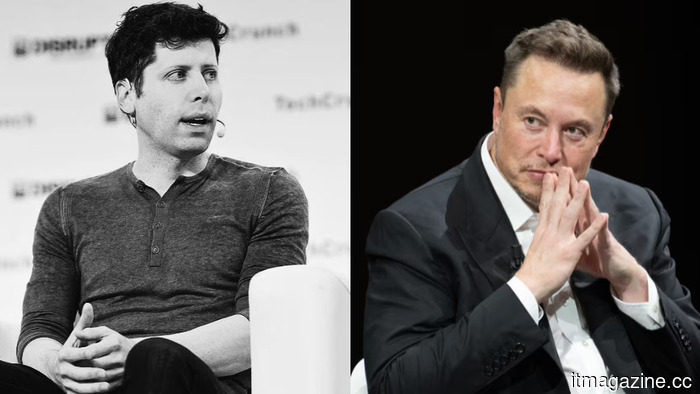 Musk's lawsuit against OpenAI is entering its first week.
La demanda de Elon Musk de $130 mil millones contra OpenAI enfrentó varios obstáculos en su primera semana, incluida su admisión de que xAI se basa en los modelos de OpenAI para su entrenamiento.
Apple's $599 Mac mini is no longer available. The reason? The AI agents.
Apple has phased out the $599 Mac mini and increased the starting price to $799, citing high demand for AI and agentic tools that are putting pressure on its desktop supply.
Musk's lawsuit against OpenAI is entering its first week.
La demanda de Elon Musk de $130 mil millones contra OpenAI enfrentó varios obstáculos en su primera semana, incluida su admisión de que xAI se basa en los modelos de OpenAI para su entrenamiento.
Apple's $599 Mac mini is no longer available. The reason? The AI agents.
Apple has phased out the $599 Mac mini and increased the starting price to $799, citing high demand for AI and agentic tools that are putting pressure on its desktop supply.
 Why a Canadian bank is attempting to forecast earthquakes using quantum computers.
BMO has submitted a provisional patent for a quantum algorithm designed to predict earthquakes and employs AI to deploy mobile branches in areas affected by wildfires.
Why a Canadian bank is attempting to forecast earthquakes using quantum computers.
BMO has submitted a provisional patent for a quantum algorithm designed to predict earthquakes and employs AI to deploy mobile branches in areas affected by wildfires.
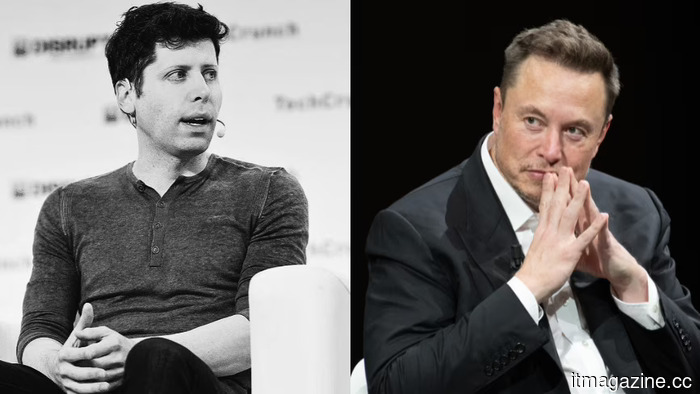 Musk’s lawsuit against OpenAI is situated around its initial week.
La demanda de Elon Musk por 130 mil millones de dólares contra OpenAI enfrentó varios obstáculos en su primera semana, incluyendo su reconocimiento de que xAI se entrena con los modelos de OpenAI.
Musk’s lawsuit against OpenAI is situated around its initial week.
La demanda de Elon Musk por 130 mil millones de dólares contra OpenAI enfrentó varios obstáculos en su primera semana, incluyendo su reconocimiento de que xAI se entrena con los modelos de OpenAI.
 Cerebras, a manufacturer of AI chips, aims for an IPO of up to $4 billion, with a valuation of $40 billion.
Cerebras aims to raise up to $4 billion in its Nasdaq IPO, which is valuing the company at $40 billion. This move is supported by a $10 billion computing agreement with OpenAI and clearance from CFIUS.
The $599 Mac mini from Apple is no longer available. The cause? The AI agents.
Apple has stopped offering the $599 Mac mini and increased the starting price to $799, mentioning the demand for AI and agentic tools as the reason for the strain on its desktop supply.
Cerebras, a manufacturer of AI chips, aims for an IPO of up to $4 billion, with a valuation of $40 billion.
Cerebras aims to raise up to $4 billion in its Nasdaq IPO, which is valuing the company at $40 billion. This move is supported by a $10 billion computing agreement with OpenAI and clearance from CFIUS.
The $599 Mac mini from Apple is no longer available. The cause? The AI agents.
Apple has stopped offering the $599 Mac mini and increased the starting price to $799, mentioning the demand for AI and agentic tools as the reason for the strain on its desktop supply.
Oracle's stock drops by 50% despite a buy consensus from Wall Street, as concerns about concentration rise due to a $300B deal with OpenAI.
Out of 51 analysts, 41 recommend Oracle as a buy. The stock has decreased by 50%. The disparity represents a $300 billion wager on OpenAI's potential to increase its revenue tenfold.