
Apple's $599 Mac mini is no longer available. The reason? The AI agents.
Apple has discreetly increased the starting price of its desktop to $799, following a surge in demand from developers creating local AI tools that quickly sold out existing stock. Tim Cook mentioned that it may take months to replenish supplies.
For the past five years, the Mac mini has served as the most affordable entry point into Apple's desktop ecosystem. Following the M4 upgrade in late 2024, the price had been set at $599, which was an unusually competitive figure for Cupertino, making the compact aluminum box a surprising success.
It became the recommended introductory Mac, favored among hobbyists as a home server, and increasingly sought after by developers running AI models on personal hardware.
However, as of Friday, the $599 Mac mini is no longer available. Apple has phased out the 256GB version of the M4 Mac mini, establishing the 512GB model at $799 as the new entry point. Bloomberg was the first to report this change, referencing Apple’s own product pages, with further confirmations from MacRumors, 9to5Mac, Macworld, and AppleInsider. The prices for other specifications remain unchanged; the lower entry option has simply been eliminated.
Thus, the Mac mini's base price has effectively increased by $200 compared to the previous day.
Apple provided clear reasoning for this adjustment during the recent Q2 earnings call. Tim Cook, the CEO, attributed the shortages of both the Mac mini and the more powerful Mac Studio to demand exceeding their internal forecasts, linking that demand directly to AI workloads.
He remarked that both machines are “fantastic platforms for AI and agentic tools,” noting that customer awareness has developed more rapidly than anticipated.
This recognition has a definite trend. The Mac mini and Mac Studio feature a surprisingly valuable characteristic in 2026: substantial amounts of unified memory readily accessible to the GPU and Neural Engine in Apple’s M-series chips.
For developers utilizing large local language models, agentic tools that coordinate multi-step tasks on a single device, or compact research setups otherwise dependent on cloud GPUs, this memory structure is a significant advantage. A 64GB Mac Studio is more affordable than the least expensive Nvidia H100, operates quietly on a desk, and does not incur hourly charges.
Consequently, there has been a rush on inventory typically seen during product launches rather than for products that have been available for nine months. Several higher-RAM configurations listed on Apple’s online store are currently unavailable. The new entry-level 16GB, 512GB Mac mini is reportedly backordered until June according to some retail sources.
Beneath the consumer-facing narrative lies a less visible story concerning supply. The advanced memory chips used in the Mac minis and Mac Studios are also crucial components for the AI server farms being constructed by hyperscale providers, creating a growing imbalance between data center demand and global memory production that has been intensifying for over a year.
DRAM prices have surged, and analysts warn that consumer electronics manufacturers may increasingly find themselves secondary to cloud providers willing to pay above market rates.
Cook acknowledged this supply issue on the call, informing investors that the supply-demand balance for both devices is “several months” away. While he refrained from projecting further price changes, Notebookcheck and other sources have noted that the trend—AI demand absorbing memory, leading to scarcity and rising consumer prices—may not be exclusive to Apple.
There is also an aspect related to US manufacturing in this scenario. The M4 Mac mini is one of the products that Apple has started to assemble partially in the United States, and analysts from Technetbook and others have suggested that some of the cost pressure on the entry-level tier is a result of this shift, rather than being solely dependent on chip availability. Apple has not publicly commented on the relative significance of these two factors.
For the majority of consumers, this change represents a subtle price increase disguised as a product simplification. The 512GB Mac mini, which previously required a $200 upgrade, is now the baseline. Individuals who would have opted for the 256GB variant—such as students, buyers of second machines, or light office users—now find themselves paying more for storage they may not require.
For the segment Apple seems to be targeting—developers running Claude- or Llama-class models locally—this new entry level is closer to a logical minimum. The 256GB of storage was always insufficient for that usage context, while 512GB paired with 16GB of unified memory offers a more realistic starting point.
Ultimately, the broader implication is unmistakable. Apple, a company that traditionally maintains stable prices throughout chip cycles, has just elevated a starting price by a third in response to demand driven by AI. The Mac mini has transitioned from being an unnoticed option to an AI workstation, at least temporarily.
Other articles
 Why a Canadian bank is attempting to forecast earthquakes using quantum computers.
BMO has submitted a provisional patent for a quantum algorithm designed to predict earthquakes and employs AI to deploy mobile branches in areas affected by wildfires.
Why a Canadian bank is attempting to forecast earthquakes using quantum computers.
BMO has submitted a provisional patent for a quantum algorithm designed to predict earthquakes and employs AI to deploy mobile branches in areas affected by wildfires.
 AI chip manufacturer Cerebras aims for an initial public offering (IPO) of up to $4 billion, with a valuation of $40 billion.
Cerebras aims to raise as much as $4 billion at a valuation of $40 billion in its Nasdaq IPO, supported by a $10 billion computing agreement with OpenAI and approval from CFIUS.
AI chip manufacturer Cerebras aims for an initial public offering (IPO) of up to $4 billion, with a valuation of $40 billion.
Cerebras aims to raise as much as $4 billion at a valuation of $40 billion in its Nasdaq IPO, supported by a $10 billion computing agreement with OpenAI and approval from CFIUS.
 AI chip manufacturer Cerebras aims for an IPO of up to $4 billion, seeking a valuation of $40 billion.
Cerebras aims to raise up to $4 billion in its Nasdaq IPO, which is valued at $40 billion, supported by a $10 billion computing agreement with OpenAI and clearance from CFIUS.
AI chip manufacturer Cerebras aims for an IPO of up to $4 billion, seeking a valuation of $40 billion.
Cerebras aims to raise up to $4 billion in its Nasdaq IPO, which is valued at $40 billion, supported by a $10 billion computing agreement with OpenAI and clearance from CFIUS.
 GameStop is gearing up to make an offer for eBay as Cohen aims for a $100 billion valuation.
GameStop is getting ready to make an offer for eBay. CEO Ryan Cohen is discreetly acquiring a share in the $46 billion marketplace as he aims for a $100 billion company valuation.
The $599 Mac mini from Apple is no longer available. The cause? The AI agents.
Apple has stopped offering the $599 Mac mini and increased the starting price to $799, mentioning the demand for AI and agentic tools as the reason for the strain on its desktop supply.
GameStop is gearing up to make an offer for eBay as Cohen aims for a $100 billion valuation.
GameStop is getting ready to make an offer for eBay. CEO Ryan Cohen is discreetly acquiring a share in the $46 billion marketplace as he aims for a $100 billion company valuation.
The $599 Mac mini from Apple is no longer available. The cause? The AI agents.
Apple has stopped offering the $599 Mac mini and increased the starting price to $799, mentioning the demand for AI and agentic tools as the reason for the strain on its desktop supply.
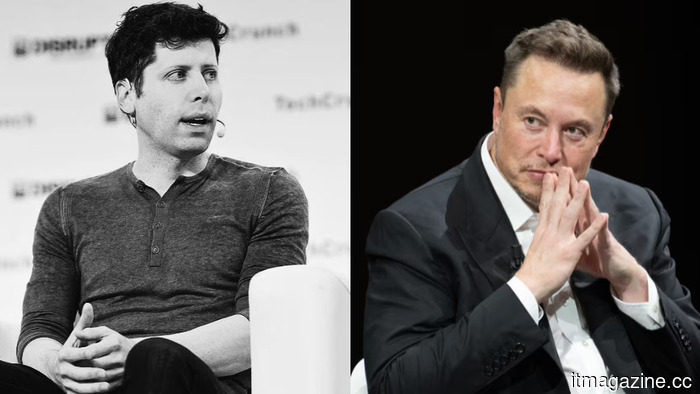 Musk's lawsuit against OpenAI is entering its first week.
La demanda de Elon Musk de $130 mil millones contra OpenAI enfrentó varios obstáculos en su primera semana, incluida su admisión de que xAI se basa en los modelos de OpenAI para su entrenamiento.
Musk's lawsuit against OpenAI is entering its first week.
La demanda de Elon Musk de $130 mil millones contra OpenAI enfrentó varios obstáculos en su primera semana, incluida su admisión de que xAI se basa en los modelos de OpenAI para su entrenamiento.
Apple's $599 Mac mini is no longer available. The reason? The AI agents.
Apple has phased out the $599 Mac mini and increased the starting price to $799, citing high demand for AI and agentic tools that are putting pressure on its desktop supply.