
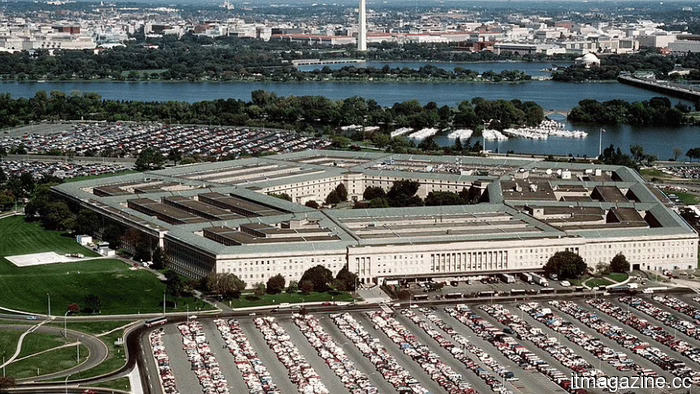
The Pentagon has finalized classified AI agreements with Nvidia, Microsoft, and AWS following the removal of Anthropic due to safety constraints.
**Summary:** The Pentagon has established classified AI agreements with Nvidia, Microsoft, Amazon Web Services, and Reflection AI, increasing the total number of companies to seven that operate on secret military networks under terms of "lawful operational use." This phrase intentionally replaces the safety restrictions that Anthropic sought to impose, which resulted in its removal from Pentagon supply chains. The implication is clear: AI companies that impose limits on military usage will be replaced by those that do not.
On May 1, the Pentagon announced agreements with Nvidia, Microsoft, AWS, and Reflection AI to enhance the application of advanced AI within classified military networks, bringing the total to seven companies, which include SpaceX, OpenAI, and Google. All agreements permit "lawful operational use," a term the Defense Department uses to signify a shift towards making the U.S. military an AI-first combat force. This term was strategically chosen to replace the restrictions Anthropic insisted on regarding military applications of its technology. Anthropic's insistence on these limits led to its exclusion from the Pentagon's supply chain. The remaining seven companies are aligned with broader terms that Anthropic would not accept.
The distinction is crucial as it clarifies the meaning of "classified military AI" in practical terms. Before being labeled a supply chain risk in February, Anthropic maintained that its models would not be used for mass surveillance of American citizens or for fully autonomous weapon systems. These were definitive contractual boundaries included in its $200 million Pentagon agreement awarded in July 2025. When the Pentagon rejected these restrictions during renegotiations, Anthropic remained firm, prompting the Defense Department to replace it with competitors willing to accept broader terms.
The concept of "lawful operational use" is expansive, covering targeting assistance, intelligence synthesis, and operational planning on classified networks, without the restrictions sought by Anthropic. The Pentagon is now able to use advanced AI technologies for secret combat operations, including targeting, as indicated by defense officials. The urgency of finalizing agreements was highlighted by the late-night negotiations with AWS. An AWS representative referred to the Defense Department as “the Department of War” (its name before 1947) and expressed eagerness to support its modernization efforts.
The seven companies involved reflect nearly the entirety of the U.S. AI infrastructure. Nvidia supplies the hardware, while Microsoft and AWS provide cloud services. Google, OpenAI, and SpaceX contribute AI models and satellite communications. While smaller defense-focused AI firms are also developing for military applications, the Pentagon clearly prioritizes these major providers. Reflection AI focuses specifically on classified and intelligence community applications.
The significance lies in the diversification of relationships. Defense officials have emphasized the importance of not depending on a single company or set of limitations, a reference to Anthropic's situation. The Pentagon aims to avoid constraints on military operations imposed by any specific AI provider. The envisioned "AI-first fighting force" necessitates AI that can be utilized for any lawful military purpose without restrictions from the companies developing the technology.
In contrast, the Anthropic narrative showcases its removal from consideration as a supply chain risk previously associated with Chinese firms like Huawei. Its $200 million Pentagon contract was effectively nullified, and senior defense officials criticized the company's approach. Although its market valuation surged to approximately $900 billion from $380 billion in February, and its revenue run rate reached around $30 billion, being expelled from Pentagon networks has not harmed Anthropic's business in the short term.
However, it has set a precedent: any AI company that enforces specific military usage limitations will be supplanted by those that do not. The Pentagon's agreements underscore that the Department of Defense will not negotiate military AI usage terms with technology providers. "Lawful operational use" grants the military authority to define what is lawful and operational, while companies simply supply the technology. Questions about the role of AI in targeting or autonomous systems are ones the Pentagon seeks to resolve by choosing vendors that do not impose such questions.
The consequences are substantial. AI used on classified networks will facilitate intelligence analysis, operational planning, and data synthesis. The Pentagon's announcement indicates these tools will improve data integration, enhance situational awareness, and support decision-making in complex situations. In simpler terms, AI will expedite intelligence processing, help commanders comprehend battlefield dynamics in real-time, and assist targeting teams in prioritizing objectives. The addition of SpaceX’s AI capabilities — stemming from its acquisition of xAI — introduces a new element as a satellite comms provider that also develops AI models for the same classified networks handling targeting data.
The swift shift in the Pentagon's strategy is notable. Just five months ago, Anthropic held a significant $200 million contract and was a key player in classified military AI systems. Now, seven competitors have signed agreements that effectively render Anthropic's contribution to military AI replaceable. The Pentagon has provided a definitive answer to a long-standing industry debate over whether AI creators will have a say in the military application of their systems: the answer is no.
Other articles
 Meta purchases Assured Robot Intelligence to develop the Android for humanoid robots.
Meta acquired ARI, a robotics AI startup, and integrated it into Superintelligence Labs. The objective is to become the essential platform for every humanoid manufacturer.
Meta purchases Assured Robot Intelligence to develop the Android for humanoid robots.
Meta acquired ARI, a robotics AI startup, and integrated it into Superintelligence Labs. The objective is to become the essential platform for every humanoid manufacturer.
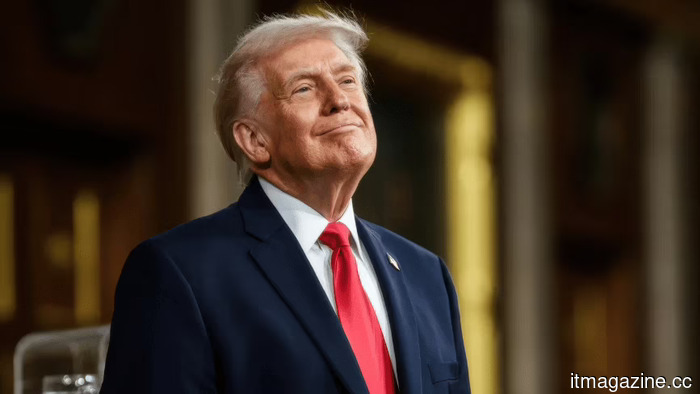 Trump's 25% tariff on EU automobiles violates the Turnberry Agreement, which also addresses semiconductors and digital commerce.
Next week, Trump will increase EU car tariffs to 25%, violating the Turnberry agreement. This pact also includes chips and AI. The cars will serve as a trial.
Trump's 25% tariff on EU automobiles violates the Turnberry Agreement, which also addresses semiconductors and digital commerce.
Next week, Trump will increase EU car tariffs to 25%, violating the Turnberry agreement. This pact also includes chips and AI. The cars will serve as a trial.
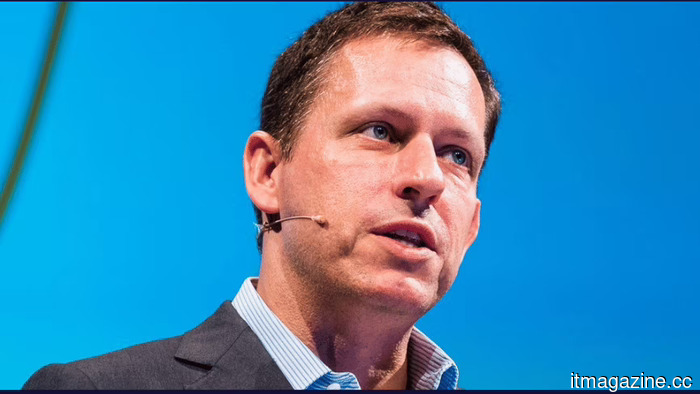 Founders Fund has raised $6 billion after spending $4.6 billion in less than a year on investments in Anthropic, Anduril, and OpenAI.
Founders Fund's new $6 billion fund takes the place of a $4.6 billion predecessor that was utilized in less than a year. The average investment amount is $600 million. Portfolio includes Anthropic, Anduril, SpaceX, and OpenAI.
Founders Fund has raised $6 billion after spending $4.6 billion in less than a year on investments in Anthropic, Anduril, and OpenAI.
Founders Fund's new $6 billion fund takes the place of a $4.6 billion predecessor that was utilized in less than a year. The average investment amount is $600 million. Portfolio includes Anthropic, Anduril, SpaceX, and OpenAI.
 Meta's $145 billion AI initiative eclipses the child safety lawsuits that may incur greater expenses.
Meta suffered a defeat in its initial addiction trial and is confronted with over 40 lawsuits from state attorneys general, while bans are on the rise. During Zuckerberg's earnings call, the focus was on AI, with no investors raising questions about children.
Meta's $145 billion AI initiative eclipses the child safety lawsuits that may incur greater expenses.
Meta suffered a defeat in its initial addiction trial and is confronted with over 40 lawsuits from state attorneys general, while bans are on the rise. During Zuckerberg's earnings call, the focus was on AI, with no investors raising questions about children.
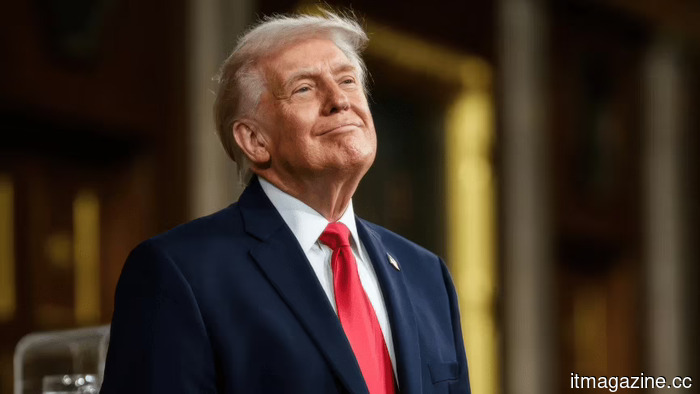 Trump's 25% tariff on EU automobiles violates the Turnberry Agreement, which also includes provisions related to semiconductors and digital trade.
Next week, Trump will increase EU car tariffs to 25%, violating the Turnberry agreement. This deal also includes provisions for chips and AI. The cars will serve as the proving ground.
Trump's 25% tariff on EU automobiles violates the Turnberry Agreement, which also includes provisions related to semiconductors and digital trade.
Next week, Trump will increase EU car tariffs to 25%, violating the Turnberry agreement. This deal also includes provisions for chips and AI. The cars will serve as the proving ground.
 Meta purchases Assured Robot Intelligence to develop the Android of humanoid robots.
Meta acquired ARI, a robotics AI startup, and integrated it into Superintelligence Labs. The aim is to become the essential platform for all humanoid manufacturers.
Meta purchases Assured Robot Intelligence to develop the Android of humanoid robots.
Meta acquired ARI, a robotics AI startup, and integrated it into Superintelligence Labs. The aim is to become the essential platform for all humanoid manufacturers.
The Pentagon has finalized classified AI agreements with Nvidia, Microsoft, and AWS following the removal of Anthropic due to safety constraints.
Seven companies currently manage AI on classified Pentagon networks under the terms of "lawful operational use." Anthropic, which did not remove its safety constraints, has been substituted.