
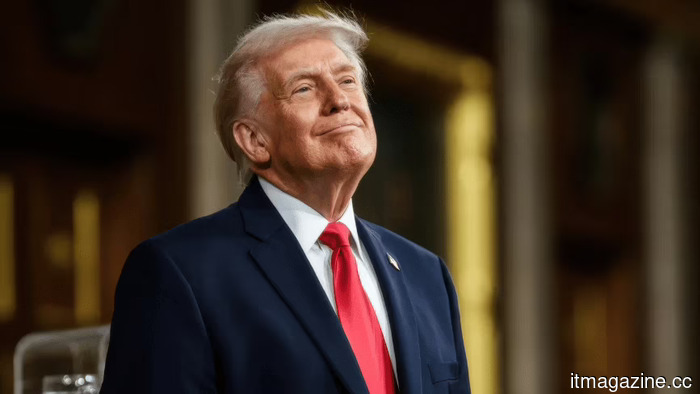
Trump's 25% tariff on EU automobiles violates the Turnberry Agreement, which also addresses semiconductors and digital commerce.
**TL;DR** Trump has announced that he will increase tariffs on EU cars and trucks to 25% next week, claiming the bloc is not complying with the Turnberry Agreement without clarifying the alleged violations. Signed in July 2025, this deal also pertains to semiconductors, AI chips, and digital trade. Trump's readiness to ignore the automotive aspects sets a precedent that could jeopardize the entire transatlantic tech trade framework.
The Turnberry Agreement was intended to be the baseline. Signed at Donald Trump’s golf resort in Scotland last July, this accord between the United States and the European Union capped US tariffs on nearly all EU goods entering America, including cars, car parts, semiconductors, and pharmaceuticals, at 15 percent. In return, the EU agreed to eliminate tariffs on all US industrial goods, purchase $750 billion in American energy exports, and invest $600 billion in the US by 2028. The agreement was inherently imbalanced, yet the EU accepted it, facing a worse alternative. On Friday, Trump announced that this alternative is back, raising tariffs on EU cars and trucks to 25% next week while accusing the EU of non-compliance without detailing what was violated. European technology firms had already warned that tariffs would affect both hardware and software, leaving the question of whether the auto situation marks the start or the end of an escalation.
The Turnberry Agreement, known formally as the Agreement on Reciprocal, Fair, and Balanced Trade, was initially announced on July 27, 2025, and outlined in a framework agreement on August 21. It set a 15 percent tariff cap on EU goods with zero-for-zero arrangements in key sectors like aircraft components, critical raw materials, and semiconductor equipment, including collaboration on supply chain security, AI chips, and digital trade. The EU agreed to eliminate tariffs on all US industrial goods and extend preferential access to American agricultural products. While European leaders, including German Chancellor Friedrich Merz, criticized the deal's lopsidedness, they deemed it preferable to a full-blown trade war. The European Parliament ratified the agreement in March 2026, adding safeguards allowing the EU to reimpose tariffs if the US violated the terms.
The legal basis of the deal changed significantly on February 20, 2026, when the US Supreme Court ruled in Learning Resources Inc. v. Trump that the president does not have the authority under the International Emergency Economic Powers Act (IEEPA) to impose wide-ranging tariffs. Shortly after, the White House reintroduced a 10 percent universal import surcharge under Section 122 of the Trade Act of 1974, which has a 150-day limit. Although the Supreme Court ruling did not invalidate the Turnberry Agreement, it altered the legal mechanism for administering tariffs, creating uncertainty about enforceable provisions and timelines. The EU halted its ratification process in February, seeking clarification on the agreement’s validity. By March, the US Trade Representative initiated Section 301 investigations into 16 economies, including the EU, relating to steel, aluminum, autos, batteries, and high-tech products.
The immediate impact of Trump’s announcement specifically targets cars and trucks, with tariffs set to rise from the current 10 percent to 25 percent. He mentioned that European automakers producing vehicles in American factories would be exempt from tariffs, intending to enhance the reshoring of manufacturing. Trump claimed that over $100 billion is being invested in US auto facilities, labeling it a record. However, fact-checkers have pointed out that many cited investments involve reallocations at existing sites rather than new plant construction, with some announcements made prior to Trump's re-election. Toyota has publicly disputed the narrative around its $10 billion commitment being a new investment. Collectively, international automakers have invested over $124 billion in US operations, but a significant portion of that occurred before the current tariff landscape emerged.
The market's initial reaction was subdued. The S&P 500 maintained its gains on Friday, although shares of European automakers fell, with Stellantis down more than 2 percent and Ferrari dropping nearly 1.5 percent. The EU estimated that the Turnberry deal saved European automakers between 500 million and 600 million euros each month compared to previous tariff levels. A 25 percent tariff would wipe out those savings. BMW’s Spartanburg plant in South Carolina, the largest in the world, already manufactures vehicles for the American market. Stellantis has revealed plans to invest $13 billion in the US to boost production capacity by 50 percent over four years. Automakers with local manufacturing are somewhat shielded, whereas those exporting finished vehicles face greater challenges.
The Turnberry Agreement encompassed more than just automobiles. Its zero-tariff clauses regarding semiconductor equipment and its cooperative framework on AI chips and digital trade were vital for European tech firms. Trump's tariffs have revived Europe’s drive for cloud independence, as nations such as France and Germany invest in domestic alternatives to US digital infrastructure. The 25
Other articles
 Meta's $145 billion AI initiative eclipses the child safety lawsuits that may incur even higher costs.
Meta faced its first loss in an addiction trial, is dealing with over 40 lawsuits from state attorneys general, and is experiencing a rise in bans. During Zuckerberg's earnings call, the focus was on AI, with no investors inquiring about issues related to children.
Meta's $145 billion AI initiative eclipses the child safety lawsuits that may incur even higher costs.
Meta faced its first loss in an addiction trial, is dealing with over 40 lawsuits from state attorneys general, and is experiencing a rise in bans. During Zuckerberg's earnings call, the focus was on AI, with no investors inquiring about issues related to children.
 Meta's $145 billion AI initiative eclipses the child safety lawsuits that could potentially incur higher costs.
Meta experienced a defeat in its initial addiction trial, is confronted with over 40 lawsuits from state attorneys general, and is seeing an increase in bans. During Zuckerberg's earnings call, the focus was on AI, and no investors inquired about issues concerning children.
Meta's $145 billion AI initiative eclipses the child safety lawsuits that could potentially incur higher costs.
Meta experienced a defeat in its initial addiction trial, is confronted with over 40 lawsuits from state attorneys general, and is seeing an increase in bans. During Zuckerberg's earnings call, the focus was on AI, and no investors inquired about issues concerning children.
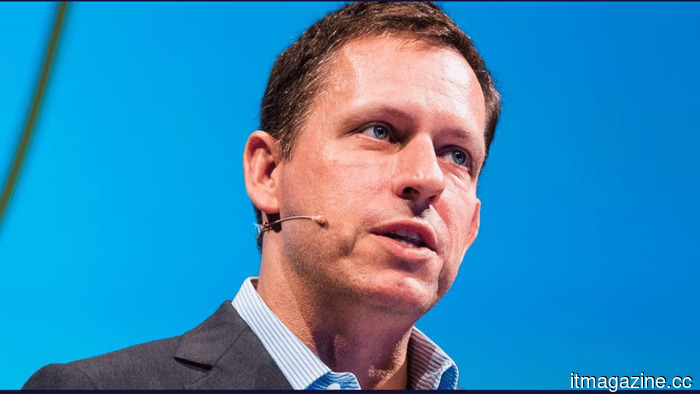 Founders Fund has raised $6 billion following the expenditure of $4.6 billion in less than a year on investments in Anthropic, Anduril, and OpenAI.
Founders Fund has launched a $6 billion fund, succeeding its previous $4.6 billion fund, which was utilized in less than a year. The average investment amount is $600 million. Their portfolio includes Anthropic, Anduril, SpaceX, and OpenAI.
Founders Fund has raised $6 billion following the expenditure of $4.6 billion in less than a year on investments in Anthropic, Anduril, and OpenAI.
Founders Fund has launched a $6 billion fund, succeeding its previous $4.6 billion fund, which was utilized in less than a year. The average investment amount is $600 million. Their portfolio includes Anthropic, Anduril, SpaceX, and OpenAI.
 Meta purchases Assured Robot Intelligence to develop the Android for humanoid robots.
Meta acquired ARI, a robotics AI startup, and integrated it into Superintelligence Labs. The aim is to become the essential platform for all humanoid manufacturers.
Meta purchases Assured Robot Intelligence to develop the Android for humanoid robots.
Meta acquired ARI, a robotics AI startup, and integrated it into Superintelligence Labs. The aim is to become the essential platform for all humanoid manufacturers.
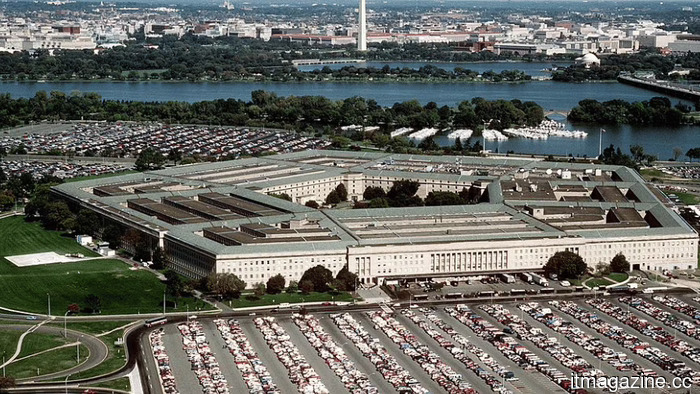 The Pentagon has finalized classified AI agreements with Nvidia, Microsoft, and AWS after removing Anthropic due to safety restrictions.
Currently, seven companies are utilizing AI on classified Pentagon networks under the conditions of "lawful operational use." Anthropic, which declined to eliminate its safety restrictions, has been substituted.
The Pentagon has finalized classified AI agreements with Nvidia, Microsoft, and AWS after removing Anthropic due to safety restrictions.
Currently, seven companies are utilizing AI on classified Pentagon networks under the conditions of "lawful operational use." Anthropic, which declined to eliminate its safety restrictions, has been substituted.
 Meta purchases Assured Robot Intelligence to develop the Android for humanoid robots.
Meta acquired ARI, a robotics AI startup, and integrated it into Superintelligence Labs. The objective is to become the essential platform for every humanoid manufacturer.
Meta purchases Assured Robot Intelligence to develop the Android for humanoid robots.
Meta acquired ARI, a robotics AI startup, and integrated it into Superintelligence Labs. The objective is to become the essential platform for every humanoid manufacturer.
Trump's 25% tariff on EU automobiles violates the Turnberry Agreement, which also addresses semiconductors and digital commerce.
Next week, Trump will increase EU car tariffs to 25%, violating the Turnberry agreement. This pact also includes chips and AI. The cars will serve as a trial.