

Press freedom has reached a 25-year low, with RSF identifying technology platforms alongside authoritarian regimes as contributing factors.
**TL;DR** The 2026 RSF World Press Freedom Index highlights the lowest level of press freedom in 25 years, with over half of countries marked as "difficult" or "very serious," and less than one percent of the global population residing in a "good" press freedom environment. The US has fallen to 64th place, its lowest ranking ever. The report attributes the decline to technology platforms, notably Meta's discontinuation of fact-checking and Elon Musk's frequent criticism of the media, alongside authoritarian regimes and the criminalization of journalism in 110 nations.
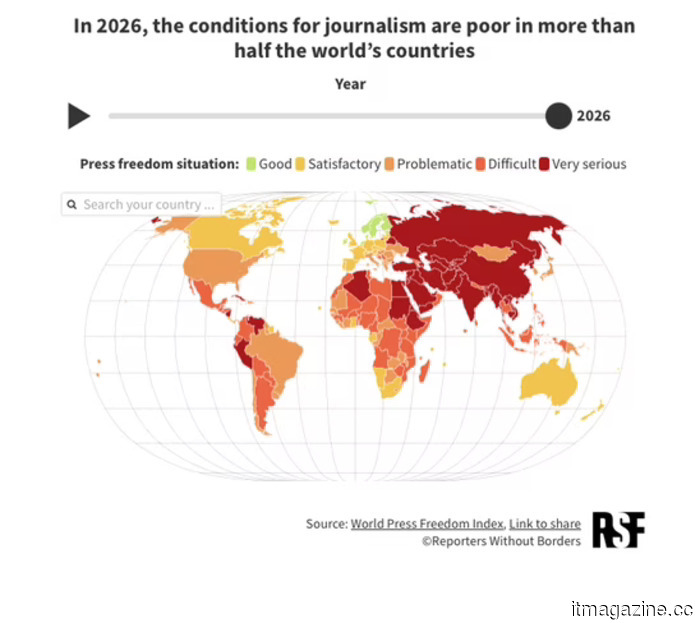
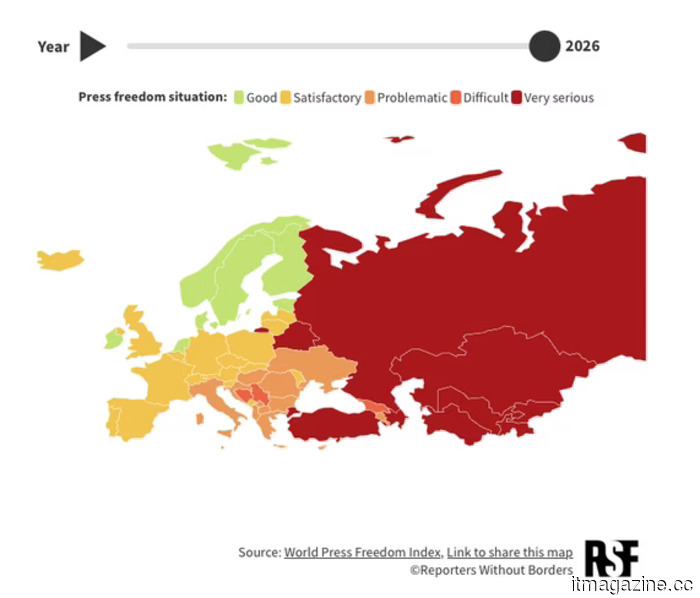
For the first time in the history of the World Press Freedom Index, more than half of the countries are classified under "difficult" or "very serious" conditions concerning press freedom, rising to 52.2 percent from 13.7 percent since the index began publication by Reporters Without Borders in 2002. The percentage of the global population living in nations with "good" press freedom has plummeted from 20 percent to under one percent, with only seven countries, all in northern Europe and led by Norway for the tenth year in a row, meeting this standard. The overall score across 180 countries and territories is at an all-time low. The report, released on April 30, points to familiar factors: authoritarian governments, emergency laws used to suppress journalists, and the physical violence that has resulted in over 220 media worker fatalities in Gaza since October 2023. It also highlights an aspect that the tech industry might prefer to overlook: the platforms themselves. Anne Bocande, RSF’s editorial director, stated that "authoritarian states, complicit or incompetent political powers, predatory economic actors, and under-regulated online platforms" are contributing to the decline in press freedom. The tech sector is implicated in every category apart from the first.
**Statistics**
Press freedom has worsened in 100 of the 180 countries listed in the 2026 index. More than 60 percent, or 110 countries, have imposed criminal penalties on media personnel through anti-terrorism laws, national security laws, and vaguely defined disinformation legislation. The legal landscape recorded the steepest decline among the indicators, with reductions observed in over 60 percent of nations. Russia, ranked 172nd, holds 48 journalists in prison, while China is 178th and India 157th. Hong Kong has plummeted 122 ranks to 140th since Beijing strengthened its control over the region. El Salvador has seen a decline of 105 positions since 2014, and Georgia has dropped 75 spots due to increased governmental repression of the media. Eritrea remains last for the third consecutive year, while Syria experienced the most significant improvement, rising 36 places after the fall of the Assad regime, marking the largest single-year gain in the index's history.
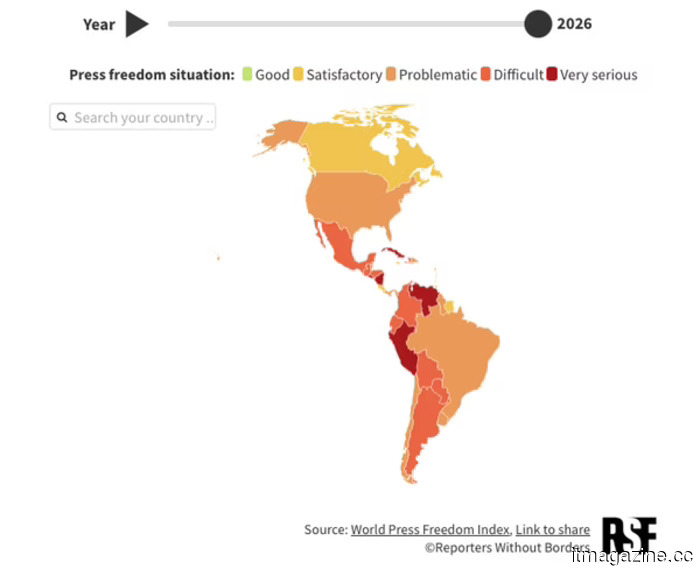
The United States dropped seven places to 64th, achieving its lowest ever ranking. RSF attributed this decline to the Trump administration's "systematic" attacks on press freedom, including the detention and deportation of Salvadoran journalist Mario Guevara for reporting on migrant arrests, significant cuts to funding for US international broadcasting, efforts to dismantle public broadcasters, and the use of governmental agencies and lawsuits to retaliate against critical media outlets. Clayton Weimers, executive director of RSF’s North America section, remarked that "Trump and his administration have waged a coordinated war on press freedom since he assumed office, and we will face the ramifications for years." The Varieties of Democracy Institute’s 2026 Democracy Report indicates that freedom of expression in the US has regressed to levels seen during World War II. Once a global champion of press freedom, the US is now ranked below Burkina Faso.
**Press Freedom in the Americas**
**The 💜 of EU Tech**
The latest news from the EU tech sector, along with insights from our founder Boris and some dubious AI artwork, delivered free every week to your inbox. Sign up now! The 2026 index devotes more attention to technology companies than any prior edition, using strong language. RSF outlines how "the increasing dominance of major tech firms, along with their changing policies and practices, have fostered an environment ripe for spreading hate speech and disinformation." The report identifies specific mechanisms such as platform algorithms that prioritize disinformation over verified news, enabling Russian disinformation campaigns, and the removal of integrated fact-checking systems.
The latter point highlights Meta's choice to dismantle its fact-checking program in favor of a model similar to X’s Community Notes. RSF terms this shift the “Muskification” of Meta’s platforms, where “private sector interests take precedence over the need for a factual public discourse.” Elon Musk is notably referenced in the report, with RSF documenting over 1,000 instances of media-hostile content posted by him on X from September 2024 to September 2025, averaging nearly
Other articles
 Apple reports that users are purchasing Macs more quickly than ever, resulting in a supply shortage.
Apple is struggling to meet the unprecedented demand for Macs, as the MacBook Neo and AI-capable Mac Mini and Studio sold out more quickly than the company had anticipated.
Apple reports that users are purchasing Macs more quickly than ever, resulting in a supply shortage.
Apple is struggling to meet the unprecedented demand for Macs, as the MacBook Neo and AI-capable Mac Mini and Studio sold out more quickly than the company had anticipated.
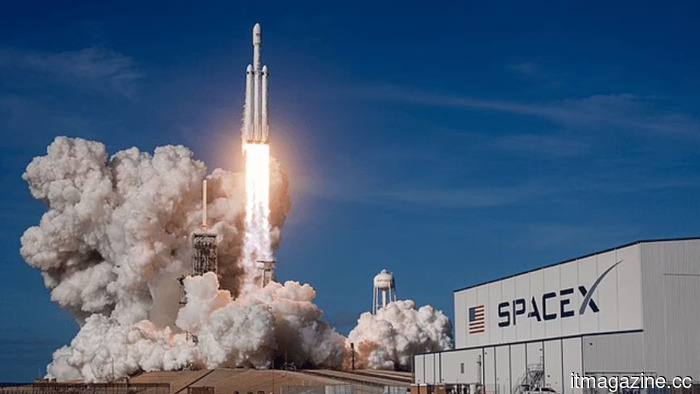 SpaceX has invested over $15 billion in the Starship program.
SpaceX has invested over $15 billion in the development of Starship and is aiming for a launch frequency similar to that of airlines.
SpaceX has invested over $15 billion in the Starship program.
SpaceX has invested over $15 billion in the development of Starship and is aiming for a launch frequency similar to that of airlines.
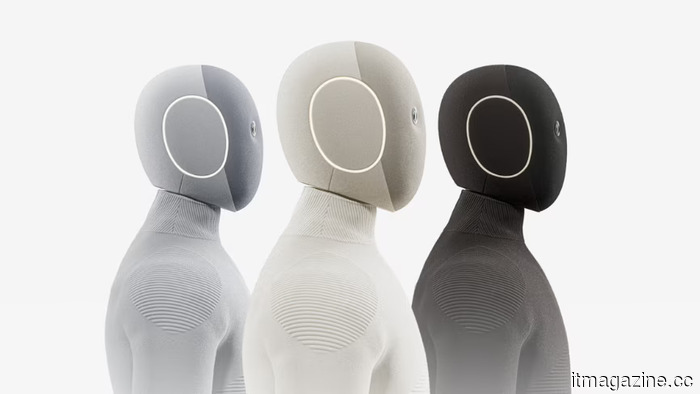 1X has begun delivering NEO humanoid robots to households in the US.
Backed by OpenAI, 1X has launched a factory in Hayward, California, with plans to manufacture 10,000 NEO home humanoid robots in the first year, increasing production to over 100,000 by the close of 2027.
1X has begun delivering NEO humanoid robots to households in the US.
Backed by OpenAI, 1X has launched a factory in Hayward, California, with plans to manufacture 10,000 NEO home humanoid robots in the first year, increasing production to over 100,000 by the close of 2027.
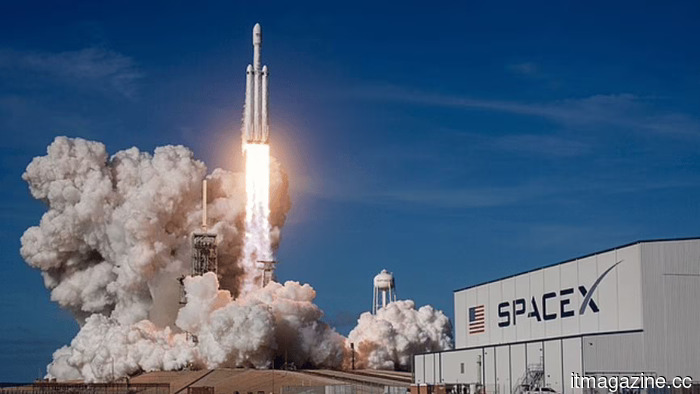 SpaceX has invested over $15 billion in the Starship project.
SpaceX has invested over $15 billion in the development of Starship and is aiming for a launch frequency similar to that of airlines.
SpaceX has invested over $15 billion in the Starship project.
SpaceX has invested over $15 billion in the development of Starship and is aiming for a launch frequency similar to that of airlines.
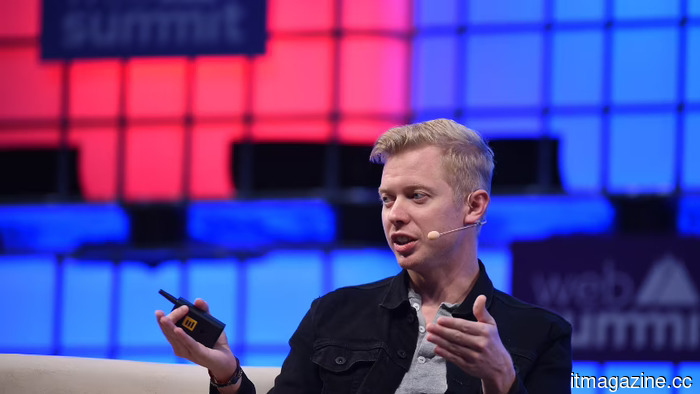 Reddit's Q1 revenue soars by 69% to reach $663 million, prompting a 9% increase in its shares.
Reddit announced that its revenue for the first quarter of 2026 reached $663 million, marking a 69% increase year-over-year. This figure exceeded expectations in all categories and led to an upward revision of its Q2 guidance beyond consensus estimates.
Reddit's Q1 revenue soars by 69% to reach $663 million, prompting a 9% increase in its shares.
Reddit announced that its revenue for the first quarter of 2026 reached $663 million, marking a 69% increase year-over-year. This figure exceeded expectations in all categories and led to an upward revision of its Q2 guidance beyond consensus estimates.
 Press freedom reaches a 25-year low as RSF identifies tech platforms along with authoritarian regimes as contributing factors.
The 2026 index from RSF indicates the lowest press freedom levels seen in 25 years. More than half of the countries evaluated are categorized as having difficult conditions or worse. The report identifies Meta, X, and AI-generated disinformation as fundamental factors contributing to this situation.
Press freedom reaches a 25-year low as RSF identifies tech platforms along with authoritarian regimes as contributing factors.
The 2026 index from RSF indicates the lowest press freedom levels seen in 25 years. More than half of the countries evaluated are categorized as having difficult conditions or worse. The report identifies Meta, X, and AI-generated disinformation as fundamental factors contributing to this situation.
Press freedom has reached a 25-year low, with RSF identifying technology platforms alongside authoritarian regimes as contributing factors.
The RSF's 2026 index indicates the lowest level of press freedom in the past 25 years. More than half of the countries surveyed are rated as facing difficult conditions or worse. The report identifies Meta, X, and AI-generated disinformation as fundamental factors contributing to this situation.